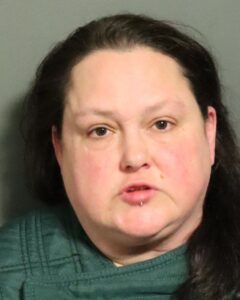
Defense asks judge to throw out murder charge against professor
The Associated Press ? Prosecutors improperly withheld DNA evidence that would help clear a college music professor accused of strangling his former lover, the professor’s attorney said in a court hearing.
Johnson County prosecutors denied those allegations and said there was more than enough evidence to convict David Stagg at trial.
“I think there is an overwhelming amount of evidence against Mr. Stagg,” Assistant Dist. Atty. Scott Toth said Wednesday at a hearing in which Stagg’s attorney asked a judge to throw out charges against the longtime Central Missouri State University professor.
Stagg was bound over for trial after a preliminary hearing in December. But attorney Tim Bath said Wednesday he has learned since then that prosecutors have DNA evidence that could clear Stagg.
If the charge is not thrown out, Bath said, Stagg should get a new preliminary hearing.
District Judge John Anderson III did not set a timetable for ruling on Bath’s request.
Stagg, charged with first-degree murder, is accused of strangling William J. Jennings, 54, in April 2004 at Jennings’ apartment in the Kansas City suburb of Shawnee.
During the hearing, two defense witnesses who reviewed the prosecution’s DNA evidence testified that genetic material taken from a bloodstain on Jennings’ desk and from under the dead man’s fingernails came from two people.
Most of it came from Jennings, they testified, and the other material’s DNA did not match Stagg’s.
But Ross Capps, a forensic chemist who performed the DNA tests in Johnson County’s crime lab, said there was not enough material from the second person to reach a conclusion.
Bath said the state improperly allowed the material to be destroyed and acted in bad faith by not giving him complete DNA data until February.
Toth denied the allegation of withholding evidence, and Capps said the destruction of the material was in keeping with the crime lab’s protocol. He also testified that the lab complied with Bath’s request to send a sample of the material to a private DNA lab in New Orleans.
Gina Pineda, an assistant director with the private lab, testified that the sample she received from Capps did not show any DNA from a second person. However, she said, the Johnson County lab already had used the best sample.
About two dozen people showed up in support of Stagg, who continues to teach at Central Missouri State.
Public Safety

Perry-Lecompton school district implements AI gun detection technology to protect students and staff from threats
Man convicted of battery against Douglas County corrections workers dies at El Dorado facility
A man convicted of battery against three Douglas County corrections workers died in his cell at the El Dorado ...
‘If it ain’t broke, don’t fix it’: Retired Judge Sally Pokorny tells residents why she opposes electing Supreme Court justices
Lawrence police seek info on alleged child sex crime involving former teacher; incident occurred over 25 years ago
Lawrence sex offender facing 20 years in prison sentenced to three years of probation