

Trail-blazing KU professor dies at 86
Mary Townsend, a pioneering black woman who began her career at Kansas University as a secretary and advanced to become a tenured faculty member, died Saturday. She was 86.
“She was the kind of person who did not believe that anyone should be held back if they had the capacity to do something,” KU English professor Maryemma Graham said.
At the end of her life, Townsend published the book “Telling It Like It Is: The Truth about All the Women of the Bible.”
Described as strong, feisty, articulate and kind, Townsend was also a private person. She spoke her mind, but she didn’t disclose her tales about KU, Graham said.
“She was not going to cry over what had already happened,” Graham said.
Townsend attended and worked at KU during the 1960s – an experience that couldn’t have been easy for a black woman, friends said. Her career at KU continued into the 1980s.
She began her career as a secretary, but those around her spotted greater potential in the high school graduate and encouraged her to further her education, according to several colleagues.
While in her 40s, Townsend enrolled at KU. She earned a bachelor’s degree in 1963 and a master’s degree in 1965.
She faced a campus, like the world outside, that struggled with race issues.
Walter Crockett, a KU retired psychology and communication studies professor, recalled Townsend’s stories of being a student at KU.
“She described a course in which she was told to sit in the back of the room,” Crockett said. “When she said that she would like to sit in the front so she could hear better she was told to sit there or leave the class.”
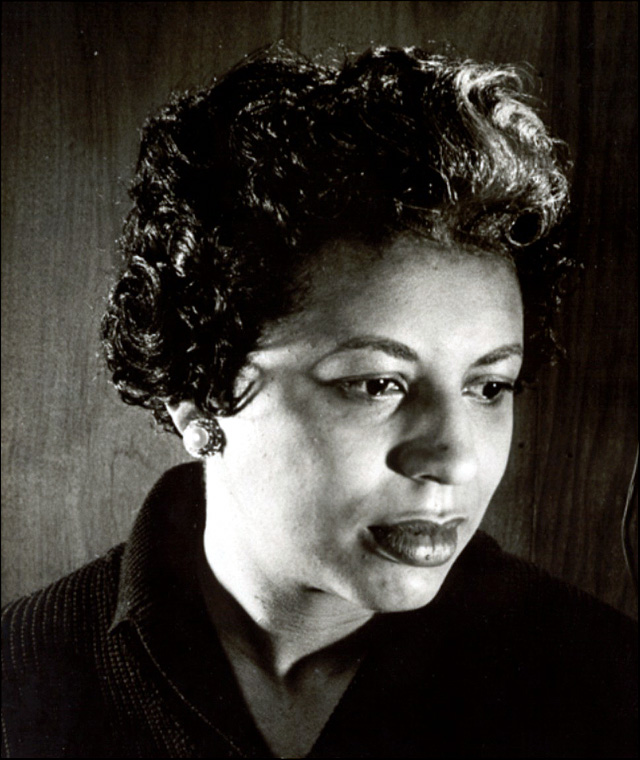
Mary E. Townsend
In 1965, Townsend joined KU’s faculty. Within a few years, she climbed from assistant professor to tenured faculty member in the department of psychology. It was a unique step, given that Townsend’s degree was in social work.
“I think that people felt that it was pretty unusual that she got tenured, especially in the psychology department as an assistant professor,” said Raymond Higgins, KU psychology professor. “It clearly was unprecedented.”
Howard Baumgartel, professor emeritus of psychology, said the department was politically liberal at the time and valued Townsend’s contributions.
“She was highly valued by the clinical program in the psychology department and the whole department,” he said. “She performed. She earned everything she got.”
Townsend later turned to administration, leading what is now the Office of Minority Affairs from 1974 to 1982.
She transformed the office from a gathering place for black students to an enrichment center, with programming, counseling and advising.
“She’s the one that really developed the Office of Minority Affairs,” said Robert Page, the office’s current director.
In the post, she stood up for her students, pressing the university to build and support programs for minority students.
“They were just in the early stages of their development and they definitely needed more resources, and she was a strong proponent,” said Del Shankel, executive vice chancellor for the Lawrence campus from 1974 to 1980. “She represented her constituents quite well.”
In her later years, Townsend tackled her book about the women of the Bible.
It was a gift she wanted to give to the world, and the making of it showed progress, Graham said. A white KU student assisted Townsend, whose eyes were failing, with the completion of the book.
“At the end of her life, something was possible that was not possible when she was young,” Graham said of the collaboration between the black author and white assistant.
KU American studies professor Bill Tuttle said Townsend’s path was not an easy one.
“She was a pioneer, but she did it with such grace,” he said.
KU
KU professor hopes ‘average places’ postcard project helps people connect to Langston Hughes’ Lawrence upbringing

KU professors would be limited in how they could present the idea of systemic racism in future classes

The annual summer solstice tour of the KU Native Medicinal Plant Garden will be held later this month

KU Homecoming parade to return to campus after seven-year absence
‘Backyard’ allows even more fans to cheer on Jayhawks
