Modern-care concepts born in Civil War hospital museum
Sharpsburg, Md. ? Visitors to the Antietam National Battlefield often come knowing about the deaths. Starting this spring, they can learn how lives were saved by modern medical concepts pioneered at the Civil War site.
Efficient systems for sorting and transporting patients and managing medical supplies can be traced to a red-brick farmhouse at the battlefield’s eastern edge where Union surgeon Jonathan Letterman oversaw the care of thousands of soldiers wounded on the bloodiest day of the war.
The building comprise the Pry House Field Hospital Museum. Run by the National Museum of Civil War Medicine in nearby Frederick, it achieves a long-held goal of the National Park Service.
“We’ve never been able to do an adequate education on the medical care that was here,” park Superintendent John W. Howard said. “It’s a great opportunity to bring that part of the interpretive story into the light, where it will get the attention it is due.”
Letterman, born in Washington, Pa., was director of medicine for the Army of the Potomac. He is known as the father of modern battlefield medicine for revamping the Army Medical Corps. The blueprint for the reorganization was Letterman’s report on the Battle of Antietam, also known as the Battle of Sharpsburg, fought Sept. 17, 1862, on rocky farm fields about 60 miles west of Baltimore. There were nearly 23,000 casualties – including about 3,700 killed, 17,300 wounded and 1,800 captured or missing.
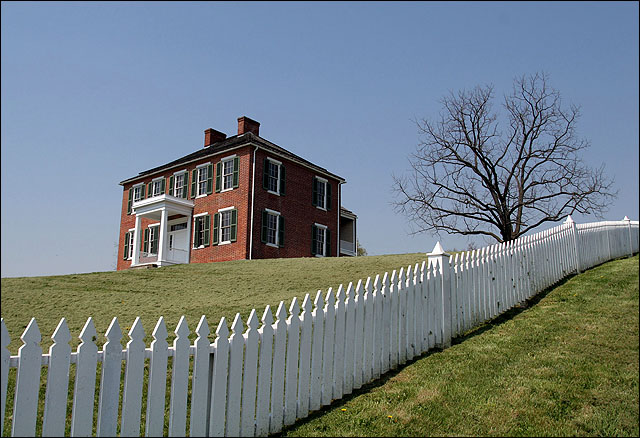
The historic Pry House, in Sharpsburg, Md., recently opened to the public as the Pry House Field Hospital Museum. It is operated by the National Museum of Civil War Medicine.
Letterman prepared for the battle by setting up field-dressing stations next to the battlefield, field hospitals in nearby barns or houses, and large hospitals in surrounding towns. During and after the 12-hour engagement, horse-drawn wagons driven by the nation’s first ambulance corps carried the wounded to the field-dressing stations, where bandages and tourniquets were applied and patients were sorted according to the severity of their injuries.
Considering the magnitude of the battle, “it is a matter of congratulation to speak of the expeditious and careful manner in which the wounded were removed from the field,” he wrote.
Letterman’s triage system for sorting patients is still used today, and his multitiered treatment concept is the model for modern emergency care. Letterman also devised a supply chain for bandages and medicines that allowed military brigades to travel lighter and with less risk of losing or wasting medical supplies.
“What he set up as a medical system still affects military medical care and civilian medical care to this day,” said George Wunderlich, executive director of the National Museum of Civil War Medicine.
Arts and Entertainment

Lawrence Music Alliance to sponsor live music acts ahead of select World Cup watch parties

11 Douglas County creatives to participate in pop-up market in Kansas City’s Union Station during World Cup
Photos: Lawrence begins World Cup festivities with downtown block party
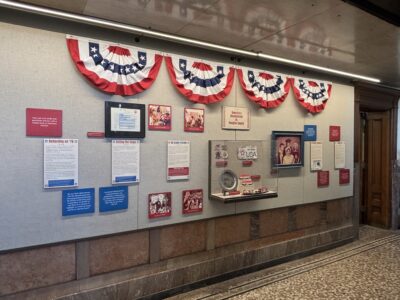
Watkins Museum to open special exhibit detailing how Douglas County celebrated America’s Bicentennial

Go, See, Do: Kaw River Roots Festival, markets and more