

KU helps lead way on state’s goal to boost biosciences
Topeka ? From work on male birth control to developing treatments for cancer, Kansas University’s bioscience effort is improving, officials say.
“I think things are definitely happening,” said Charles Decedue, executive director of the Higuchi Biosciences Center.
KU’s federally funded science and engineering research expenditures at both the Lawrence campus and KU Medical Center were $102 million in 2004, up from $91 million in 2003 and more than double the $42 million in 1996. Life sciences research accounts for about 75 percent of that amount, KU officials said.
The school has had some healthy news on the bioscience front recently.
In June, the National Institutes of Health awarded $7.9 million to develop an oral contraceptive for men.
And late last year, KU dedicated a $1.9 million nuclear magnetic resonance spectrometer – a huge magnet with a force 200,000 times stronger than the Earth’s gravitational pull.
Housed in a $10.2 million Structural Biology Center on west campus, the magnet will be used to study proteins that have been cited in cancer, which may help researchers gain insights into causes of the disease.
In addition to an increase in research funds, KU is making new hires to establish a base of young science faculty, Decedue said.
“The increase in young faculty will have quite an impact. That is going to help research and instruction by providing a broader variety of instruction,” he said.
Tuition increases over the past three years have gone to make up for the decreasing share of state funding, and to improve projects and financial aid, officials have said.
Forty-two new faculty members have been hired during the 2004-2005 school year, and 100 will be hired in the next couple of years.
The new positions have been spread throughout the university, but an emphasis has been placed on life sciences, purchasing lab equipment and hiring research assistants.
The state has also embarked on an ambitious plan to plow $500 million of captured taxes back into bioscience research and development.
And KU is constructing a $40 million Multidisciplinary Research Building that will be occupied by geologists, engineers, biologists, pharmacists and chemists.
But officials say there are some problems that could hamper the bioscience effort.
Hearings this year by the State Board of Education that showcased criticism of evolution instruction in public schools put the state under the national microscope.
Mainstream scientists boycotted the hearings, and many scientists at KU criticized conservative board members, saying they were creating an image of Kansas that was unfriendly to serious scientific research.
And there are signs that flat appropriations from Congress for research may be losing ground to inflation.
But Decedue said KU was in position to play a big role in bioscience, especially through the development of new faculty.
“Now the challenge is to keep them here,” he said.
KU
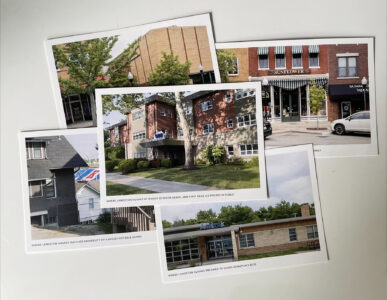
KU professor hopes ‘average places’ postcard project helps people connect to Langston Hughes’ Lawrence upbringing
KU professors would be limited in how they could present the idea of systemic racism in future classes

The annual summer solstice tour of the KU Native Medicinal Plant Garden will be held later this month

KU Homecoming parade to return to campus after seven-year absence
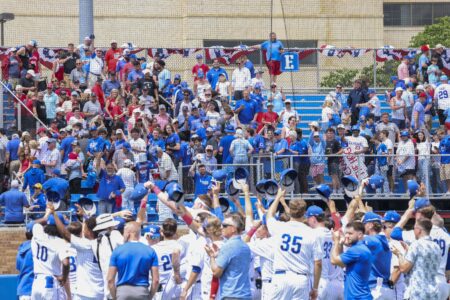
‘Backyard’ allows even more fans to cheer on Jayhawks
