

It’s too late
'Procramstination' is hazardous to your health
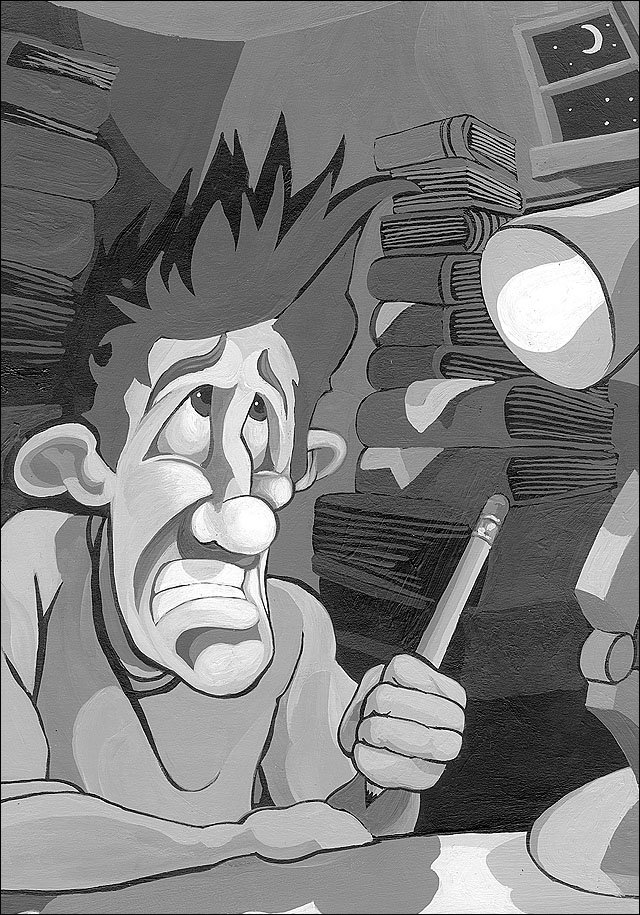
Staying up all night to finish an English paper or study for a math test is an all-too-familiar scenario for Dustin Reynolds.
The KU sophomore from Wichita said he would look for just about anything to do as a means to procrastinate.
“I’ll look on the Internet or go out and find something to do – as long as it’s not homework,” Reynolds said.
Although students may make light of procrastination and joke about waiting until the night before to start working on an assignment, procrastinating can lead to unwarranted stress.
“It’s sort of a sneaky sort of stress. They feel it even while they’re putting off what they have to do,” said Pam Botts, associate director of clinical and psychological services at Watkins Health Center. “They can be kind of depressed or anxious, but it may not be apparent that it is related to putting things off.”
The counseling and psychological services offered at KU can help students find a way to deal with stress caused by procrastination and cramming.
“They are generally feeling overwhelmed, like they are in a hole they just can’t get out of,” Botts said. “That’s one of the things our office can help with, is helping people take a step back, get a different perspective on their situation and then develop a plan.”
“One thing is to just make a list of all the things,” she said, “and break those tasks down into small steps.”
For some college students the effects of procrastination go beyond high levels of stress and anxiety.
Reynolds said he once put off turning in a paper for an entire month after it was due. “I eventually had to turn it in, because the teacher told me I would fail the class if I didn’t.”
Reynolds’ situation is common.
“Very frequently they just stop going to class because they think it’s hopeless,” Botts said.
Procrastination and late-night cramming can also lead students to develop poor eating habits.
“When a student is stressed, sometimes they turn to food to soothe their emotions,” said Ann Chapman, a registered dietitian and coordinator of nutrition services at Watkins. “Food is even used as a way to procrastinate.”
Chapman said students could avoid overeating while studying by separating food from their homework.
“I would plan some built-in study breaks about every three hours and plan a snack into it. Planing a snack is always a better way to go,” she said.
“It’s a good idea to take an exercise break as well,” Chapman said. “It doesn’t have to be any big deal, even if you just get up for five minutes and walk around or do some stretching.”
When faced with late-night cramming, students will often turn to stimulants to keep them awake and alert while studying.
Caffeine is the most accessible stimulant for most college students, and the overuse of caffeine can lead to even more trouble.
“In moderation it’s not a particular problem, but if they are drinking three pots a day, that’s a problem,” Botts said.
The overuse of caffeine can also disrupt a student’s sleeping habits.
Botts said, “Sometimes they sleep too much or not enough. If the sleep becomes disregulated, it becomes even harder to sleep.”
Botts suggests around eight hours or less for most people, but she said that nine is better for students.
KU

KU professors would be limited in how they could present the idea of systemic racism in future classes

The annual summer solstice tour of the KU Native Medicinal Plant Garden will be held later this month

KU Homecoming parade to return to campus after seven-year absence

‘Backyard’ allows even more fans to cheer on Jayhawks

Dole Institute of Politics announces summer lineup celebrating America’s 250th anniversary
KU Hospital Authority says CVS stole nearly $62M in drug savings
The University of Kansas Hospital Authority is suing CVS and its subsidiaries, alleging the mega pharmacy company ...