

Campus ban on military recruiters won’t affect KU, Baker University
A recent court ruling has opened the door for universities to ban military recruiters from visiting campus.
But don’t expect any changes at Kansas University or Baker University.
Officials at both universities said having military recruiters on campus, like having job recruiters, gave students another option for their post-university life.
“We’ve not had any problems, not in recent years or in my memory,” said Ann Hartley, associate director of Kansas University’s Career Center.
Ric Anderson, a Baker spokesman, agreed.
“We don’t anticipate this will change the policy any,” he said. “I’m told we’ve never turned away a military recruiter.”
The change in law came after a ruling late last month by the U.S. 3rd Circuit Court of Appeals in Philadelphia. The ruling invalidates a decade-old — but only recently enforced — federal law requiring universities to give the military the same access to students as other recruiters, or forfeit their universities’ eligibility for federal research funds.
The Pentagon began strictly enforcing the measure in 2002. But some universities complied under protest, saying since gays couldn’t serve openly in the armed forces, granting formal access to Pentagon recruiters violated the schools’ policies forbidding on-campus recruiting by employers who discriminate on the basis of race, gender or sexual orientation.
The court ruled 2-1 that the law was an unconstitutional violation of the schools’ free speech. The ruling affects only the 3rd Circuit, but the issue may be expanded if the ruling is appealed.
“We’re simply applying the same rules to military recruiters that we would apply to any other recruiter,” said Kent Greenfield, a Boston College law professor who was active in creating the consortium of law schools that brought the lawsuit challenge. “We’d say the same thing if they only wanted white students or they only wanted men.”
A dissenting judge argued the law merely deprived the schools of money, not free speech, since nothing prevents the schools from continuing to protest the Pentagon’s policy.
The Justice Department has not indicated whether it will appeal, and several law schools said this week they still were considering how to proceed. But Harvard Law School has announced it will revert to its previous policy of banning the military from formal recruiting access, and other law schools are likely to follow.
Although the legal battle focused on Air Force Judge Advocate General Corps at law schools, the ruling applies to colleges in general.
Tom Luzader, director of Purdue University’s Center for Career Opportunities and president of the National Association of Colleges and Employers, said most career services offices that have nondiscrimination policies hadn’t applied them to the Pentagon, and he did not expect many to start. Still, they may face pressure to do so.
“It’s going to make for some very interesting debate at a lot of institutions, I’m sure,” Luzader said.
Opponents of the law said this week they doubted the ruling would impede the military’s efforts to recruit top students.
They point out that, before the law was enforced, military recruiters weren’t strictly banned and many law students became JAGs; recruiters still could interview students off-campus, or be invited on campus by students or student groups. The schools only refused to facilitate presentations and interviews.
Dean Harold Krent of the Chicago-Kent College of Law, a plaintiff in the case, said he believed military recruiters would actually fare better now because the law that was struck down — known as the Solomon Amendment — offended many students and was bad publicity for the military.
KU
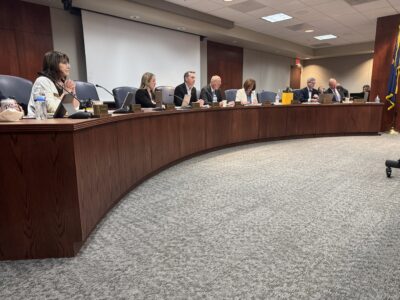
KU professors would be limited in how they could present the idea of systemic racism in future classes

The annual summer solstice tour of the KU Native Medicinal Plant Garden will be held later this month

KU Homecoming parade to return to campus after seven-year absence
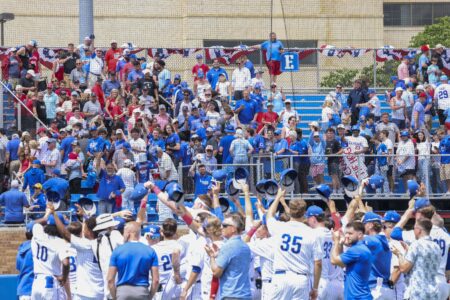
‘Backyard’ allows even more fans to cheer on Jayhawks

Dole Institute of Politics announces summer lineup celebrating America’s 250th anniversary
KU Hospital Authority says CVS stole nearly $62M in drug savings
The University of Kansas Hospital Authority is suing CVS and its subsidiaries, alleging the mega pharmacy company ...