

Residence halls adjust to meet electronic needs
Curtis Sample chuckles as he leans back on a comfortable couch and watches his roommates play Super Tecmo Bowl on their big-screen television.
The Belmont Stakes is playing on a smaller television next to the large one, and a baseball game is playing on a third TV. The fourth television is turned off — for now.
Sample, a third-year law student from Lenexa, and his four roommates frequently relax on their stadium-seating-style elevated couches while watching all four TV sets. They also have a stereo receiver, five video game systems, a few VCRs, a DVD player, CD player and a Pac-Man joystick console.
That’s just in the living room.
“If I don’t have 30 things to plug in,” Sample says, “I don’t feel at home.
“If you look behind our TV right now, it looks like somebody jacked a Best Buy wiring department.”
Sample and his roommates share a two-story house in Lawrence, so they have enough room to hold their arsenal of electronics, but nowadays students at Kansas University are cramming similar amounts of electronics into their residence halls.
KU has had to make adjustments to adjust to the times.
When KU’s residence halls originally were constructed, the top electrical priority was having the ability to plug in a lamp to study under late at night.
Lamps still are important to students at KU, but with an abundance of permanent light fixtures throughout the residence halls, students are using electrical outlets to plug in their latest accessories.
A television set, stereo, VCR, DVD player, game systems, alarm clocks, George Foreman grills, palm pilots and cell-phone chargers constantly are competing for outlet space.
Sample understands those struggles. Although he has an abundance of space for his electronics now, he lived in Templin Residence Hall from 1997 to 1999 after it was renovated, and had to pick and choose what to plug in with limited space.
His four-person suite contained two 27-inch television sets, a basic stereo system, VCR and four computers plugged into a cable Ethernet hub.
“You’ve got to have a decent TV, CD changer and stereo definitely,” Sample said of the modern college residence hall. “You still use a VCR occasionally. You’ve got to have a DVD player, and everyone has computers.”
Since building most of its residence halls in the early 1960s, KU has been forced to undergo renovations to meet students’ changing needs. Ken Stoner, director of student housing, said the dorms initially didn’t have telephones, let alone TV sets.
The university has been remodeling dorms for the past eight years, turning rooms into suites and adding additional electrical outlets. More on-campus computer labs also have been built.
“As you do renovations, you have to bring in additional wiring, high-speed Internet connections, fiber cable,” Stoner said. “All that stuff is pretty significant. It just changes the way you do business.”
Stoner said the increased use of electronics didn’t necessarily equate to drastically higher electric bills. He said modern appliances that feature energy-saving devices have helped keep costs down.
“In some ways, people have a lot more electronical stuff,” Stoner said, “but they are a lot more energy efficient. Some appliances draw less energy than they used to, so in terms of overall electrical usage it hasn’t grown as much as you might think.”
The idea of extension cords stretching across floors concerns Stoner, but he said that wasn’t usually a problem. He said surge protectors with multiple outlets are safe for plugging in multiple cords without greatly increasing the risk of a fire. In fact, built-in surge protectors are included in the wiring of many residence halls during renovations.
Sample said KU has done all it could do to meet students’ electronic needs and be safe, although he admitted for some students — such as himself — you can never have too many outlets.
“I wish I’d bought stock in surge protectors because it seems like everybody has at least five in their rooms,” Sample said. “A lot of people just have too much stuff to plug in, so you have surge protectors plugged into surge protectors. But they put in about as many outlets as you reasonably could expect them to. When you put one every six feet, what more can you do?”
KU

KU professors would be limited in how they could present the idea of systemic racism in future classes

The annual summer solstice tour of the KU Native Medicinal Plant Garden will be held later this month

KU Homecoming parade to return to campus after seven-year absence
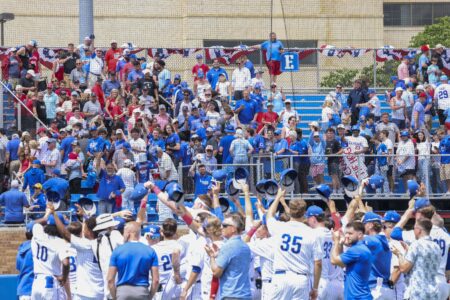
‘Backyard’ allows even more fans to cheer on Jayhawks

Dole Institute of Politics announces summer lineup celebrating America’s 250th anniversary
KU Hospital Authority says CVS stole nearly $62M in drug savings
The University of Kansas Hospital Authority is suing CVS and its subsidiaries, alleging the mega pharmacy company ...