

Program trains professionals to treat children holistically
A contract between Kansas University and the state of Kansas provides training opportunities for people serving children with developmental disabilities and behavior issues.
“We’re giving the training to people doing the front line work with the children,” said Jennifer Zarcone. She is a research assistant professor for KU’s Life Span Studies and a research assistant professor for the department of psychiatry and behavioral sciences at KU Medical Center.
In its third year, the Kansas Institute for Positive Behavior Support has trained about 15 people and is in the process of training more. The program is funded through the Kansas State Department of Social and Rehabilitation Services.
The program instructs professionals on how to treat children holistically, rather than just treating a particular behavior problem.
“I think it’s been a great benefit in providing services to children with needs,” said Margaret Zillinger, director of community supports and services for Kansas SRS. “KU has been excellent to work with. It’s been a very positive experience for us.”
Zillinger said about three years ago, Dr. Robert Day, former Medicaid director for Kansas SRS, contacted professors at KU about setting up the program.
Zarcone said Day contacted Rachel Freeman, an assistant professor at the Life Span Institute. Freeman asked Zarcone, who mainly does clinical research, if she would be interested in helping.
“It’s been really cool and rewarding to be involved,” Zarcone said. “We now have this network across the state of people interested in still being involved with the program. People seem revitalized in their jobs. It’s been great just to help build the program from the ground up.”
Zarcone said people have the opportunity to take the course in Parsons, Lawrence, Wichita and Hays.
Michael Deegan, a Kansas SRS liaison for the project, said people interested in the program have to go through an eligibility check before they can begin the class.
In its third year, 15 people have gone through the training and 25 are currently in the class, which takes about a year.
“The training is set up like a graduate-level class,” Zarcone said. She said instructors and students meet once a month. A lot of the coursework is done online and by assigned reading.
“The program has proved effective in serving people in homes and their communities,” Deegan said.
KU
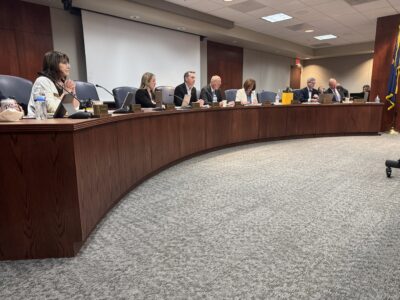
KU professors would be limited in how they could present the idea of systemic racism in future classes

The annual summer solstice tour of the KU Native Medicinal Plant Garden will be held later this month

KU Homecoming parade to return to campus after seven-year absence

‘Backyard’ allows even more fans to cheer on Jayhawks

Dole Institute of Politics announces summer lineup celebrating America’s 250th anniversary
KU Hospital Authority says CVS stole nearly $62M in drug savings
The University of Kansas Hospital Authority is suing CVS and its subsidiaries, alleging the mega pharmacy company ...