

Interim dean plans to keep curriculum moving forward
Ann Brill is only temporarily in charge of the Kansas University School of Journalism and Mass Communications.
But that doesn’t mean she’ll shy from implementing her own ideas during her one-year stint as interim dean.
“When the provost asked me to do this, I asked him, ‘Do you want somebody to keep a chair warm or are you willing to keep the program moving forward?'” Brill said. “And he said he wanted things to move forward.”
Brill, 50, replaces James Gentry, who is returning to full-time teaching and research after seven years as dean.
Brill came to KU in 2000 after teaching eight years at the University of Missouri-Columbia. She also has worked for newspapers in Minnesota, Wisconsin and Montana.
She has been serving as associate professor and chairwoman of the news and information sequence at the school.
KU officials conducted a national search last year for the dean’s position. Will Norton, dean at the University of Nebraska journalism school, was announced as the lone finalist but later withdrew his name from consideration.
The search will continue this fall, and Brill, who started July 1, said she hasn’t ruled out being a candidate for the full-time position.
“I don’t know,” she said. “I’m still getting a feel for this job. I love teaching and I love being a reporter and an editor. This is a great opportunity for me. I get to try it out.”
Busy year
In addition to the dean search, this likely will be a busy year for the school.
This fall, students for the first time will have accessed to a “converged” newsroom in the Dole Human Development Center. Crews are completing construction on the newsroom, which will offer a combined space for KJHK radio, KUJH-TV and the University Daily Kansan staffers to operate.
The newsroom will offer a working environment that mirrors the school’s newly implemented curriculum, which teaches students skills in various media to prepare them for a changing industry. Brill said students likely will dictate workflow in the newsroom.
“When people say, ‘How’s it going to work?’ we say, ‘That’s what we’re going to find out,'” she said.
Another new facility, the John Bremner Editing Center, also will open this fall in the school’s home, Stauffer-Flint Hall. The center is named for a former faculty member who died in 1987.
The school also will open four new computer labs using a $12-per-credit-hour fee charged to students for the first time this fall.
The center will include written resources as well as faculty and graduate students to help students learn writing skills such as proper grammar, punctuation and Associated Press style.
Brill also will oversee the school’s spring accreditation visit from the Accrediting Council on Education in Journalism and Mass Communications. The school is accredited every six years.
She also will continue school traditions such as Editor’s Day Sept. 25, which brings in newspaper leaders from across the state, and William Allen White Day Feb. 11, which will feature a speech by Gerald Seib, a KU graduate and Washington bureau chief and columnist for the Wall Street Journal.
Reputation
Some journalism alumni have complained in recent years that the school has lost its edge, and that some students have lost a sense of hard news because of the converged curriculum.
Brill attributed that hurt reputation, in part, to a vacant faculty position for copy editing and a slumping economy, which made it difficult for students to get jobs in recent years. That faculty position is being filled this fall by Doug Ward, a former New York Times editor.
“It’s a concern if it’s a perception,” Brill said. “But the perception is different than the reality. We’re at the forefront of cross-curriculum.”
KU
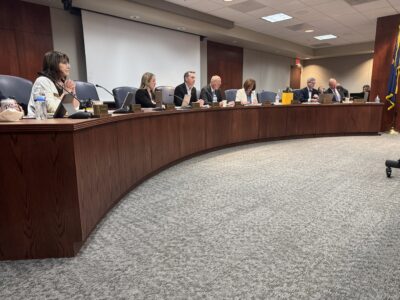
KU professors would be limited in how they could present the idea of systemic racism in future classes

The annual summer solstice tour of the KU Native Medicinal Plant Garden will be held later this month

KU Homecoming parade to return to campus after seven-year absence
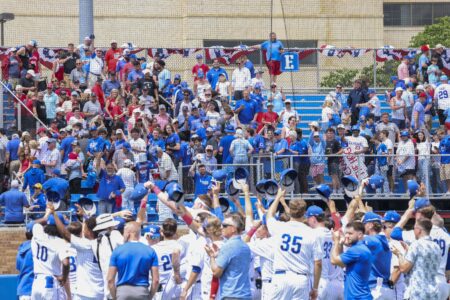
‘Backyard’ allows even more fans to cheer on Jayhawks

Dole Institute of Politics announces summer lineup celebrating America’s 250th anniversary
KU Hospital Authority says CVS stole nearly $62M in drug savings
The University of Kansas Hospital Authority is suing CVS and its subsidiaries, alleging the mega pharmacy company ...