Supreme Court to review new issues
Washington ? The Supreme Court opens its new term today and is set to consider whether states may refuse to pay for religious teaching and whether employers may refuse to hire reformed drug users.
The justices will hear 45 cases this term, including 10 that were granted review last week. Waiting in the wings are more appeals that could be added to the docket for this year’s term — including the dispute over the words “under God” in the Pledge of Allegiance and Washington’s move to strip doctors in California and Arizona of their right to prescribe drugs if they recommend marijuana to sick patients.
Potentially one of the most significant of the pending cases is a religious-rights dispute from Washington state. The case could have a wide effect on government funding of church-related schools, day care centers or social service programs. At issue is whether states must pay for church-related teaching on the same basis as other private and public schools.
Joshua Davey was turned down for a state scholarship because he was preparing to be a minister. The state Constitution in Washington, like that in 36 other states, includes a strict ban on using taxpayers’ money to pay for religious teaching.
“No public money or property shall be . . . applied to any religious worship, exercise or instruction,” says the constitution of Washington.
But the 9th U.S. Circuit Court of Appeals ruled the First Amendment requires the state to give Davey the scholarship. Bush administration lawyers agreed, urging the court to say the state cannot “single out religion for discriminatory treatment.” If the justices agree as well, it would boost the drive for school vouchers in several states and give church-run programs an equal claim to state support. The case, Locke vs. Davey, will be argued on Dec. 2.
A pair of job bias cases will test the frontiers of worker’s rights. In the first, the court will decide whether a company may refuse to rehire a worker who had used drugs in the past. Joel Hernandez, a veteran technician, quit his job with the Hughes Missile Systems in Tucson, Ariz., because he was using drugs. Three years later, after completing a recovery program, he reapplied for his job, but was rejected.
Last year, the 9th U.S. Circuit Court of Appeals said the company’s policy of not hiring former drug users violated the Americans With Disabilities Act. The 1990 law says current drug users and heavy drinkers cannot claim to have a disability. However, it also says recovered addicts cannot be discriminated against for their past use of drugs or alcohol.
On Wednesday, the court will hear the company’s appeal.
Major cases
Here are other key cases to be heard by the Supreme Court this fall:
- Police questioning: May police detectives question suspects first and warn them of their right to remain silent only after they have confessed? The case is one of four that test the warnings required under Miranda v. Arizona. (Missouri v. Seibert)
- Disabilities: Can a person in a wheelchair sue the state for discrimination if he cannot reach a second-floor courthouse that has no ramp or elevator? The state says it is shielded from such suits. (Tennessee v. Lane)
- Age bias: May employers offer special retirement benefits to older workers, but not to those who are in middle age? No, ruled an appeals court in the Midwest in the first ruling that upheld a claim of “reverse age discrimination.” (General Dynamics v. Cline)
- Partisan gerrymandering: Can state lawmakers draw congressional districts in a way that ensures their party will win most of the seats? The practice is being challenged as unconstitutional in a Pennsylvania case. (Vieth v. Jubelirer)
Public Safety

Perry-Lecompton school district implements AI gun detection technology to protect students and staff from threats
Man convicted of battery against Douglas County corrections workers dies at El Dorado facility
A man convicted of battery against three Douglas County corrections workers died in his cell at the El Dorado ...
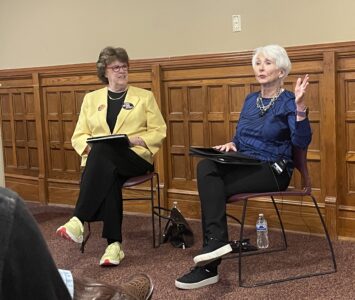
‘If it ain’t broke, don’t fix it’: Retired Judge Sally Pokorny tells residents why she opposes electing Supreme Court justices
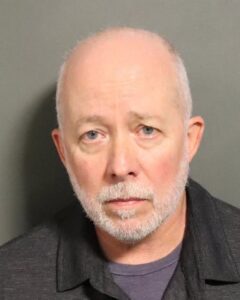
Lawrence police seek info on alleged child sex crime involving former teacher; incident occurred over 25 years ago
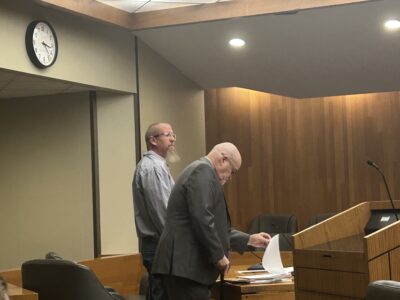
Lawrence sex offender facing 20 years in prison sentenced to three years of probation