Opinion: Rebuilding civic trust in Kansas
Along with a few of my academic colleagues, I organize our university’s Constitution Day event around Sept. 17 — the anniversary of the completion of the proposed U.S. Constitution at the end of the Constitutional Convention in 1787 — each year. Constitution Day doesn’t get the attention which Independence Day receives every July 4, but historically it has nonetheless served as an important opportunity to teach students about the history of, and about challenges to, the constitutional principles which form the basis of our system of government. One of those principles which receives even less attention than most is, very simply, civic joining.
The Constitution says nothing about citizen obligations to join or contribute to a church, a community organization, a social club, a political party, or any of the like. (The First Amendment includes the “right to assembly,” but that’s a guarantee that you are free to start or join a group, not that you have the responsibility to do so.) And yet, historical research and social science show that the importance of such civic joining to the American experiment is indisputable.
This year at Friends University we decided to show the film “Join or Die” and hold a discussion about the movie afterward. It focuses on the work of Robert Putnam, whose classic diagnosis of America’s civic health from nearly 30 years ago is, unfortunately, still very relevant. Putnam argued that American individualism, abetted by technology, has become pathological, with many of us entertaining ourselves entirely alone (the title of his book “Bowling Alone” came from the fact that bowling remains very popular, but is now overwhelmingly done singly or in close friend groups, rarely as part of a league or team), and engaging those with whom we disagree mainly via anonymous online attacks, with little of the outreach that makes compromise possible.
When Nancy Kassebaum, the famed three-term U.S. senator from Kansas, died at the age of 94 in August, the common denominator in every tribute written to her was ability to work constructively with anyone, even in the face of deep disagreements. How are civic skills and dispositions like this — the sort of patience and tolerance which engenders trust and thus “social capital” — truly cultivated? Putnam argued that we learn them best in groups.
By being active in organizations, associating with one’s neighbors, and working together on common projects across social divides, the essential tools of collective self-governance are developed. The world of the Founders in the late 1700s was thick with such associations, and so was America as a whole throughout the life of Kassebaum, who started her career as mother defending the interests of her children on the school board in Maize, Kansas, in the early 1970s.
Over the past half-century however, many of the places and practices wherein this kind of indirect civic education occurred have shrunk, been outsourced, or disappeared. Sometimes this is because global capitalism has corporatized what were once local businesses; sometimes it is because regional austerity measures have strangled sources of public funding; and sometimes our own privatized commercial habits have robbed public places of their ability to operate and thus provide space for people to interact. Local Kansas writers have reflected in recent years on the loss of parks and pubs that provided civic spaces in our cities and towns; reversing those trends will require not just policy-level changes, but personal ones as well. No one single reform — and certainly not one single film — can complete the job, but we have to start somewhere.
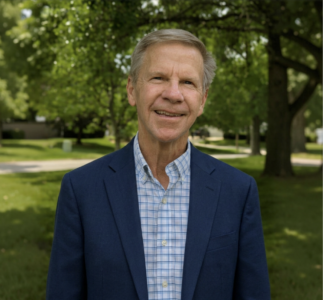
— Russell Arben Fox teaches politics at Friends University in Wichita.
Local Columns

Opinion: Lawrence deserved more from its Congressman at Saturday’s candidate forum
Opinion: Kansans don’t want political theater
Spend enough time around Kansas coffee shops, grain elevators or school board meetings and you’ll hear a familiar ...
Opinion: The Lawrence man seeking to break the power of Republican, Democratic parties this election
Opinion: Will Kansas Republicans weather this year’s political storm?
Will Kansas Republicans take back the governor’s office? Can they hold the Senate seat for another six years? ...

Opinion: KU faculty, staff should be nervous about the new spending rules proposed for college athletics