
Opinion: I hate No. 6, but I love the idea that horse racing could produce new winners in rural Kansas
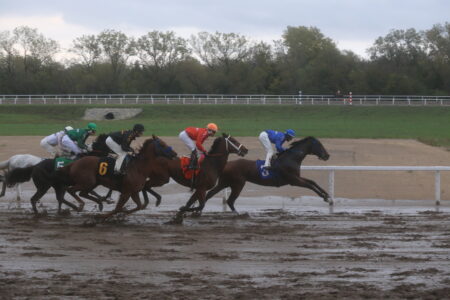
photo by: Chad Lawhorn/Journal-World
Race horses are pictured at Kansas' Eureka Downs on Nov. 1, 2026.
Everything that goes around comes around — just not always in the correct order.
That was proven on Sunday by the blankety-blank No. 6. The horses indeed went all the way around the track at Eureka Downs, but I never could quite get them to come around in the right order. I lost a $1 trifecta bet that would have paid me approximately $100 if the blankety-blank No. 6 horse hadn’t beaten the No. 7 for third by a neck.
I try to find comfort by telling myself if I had been playing horseshoes instead of horse racing, I would have at least won a point for that one. It didn’t work. I still hate the blankety-blank No. 6.
But I got over it soon enough for one simple reason: Eureka Downs is in Kansas.
It had been 16 years since I or anyone else had been able to lean on a rail of a Kansas race track to watch and bet live horse racing. Changes in state law, though, have made it possible again.
Opinion

Chad Lawhorn
Editor & Publisher
Have your own take? Send 250 words or less to letters@ljworld.com.
Have a column idea or a tip for Chad to investigate?
Send a message to clawhorn@ljworld.com.
Sunday was the last of six days of live racing at Eureka Downs, which is located less than a two-hour drive from Lawrence in the small town — population approximately 2,200 — of Eureka, which is an old Flint Hills spot between Emporia and El Dorado.
The town and the racetrack go hand-in-hand. There’s been a horse track on this patch of prairie since the late 1800s, and in parts of the 20th century, Eureka Downs was one of the most significant racetracks in America for Quarter Horse racing. Since 2009, though, the track and surrounding barns, grandstand and clubhouse have been largely idle.
That changed three weekends ago. Live races were held on Saturdays and Sundays for three consecutive weekends. Attendance numbered between 2,000 to 3,000 people each day. On Sunday, I parked two blocks away and added to the click-clack cacophony of cowboy boots hoofing it along a city street.
“It has been amazing,” Stacy Randle, secretary of the Greenwood County Fair Association — owner of the track since 1903 — told me of the return of racing to Eureka. “It is a dream come true for those of us who have lived here and saw it run in its heyday.”
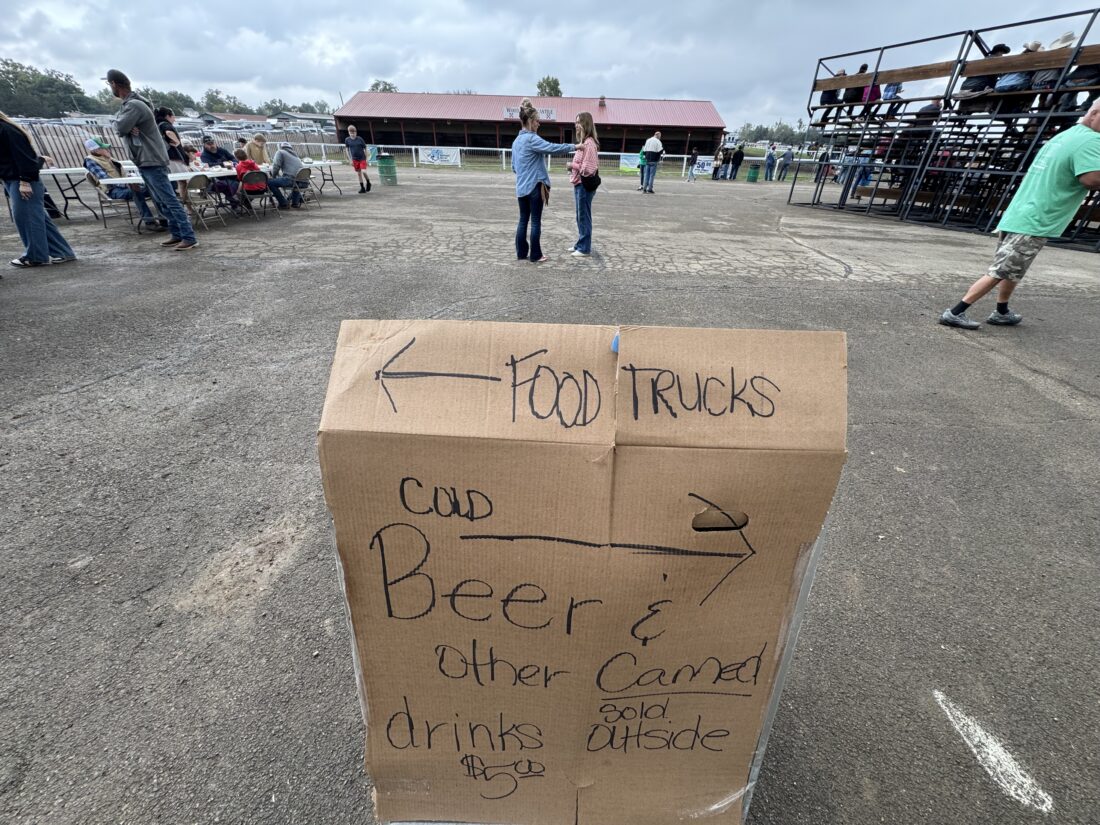
photo by: Chad Lawhorn/Journal-World
A makeshift sign points visitors to amenities at Eureka Downs on Nov. 1, 2026.
Indeed, there were plenty of sights of success. There were lines at the betting machines. The food trucks in the paddock were busy. There was excitement along the rail. There were neighbors — many with kids in tow at this facility that feels more like a rambunctious county fair than a casino — catching up with the aid of lawn chairs and beverages.
But perhaps the best sight of success was that the races were full of horses. Randle told me there were more horse owners wanting to run at Eureka Downs than the track was able to accommodate for this year’s meet. The reasons why are simple to understand: Prize money and a brand new dirt racing surface that now rivals the best in middle America.
Those two reasons may not be exactly equal. The prize money is a big deal. Of the 10 races on Sunday, seven of them had purses greater than $20,000. The more eye-popping number is this: Over the six days of racing, Eureka Downs distributed $1.2 million of prize money.
Here’s what I find really interesting: That $1.2 million came from the big city and made its way to a small town. State law has set horse racing in Kansas to be funded by a special type of gambling machine — basically a type of slot machine that uses historic horse racing results to determine winners — that currently are only in operation at a Wichita-area casino. The state takes a percentage of the revenue from those machines and distributes it to the state’s horse racing industry.
Even if you are not a fan of gambling, perhaps there is a part of you that can like the idea of the small guy getting a piece of the winnings. I do because I believe small Kansas towns deserve more than they’re getting. But I know in big cities like Lawrence there are plenty of people who believe horse racing is a cruel way to provide it. Indeed, the six day meet did produce one horse fatality, D.J. Lopez, lead regulator with the Kansas Racing and Gaming Commission told me. That’s one too many, everyone would agree. After that, the views diverge significantly — some saying it is a reason to shut it all down and others saying it is an example of how rural and urban folks often value life and risks differently.
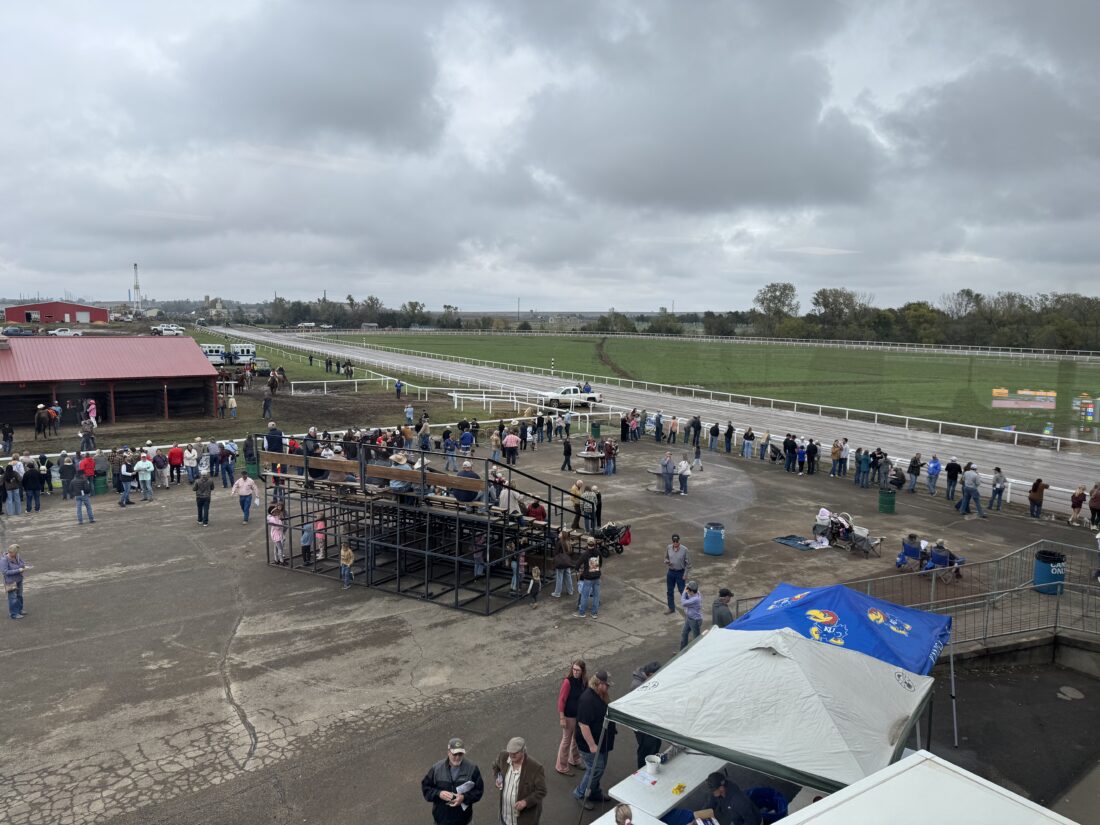
photo by: Chad Lawhorn/Journal-World
Kansas’ Eureka Down horse racing track is pictured on Nov. 1, 2026.
The sport might be a decent vehicle for illuminating the many differences between rural and urban America. Big city eyes may not have made much of the commerce that was on display in Eureka on Sunday. The local Pizza Hut was selling slices left and right at the track concession stand, locals were staffing merchandise booths, the feed store had a whole lot of bags going out the door to satisfy animals that really do eat like a horse.
These six days of racing have been a big deal for this town, which is the type that has a race track on one end of the street, its high school on the other and a livestock auction barn in between the two. But Randle believes the future will be even bigger. State law allows up to 40 days of racing per year. This year there were six. Next year there will hopefully be twice that amount, and so on.
The track also intends to be open throughout most of the year to serve as a training ground for racing operations. The hope is that multiple horse breeders and trainers will decide to locate near Eureka due to track availability and a central location, bringing year-around money. It is a viable plan to attract new business, and those don’t come a dime a dozen in rural America.
The part I may love the best about it, though, is that it is impossible to get to Eureka without going through a whole lot of small towns. I went through small towns of Olpe, Madison and Hamilton, where some city streets still have gravel and the industrial park might be a pile of rusting, steel casing for the nearby oil wells.
Even in Kansas, it is too easy to not see our small towns. And it is too hard for them to win. But Sunday’s day at the races gave me hope. Everything that goes around comes around. As of 2025, 83 of Kansas’ 105 counties have lost population this decade. It wasn’t always that way. No, horse racing isn’t going to save rural Kansas. But maybe it can produce a few rural winners.
Maybe, in turn, that will remind us that prosperity indeed can come back around for even our smallest places.
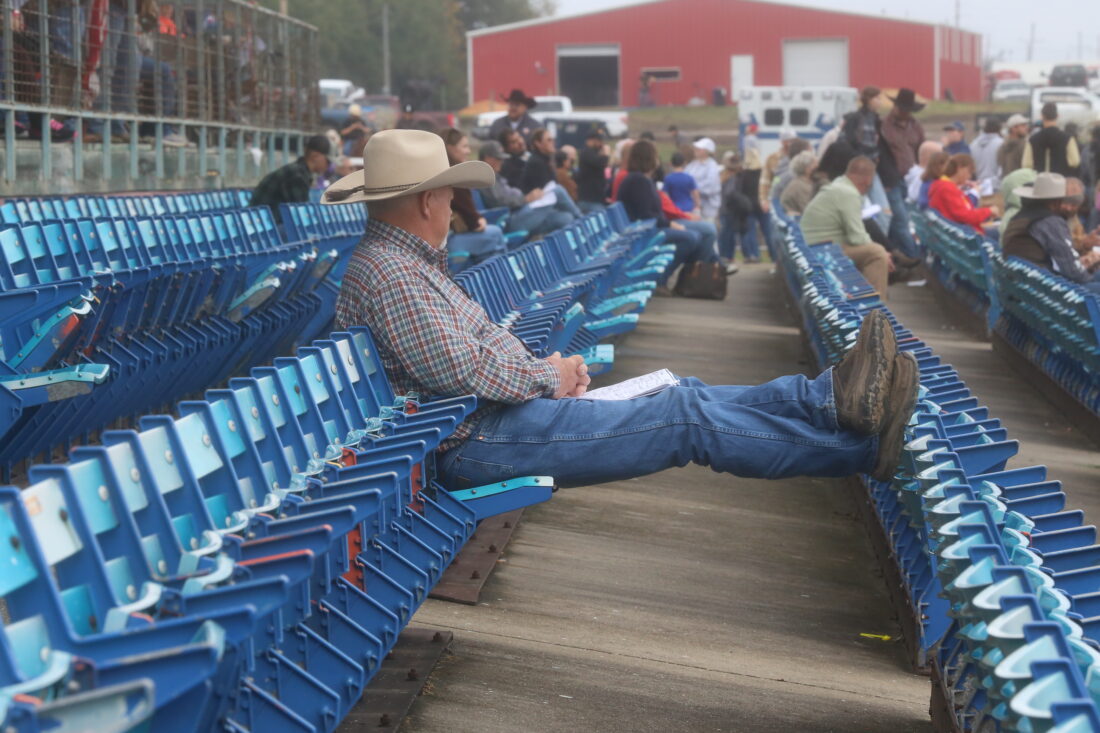
photo by: Chad Lawhorn/Journal-World
A fan relaxes at Eureka Downs horse racing track on Nov. 1, 2026.
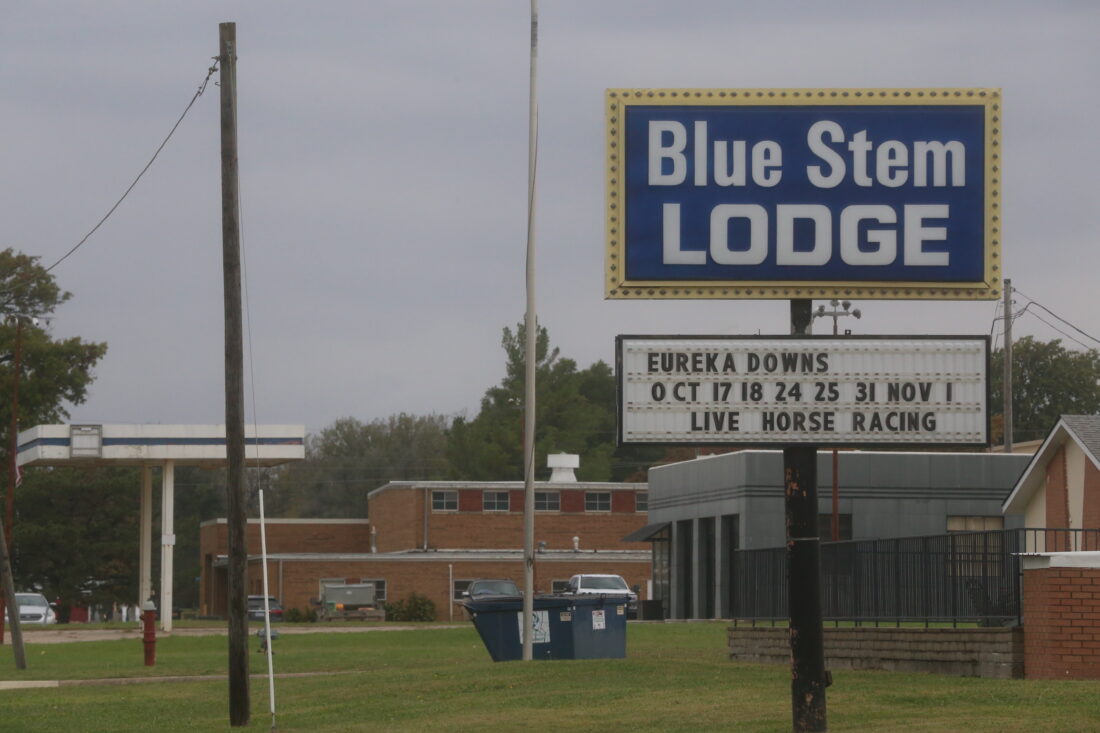
photo by: Chad Lawhorn/Journal-World
A motel in Eureka advertises race days in the small community of about 2,200 people.
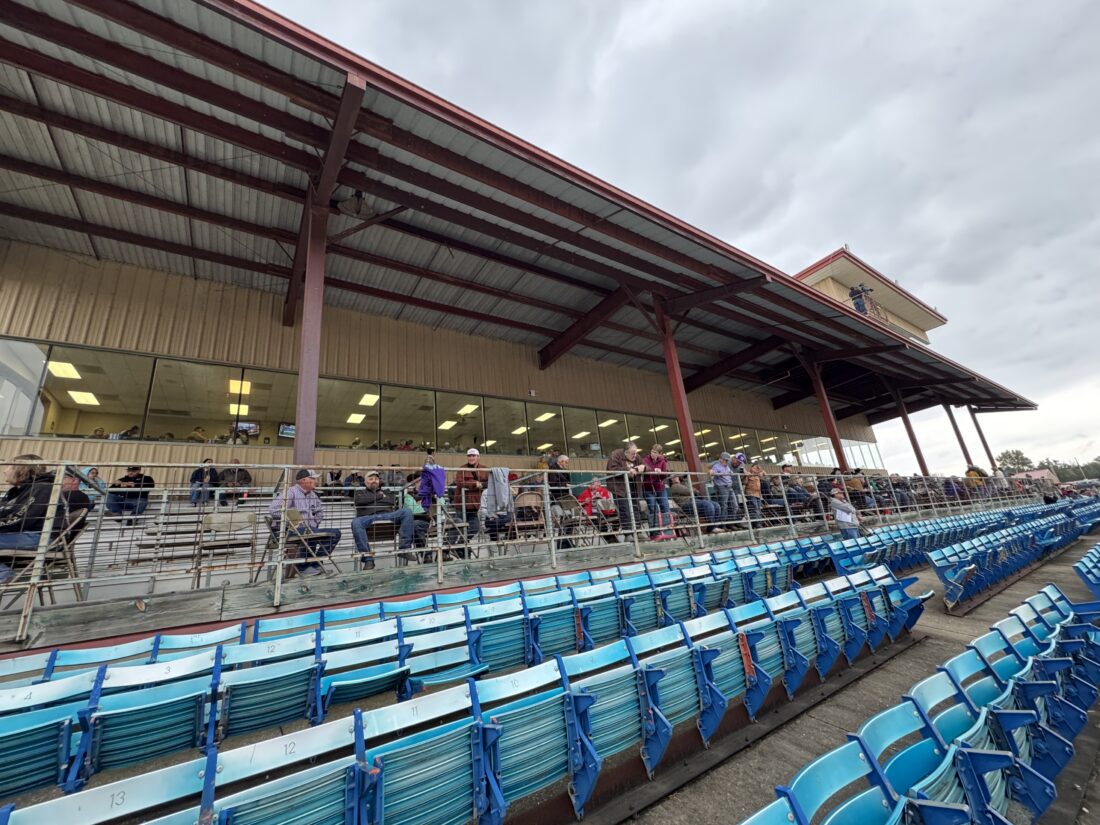
photo by: Chad Lawhorn/Journal-World
The grandstands of Eureka Downs is pictured on Nov. 1, 2026.
Other News
Opinion: I hate No. 6, but I love the idea that horse racing could produce new winners in rural Kansas
Election Day updates: Douglas County voter turnout running ahead of midterm elections four years ago
Douglas County sees nearly 18,000 in-person advance voters; here’s what to know ahead of Election Day
LINK’s free Thanksgiving dinner continues, but as a program of Homeless Resource Center; volunteers can sign up next week
Community honors departed loved ones at Día de Muertos event