Opinion: Amendment is also about schools
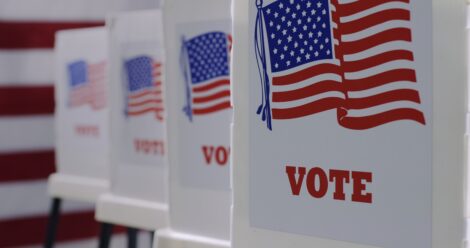
When Kansans head to the polls on Aug. 4, they’ll be asked to decide whether to change how Kansas Supreme Court justices are chosen. But this vote is about far more than judicial elections. It will have lasting consequences for public education in Kansas.
As a political science professor, I’m less interested in campaign slogans than in real-world consequences. The question before voters isn’t just who picks judges. It’s whether Kansas wants to change one of the key checks and balances that has helped protect constitutional rights–including the right to an adequately funded public education.
For decades, the Kansas Supreme Court has been the institution that stepped in when lawmakers failed to meet their constitutional obligation to fund public schools. The court has repeatedly required the state to do more for Kansas’ students, even when those decisions were politically unpopular. That wasn’t judicial activism. It was the court doing its job: enforcing the Kansas Constitution.
That history is exactly why this amendment matters.
Many of the people pushing for this change have spent years criticizing the court’s role in school-funding cases. Their frustration is understandable; court rulings often forced lawmakers to spend more money on education. But that’s also the point. When elected officials fail to uphold constitutional obligations, the courts are supposed to step in.
If this amendment passes, future Supreme Court justices would have to run campaigns, raise money, seek endorsements, and win elections. And that changes the incentives. A justice deciding whether Kansas schools need more funding could face pressure that current justices largely avoid: the knowledge that a controversial ruling may become campaign ammunition in the next election.
The biggest risk isn’t that judges suddenly become partisan actors. The bigger risk is that courts become less willing to challenge elected officials when constitutional rights are on the line.
And when it comes to education, the stakes are enormous.
Many of the most important improvements in Kansas school funding happened only after the courts intervened. Without an independent court serving as a backstop, school funding disputes could become purely political battles. In that environment, students will lose every single time.
The consequences would be felt in classrooms across the state. Schools may struggle to hire and retain teachers. Class sizes could grow. Building repairs and facility upgrades could be delayed. Students with special needs could face reduced support. Rural districts and lower-income communities — many of which already operate with limited resources — would likely feel the greatest impact.
Most importantly, the people affected would not be politicians, judges, or special-interest groups. They would be children.
When schools lack adequate funding, students lose opportunities that cannot easily be replaced. They lose access to early childhood programs that help them succeed later in life. They lose tutoring and intervention programs that help struggling learners catch up. They lose mental health resources, college-preparation programs, and career-training opportunities. Those losses don’t disappear when a budget cycle ends. They shape a student’s future for years.
Supporters of the amendment argue that elected judges would be more accountable to voters. Accountability matters. But courts were never designed to function like legislatures. Legislators are supposed to follow public opinion. Judges are supposed to follow the law — even when doing so is unpopular.
That leads to the most important question voters should ask themselves: Who will hold the state accountable if it fails to meet its constitutional responsibility to Kansas students?
For generations, the Kansas Supreme Court has helped answer that question. The August vote is about much more than how judges get their jobs. It’s about whether Kansas wants a court that can stand up to political pressure when constitutional rights are threatened, or one that may increasingly be shaped by the same political forces it is supposed to check.
Whatever voters decide, they should understand that this amendment is not just about courts. It is also about classrooms, communities and the future opportunities available to Kansas’ children. The effects of this vote will be felt long after campaign signs disappear — and long after today’s students become tomorrow’s citizens.
— Alexandra Middlewood is an associate professor and chair of the Political Science Department at Wichita State University.
Local Columns
Opinion: Will Kansas Republicans weather this year’s political storm?
Will Kansas Republicans take back the governor’s office? Can they hold the Senate seat for another six years? ...

Opinion: KU faculty, staff should be nervous about the new spending rules proposed for college athletics
Opinion: Environmentally conscious Lawrence is not focused on the biggest problem with electric vehicles
Opinion: A race against Christian nationalism
The Rev. Adam Hamilton is running against Christian nationalism. Will he win? The pastor of the huge, ...

Opinion: The three projects everyone rooting for Jayhawk success should be watching