Opinion: Getting direct about the amendment
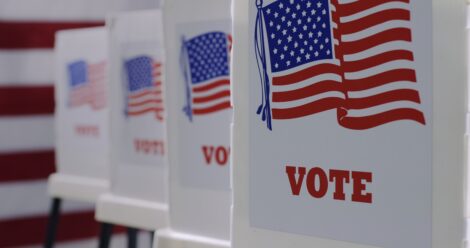
Walking around my Wichita neighborhood over the past several days, I noticed something about the yard signs encouraging people to “Vote No” on the constitutional amendment to allow for the popular election of Kansas Supreme Court justices in one month’s time. They are, in their color, font, and design, basically identical to many of the “Vote No” yard signs I saw around my neighborhood four years ago, when the vote to change the language of the Kansas state constitution so as to eliminate any judicial support for abortion rights was decisively defeated.
Relatedly, this past week my home received two mailers encouraging a no vote this August one day after another. Both mailers insisted that this vote is about keeping the Kansas Supreme Court “fair and impartial” and preventing “billionaire political donors” from influencing the justices by paying for the political campaigns they would have to run to win a spot on the court. I’ve no doubt about the sincerity of those who created these messages, and the arguments they’re making are entirely sound. But the fact that both were mailed by Planned Parenthood Great Plains, an organization dedicated to preserving abortion rights in Kansas, is worth noting nonetheless.
My point is simple. While the constitutional referendum Kansans will vote on this Aug. 4 is, strictly speaking, simply a question about changing one of the elements of our state’s constitutional structure, substantively it is actually a vote about possible policy outcomes — and while that’s usually not being said by those most engaged in the campaigns both for and against the referendum, it appears to me that pretty much everyone paying attention already knows it.
Amii Castle, a law professor at the University of Kansas, recently said the quiet part out loud, using the very words of prominent Republican backers of the current proposed amendment to show how it is rooted explicitly in the failure of the 2022 anti-abortion amendment, and the desire to get different judges on the Supreme Court so as to get different rulings regarding abortion rights in Kansas. Knowing that, why shouldn’t those who want to defend those rights campaign on the same terms as well?
Castle, though, received some pushback on social media and elsewhere for being so explicit, with some of those opposed to the amendment insisting that constitutional principles of judicial neutrality supposedly protected through Kansas’ current, somewhat complicated system of choosing Supreme Court justices (nomination by a judicial commission, appointment by governor and retention elections at the conclusion of a judge’s term) are the paramount concern.
As someone who teaches the arguments over those constitutional principles, I respect the claims of those — including some former members of the court — who believe that Kansas’ procedure for choosing justices is worth preserving simply on its own terms. But as someone who is also theoretically suspicious of most efforts to keep the messiness of electoral politics out of the judicial side of our government, I find myself more appreciative of those who choose to present the possible policy consequences of this constitutional change more directly.
Not that most of those in favor of the amendment are any more direct. Their literature insists that a vote for changing the state constitution is a vote for more “democracy,” and doesn’t say a word about getting anti-abortion justices on the court. Either way though, I think the substantive political possibilities behind both campaigns are becoming obvious to most voters. My guess is that, remembering the yard signs of 2022, they’re going to act similarly.
– Russell Arben Fox teaches politics at Friends University in Wichita.
Local Columns
Opinion: Will Kansas Republicans weather this year’s political storm?
Will Kansas Republicans take back the governor’s office? Can they hold the Senate seat for another six years? ...

Opinion: KU faculty, staff should be nervous about the new spending rules proposed for college athletics
Opinion: Environmentally conscious Lawrence is not focused on the biggest problem with electric vehicles
Opinion: A race against Christian nationalism
The Rev. Adam Hamilton is running against Christian nationalism. Will he win? The pastor of the huge, ...

Opinion: The three projects everyone rooting for Jayhawk success should be watching