Defense attorney again says public will be ‘just fine’ without arrest affidavit, invites them to his client’s court dates instead
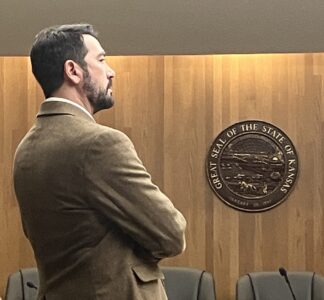
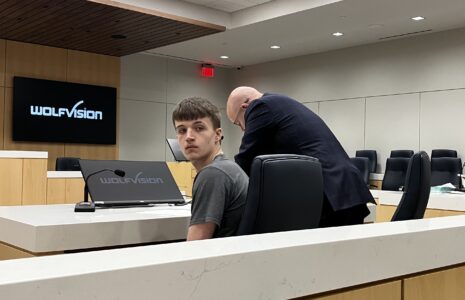
Defense attorney Hatem Chahine appears Thursday, April 24, 2025, in Douglas County District Court at a hearing for his client Kyle Elder.
A Lawrence defense attorney is once again saying the public “will be just fine” not knowing why police deprived a fellow citizen of his liberty in order to face criminal charges.
The attorney, Hatem Chahine, who is arguing for his client’s arrest affidavit to be completely sealed, said that the public could instead just attend court hearings in the case of Ian McGowan Griggs, who is facing a felony charge of residential burglary and two misdemeanor charges of theft and domestic battery stemming from a Jan. 20 incident.
“Interested members of the press and public are invited to attend the Motions Hearing currently scheduled on December 29, 2026 and Jury Trial on February 16, 2027,” he wrote in his motion to seal the affidavit, while not noting that hearings are routinely continued or canceled and trials are relatively uncommon.
Chahine previously argued, unsuccessfully, that the public would be “just fine” not knowing the circumstances around the arrest of violent sex offender Kyle Elder.
In both cases, he asserted that allowing the public to see the arrest affidavit would open a “Pandora’s box” and prejudice potential jurors — while also acknowledging that state law recognizes that the public has “a paramount interest in all that occurs in a case.”
An arrest affidavit is a sworn document by a law enforcement official that details the evidence and circumstances that led police to believe there was probable cause to arrest a person. In Kansas, the affidavits are public records, but there is a process for requesting them and a judge may order them sealed or redacted for a variety of specific statutory reasons, most having to do with protecting personal information, law enforcement interests and physical safety of people involved in the case.
In the Griggs case, the Douglas County District Attorney’s Office told the court that the affidavit should be released minus personal information like birthdates and home addresses, as well as a law enforcement officer’s personal belief about an alleged crime.
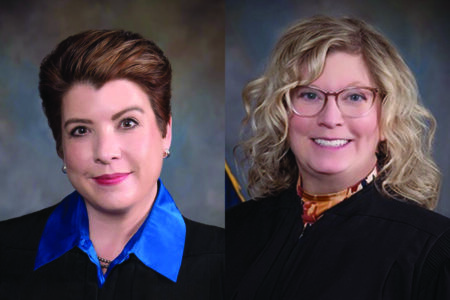
In the Elder case, the DA’s Office joined with Chahine in asking the court to keep the information hidden, but Judge Amy Hanley rejected both requests and instead released a redacted affidavit to the public.
Public Safety
Police investigating homicide in downtown Lawrence

Eudora voters to decide sales tax election to fund increased fire protection in the city
Jury convicts woman of felony interference with Lawrence police; video showed her arguing, resisting, flipping them off, ‘casually’ lighting cigarette
One of the teen shooters in Hawk incident pleads guilty to multiple felonies, will likely face at least 6 years in prison
At sentencing, city bus driver tells judge how she was traumatized by forceful takeover of her bus