Douglas County Emergency Management officials share tips on how to be prepared during overnight storms like Tuesday’s
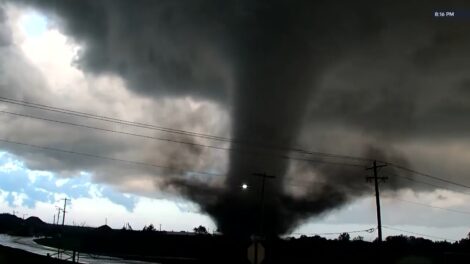
In this image taken from video from KWTV/KOTV, a tornado crosses a highway in Enid, Okla., Thursday, April 23, 2026. (KWTV/KOTV via AP)
As a damaging storm powered through Douglas County early Tuesday morning, residents may have heard the blare of tornado sirens amid the thunderclaps, but county officials said it is crucial to have other ways of being notified of severe weather.
The warnings came shortly after midnight when the National Weather Service in Topeka issued a tornado warning for Lawrence, Eudora and parts of rural Douglas County when forecasters saw activity on radar suggesting a tornado was likely to form.
Karrey Britt, a public information officer with Douglas County Emergency Management, said tornado sirens were activated in Lawrence, Lone Star, Pleasant Grove, Lecompton, Eudora and Clinton from 12:13 until 12:23 a.m. Tuesday. When the sirens are activated for a real threat, they sound for three minutes and turn off for two minutes — repeating until the threat is over. The National Weather Service let the tornado warning expire at 12:24 a.m., according to Britt.
These warning systems are important, but they are designed to warn people who are outside and “should not be relied upon” for people who are indoors, according to Douglas County’s website.
For other options for warnings, Britt said the county “strongly encourages” residents to sign up for the Northeast Kansas Regional Notification System, a free notification system which delivers residents safety notices like weather alerts from Douglas County by text, phone or email. Instructions to sign up for that service are located on the county’s website.
Additionally, people with cell phones can receive Wireless Emergency Alerts, which are emergency messages sent by local governments or agencies like the National Weather Service. Alerts are received when the cell phone tower your cell phone is connected to is included in the warning area, according to Douglas County Emergency Management, so there is no need to sign up for them.
Britt said overnight storms can be “especially dangerous” because people are asleep and may not be actively monitoring weather reports. To make sure everyone stays safe, she suggests people think ahead of how they’ll receive alerts, where they may go to take cover and what essentials they might need if they have to move quickly. Britt said a small kit that contains medications, glasses or even IDs can “make a big difference” in the event of an emergency.
The Emergency Management staff also provides community trainings designed to ensure residents can respond swiftly during severe weather events like tornado warnings. Additional safety resources, including guidance about alerts, notifications, warnings and preparedness, can be found at dgcoks.gov/em.
Public Safety

Man accused of selling wristbands to enable minors to drink at time of Hawk shootings is sentenced to probation

36-year-old Lawrence man confessed to raping 13-year-old girl, affidavit says
Evacuation drill planned Tuesday at Lawrence City Hall

Douglas County’s newest pro tem judge sworn in

Woman has renewed hope for justice 17 years after reporting rape in Lawrence