Affidavit indicates driver was arrested for DUI 9 weeks before student’s death; case wasn’t charged until last month due to KBI testing delay
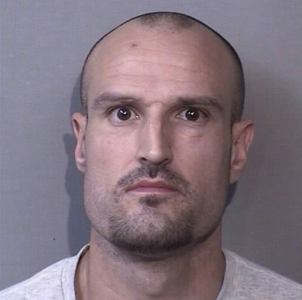
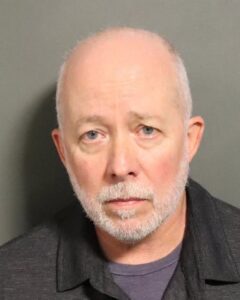
photo by: Kansas Department of Corrections
William Ray Klingler
Updated at 1:45 p.m. Thursday, April 16
Nine weeks before a 20-year-old KU student was killed in a hit-and-run, the driver accused in her death was arrested by a deputy on suspicion of DUI and other crimes, but the charges in that case weren’t filed until March, months after the student’s death.
Douglas County District Attorney Dakota Loomis on Thursday told the Journal-World that the delay was due to his office not receiving Kansas Bureau of Investigation lab reports until January.
William Ray Klingler, who is facing charges related to Elsa McGrain’s death on Nov. 6, 2025, was arrested nine weeks prior, on Aug. 30, 2025, and was charged by the DA’s Office on March 18, seven months after his suspected fourth or more DUI.
Loomis said the August case involved multiple different lab tests by the KBI after blood was collected from Klingler and syringes were collected from his vehicle.
“Until these lab reports were completed and submitted to our office we could not file a complaint,” Loomis told the Journal-World. “We did not receive those reports until mid-January.”
Loomis also said that the case involved a drug DUI, not a standard alcohol DUI, and that his office “then thoroughly reviewed the affidavit and reports before filing a complaint supported by the evidence.”
The charges contained in the March complaint “are merely allegations,” Loomis said, “and Mr. Klingler remains innocent until proven guilty.”

photo by: Contributed
Elsa McGrain
In a heavily redacted arrest affidavit released Wednesday, a Douglas County sheriff’s deputy, Chase Coleman, recounts responding shortly after midnight on Aug. 30, 2025, to the 1700 block of North 1500 Road in Douglas County. The deputy was acting as backup to a sergeant, C. Reiling, who had stopped Klingler’s white Ford F-150 for a defective headlight. Klingler had driven into a private drive, and Reiling told Coleman that when he made contact with Klingler from the passenger side of the truck he detected a strong odor of alcohol in the vehicle, according to the affidavit.
Coleman then approached the driver’s side and made contact with Klingler, who was smoking a cigarette. Coleman was “unable to smell anything other than the cigarette” while talking with Klingler, the affidavit says. Klingler told Coleman he was “mostly sleeping in his vehicle” and was driving from Lawrence to his friend’s house in Eudora. Coleman then opened the door and Klingler exited, the affidavit says, but after that the affidavit is almost entirely blacked out.
The few sentences that are not blacked out indicate that Coleman and Klingler talked outside his truck and Coleman asked Klingler when he had last slept, to which Klingler responded that he slept “every night.” Coleman conducted an initial search of the truck and of Klingler’s person but said he located nothing of “evidentiary value.”
Coleman asked Klingler about his education level, but Klingler’s response, if any, is blacked out in the affidavit.
Coleman described putting Klingler in the back of his patrol vehicle while Reiling returned to the truck for “a more comprehensive search.” What Reiling found, if anything, is blacked out.
Klingler was then taken to the Douglas County Jail shortly after 1 a.m., then to LMH Health shortly after 2 a.m. At the hospital, a phlebotomist was presented with a search warrant and conducted a blood draw from Klingler, who was then returned to the jail.
Klingler’s blood sample and three syringes were then placed in evidence to be sent to the KBI for testing. A big block of blacked-out text follows in the affidavit, presumably containing the results of the KBI tests. A single subsequent sentence refers to three lab reports being filed.
Though the arrest occurred in August, the affidavit is signed and notarized on Jan. 10 of this year, two months after McGrain, a KU student from Nebraska, was fatally struck by a vehicle as she jogged in the 1700 block of East 1500 Road. When Klingler was confronted with the August charges in March, he had already been in jail for months awaiting disposition of the McGrain case.
When asked whether he had any concerns about testing backlogs at the KBI and how those affect public safety, Loomis said that “any delay” can put the public at risk.
“The Legislature funds the KBI and has demonstrated through their budget what they believe is an acceptable delay and therefore risk that delay poses to the public,” he said.
Klingler reportedly told law enforcement that he was on a DoorDash route on the night McGrain was killed. That delivery route and various camera footage placed him at the scene of the accident around the time it occurred, according to the arrest affidavit in that case, which also includes an allegation from a man who said Klingler sought to have his truck repaired after “hitting a deer.”
In the McGrain case, Klingler has been charged with failing to stop at the fatal accident, circumvention of an ignition interlock device, driving while suspended (second or subsequent offense) and no proof of liability insurance.
In the case filed last month, he is accused of a “fourth or subsequent” DUI on Aug. 30, 2025, driving while suspended, having no proof of insurance and no registration.
Court records additionally indicate that Klingler has a criminal record going back more than 20 years, including multiple DUI and drug charges. In a pending Douglas County case from April 2024, he was charged with a fourth or subsequent DUI offense, as well as methamphetamine and circumvention of an ignition interlock device. He served a prison stint in 2021 after being convicted of tampering with electronic monitoring equipment.
In addition to the criminal charges, Klingler is being sued, along with DoorDash, by McGrain’s family for wrongful death.
He is being held in the Douglas County Jail on a bond of $500,000. His next court appearance in the McGrain case is scheduled for June 2, after his defense attorney on Tuesday obtained a seven-week continuance.
Public Safety

‘Restoring important people in our community’: Veterans Court nearing capacity as it celebrates 1st anniversary
In domestic violence case, Lawrence woman is acquitted of 5 of 6 charges; jury finds her guilty of one misdemeanor
Man ordered to stand trial after friend testifies that night of drinking ended with a rape

24-year-old ordered to stand trial in connection with Lawrence mother’s drug death
Former LHS teacher admitted having sex with a sophomore 26 years ago, but a lot turns on whether she was 15 or 16 at the time