

Instead of tickets, Lawrence drivers may now get a voucher to help pay for repairs if pulled over for an equipment violation
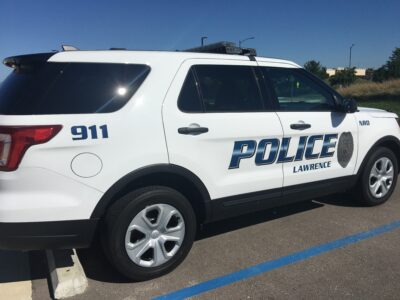
photo by: Kim Callahan/Journal-World
A Lawrence Police Department patrol vehicle is pictured June 28, 2022.
When Lawrence drivers get pulled over for equipment violations like broken headlights or defective turn signals, they may now end up with a voucher to help them pay for repairs instead of a ticket thanks to a new Lawrence Police Department program.
The police department has partnered with the “Lights On!” program, a nationwide effort by the nonprofit organization MicroGrants, and it’s also using funding from the department’s own Blue Santa charity. The “Lights On!” program teams up with law enforcement agencies nationwide to provide vouchers to people who are stopped for equipment violations, which they can use at participating auto repair shops to get their vehicles repaired at no cost.
Adopting a program like this was one recommendation made by the researchers behind a study of Douglas County law enforcement agencies’ traffic stops during 2020 and 2021. In part, that study found that Black drivers in Douglas County were nearly three times as likely to be pulled over as white drivers, and continued analysis of traffic stop data from 2022 also found racial disparities in the likelihood of a driver being searched during a traffic stop.
The police department announced the partnership in a news release on Friday. According to the release, the department’s current auto repair partners are Free State Auto Works, Lawrence Automotive Diagnostics Inc. and Westside 66. The shops are noted on the vouchers, which also include individual serial numbers and a spot for officers to fill in the vehicle’s license plate number and the date. The vouchers are valid for two weeks.
Vouchers will be given out at an officer’s discretion, according to the release, and Lawrence Police Chief Rich Lockhart said the goal was to distribute them to people who need them the most.
“We recognize that when repairs haven’t been made to a vehicle and it’s in violation, many times there’s a reason for that,” Lockhart said in the release. “This is an attempt to help mitigate that for lower-income drivers, rather than punish those who are already stressed.”
Public Safety
Man who admitted stealing nearly $50K from Dillons signs diversion with DA’s Office; charge will be dropped if he completes its terms
Man accused of selling wristbands to enable minors to drink at time of Hawk shootings is sentenced to probation

36-year-old Lawrence man confessed to raping 13-year-old girl, affidavit says
Evacuation drill planned Tuesday at Lawrence City Hall
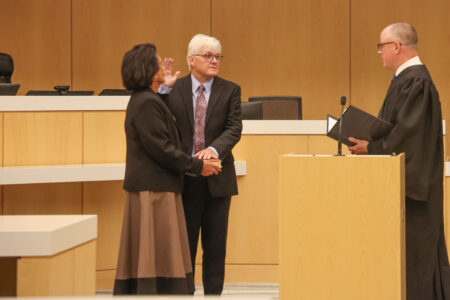
Douglas County’s newest pro tem judge sworn in
