

Despite contract progress, union representing KU faculty says binding arbitration, salary rates are key sticking points
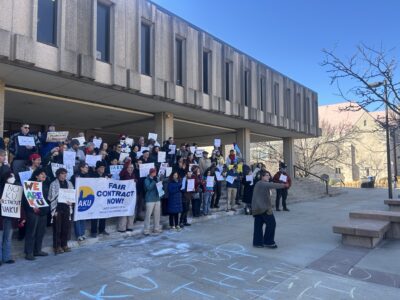
photo by: Bremen Keasey/Journal-World
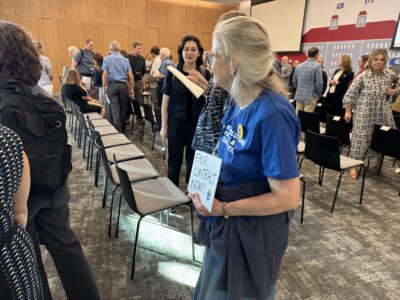
Around 100 University of Kansas faculty gathered outside Wescoe Hall on Wednesday in a rally supporting an agreement for a contract with the university and the union that represents faculty. Although the contract has many topics tentatively agreed upon, key topics like salary rates are still under negotiation.
While negotiations between the union representing University of Kansas faculty and academic staff have made significant progress, union members say there are still key sticking points to be ironed out before an agreement can be finalized.
On Wednesday, about 100 people gathered outside Wescoe Hall as part of a rally led by UAKU, the union that represents approximately 1,500 faculty members — including professors, researchers, librarians and other similar academic positions — that repeated the union’s hope for a contract. The assembled crowd also marched across the street into Strong Hall, the main administrative building that houses the offices of the chancellor and provost, chanting for a fair contract.
The union, which was formed in April 2024, has been negotiating with KU administrators since that year but have still not reached an agreement. Erinn Barcomb-Peterson, a KU spokesperson, shared a statement with the Journal-World that said “University of Kansas leaders welcome continued conversations with faculty and instructors about ways to move the university forward.”
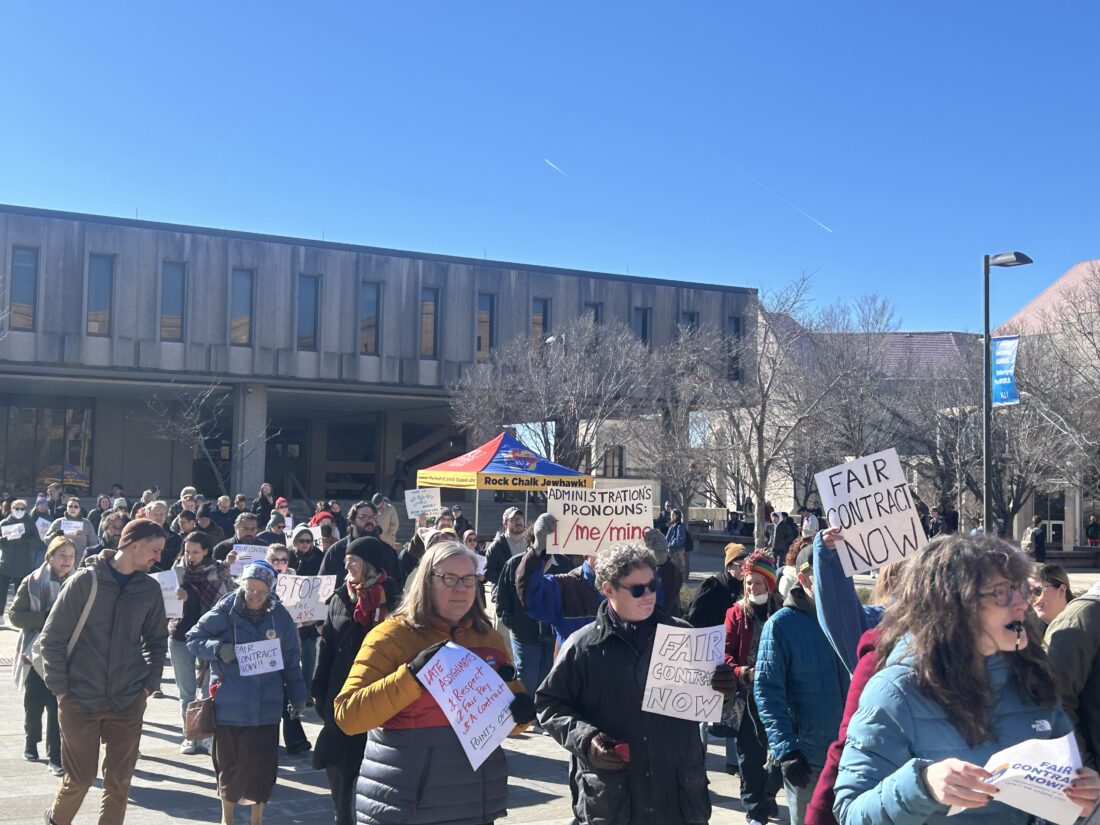
photo by: Bremen Keasey/Journal-World
After the rally, around 100 University of Kansas faculty gathered marched to Strong Hall, which houses the offices of the chancellor and provost, Wednesday afternoon.
Kate Stewart, an assistant librarian with KU’s Spencer Research Library and curator of the Wilcox Collection of Contemporary Political Movements, told the Journal-World Thursday that a lot of “important progress” has been made. The total contract has “at least 40 sections,” and the union and KU administration have made tentative agreements on all of it “except a handful of things,” according to Stewart.
Some of the topics that have been agreed on include guidelines on workload for faculty, outlines on promotions and tenure and agreements on academic freedom, but Stewart, who is a part of the union’s contract action team, said the two big sticking points in negotiations have been about binding arbitration and salaries.
Binding arbitration would mean that once a contract is agreed upon, if a problem came from either the university or the union, an outside, neutral party could mediate the dispute and decide what happens next. Stewart said if the agreement did not include binding arbitration, either party could bring in an outside mediator, but the “ultimate say” about any dispute would be in the hands of KU’s Chancellor. She said the union views an agreement without binding arbitration “kind of makes the contract pointless” if the ultimate say still rests with the Chancellor.
“(Binding arbitration) is something we really want and are trying to hold firm on,” Stewart said.
The other sticking point has been regarding salaries. KU announced earlier in January that it would give $15 million in wage increases to employees on the Lawrence and Edwards campuses, as the Journal-World reported. Eligible employees will receive at least a 1% raise while a “significant number of employees” would receive more than a 1% increase. However, faculty members were not eligible to receive those raises since they are currently negotiating with KU, and union rules prohibit KU from making salary adjustments — even raises — without first winning approval from the union.
Stewart said during negotiations, the university has offered some salary increases for “the lowest of low salaries,” but the union felt those raises were not “reflective of the talent” of those employees. Stewart noted many of the salaries offered for KU faculty rank low compared to peer institutions. According to data, KU had the third lowest average salary for faculty among public institutions that are a part of the Association of American Universities.
During the rally on Wednesday, Marsha McCartney, an associate teaching professor and Director of Curriculum and Teaching Development in the Department of Psychology at KU, spoke to the assembled crowd saying a 1% salary increase would end up being a cut relative to the recent rise in cost of living. Stewart said she knows fellow faculty members who have “struggled to get by,” telling the Journal-World some faculty members said they can’t afford an on-campus parking pass. She said those types of conditions impact the whole academic environment.
“We can’t do our best work and teach our students well if we are constantly worried about our economic security,” Stewart said.
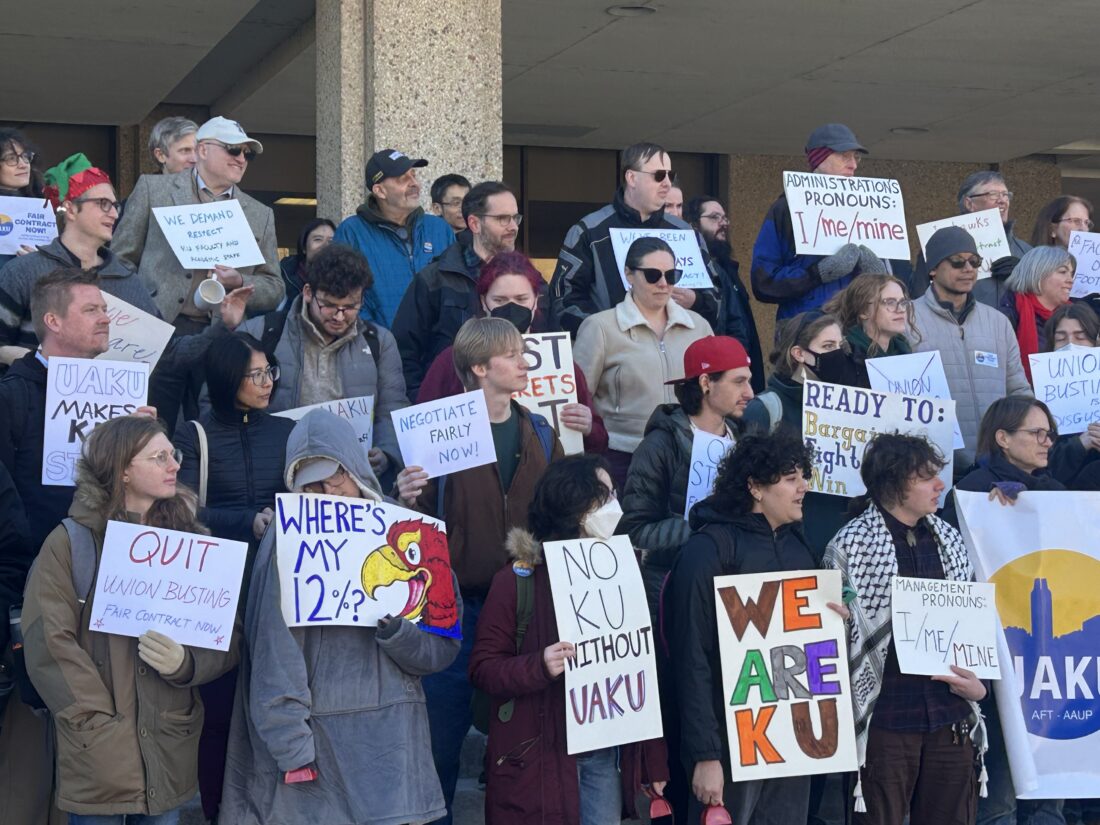
photo by: Bremen Keasey/Journal-World
Around 100 University of Kansas faculty gathered outside Wescoe Hall on Wednesday in a rally supporting an agreement for a contract with the university and the union that represents faculty, many holding signs in support of the UAKU, the union that represents around 1,500 faculty members.
KU
Longtime, local faculty member named as finalist to become the next dean of KU’s education school

KU’s faculty and university senates call for a vote to determine if university community has confidence in chancellor
KU leaders reject pay proposal from faculty union; administration says it will seek an impasse in negotiations if deal not reached in 7 days

KU research dollars set a new record in 2025; university conducted more than $600M in research activities
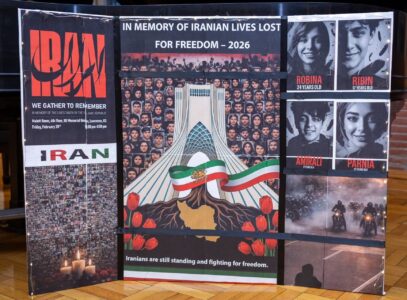
A memorial unites Iranian students at KU as they grieve civil-rights protesters killed by Iran’s dictatorship
