Lawsuit alleges KU fraternity subjected pledge to ‘waterboarding torture techniques,’ violence, forced binge drinking
Chapter has a history of hazing violations
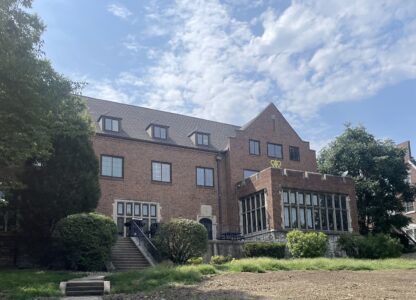
photo by: Sylas May/Journal-World
The Delta Upsilon fraternity house is pictured near the University of Kansas campus on Wednesday, Aug. 12, 2026.
A recently filed lawsuit is alleging that a University of Kansas fraternity with a history of hazing subjected one of its pledges in 2025 to “waterboarding torture techniques,” forced binge drinking, acts of violence, and harassment and intimidation even after he left the chapter.
The suit was filed in July in Douglas County District Court against the KU chapter of Delta Upsilon, the national fraternity organization and nine individuals associated with the chapter. It alleges that starting in August 2025, the pledge was “subjected to ongoing, systematically abusive hazing activity.”
Among other things, the suit alleges:
• The pledge was “ordered to endure waterboarding torture techniques.” The suit accuses two “pledge trainers” of “holding him by the legs and submerging him head-first into a large trash can filled with ice cold water and contaminated with feces, and keeping Plaintiff submerged to simulate the sensation of drowning.”
• The pledge was kept in a basement with no light and with a large speaker near his head playing music “at deafening volumes.”
• The pledge was forced to binge drink on multiple occasions, including being forced to drink for failing to remember facts about the fraternity, or being locked in a room with other pledges and “forced to consume 60 beers between them while completing active member’s school assignments.”
• Unidentified fraternity members urinated on the pledge’s bed.
• The pledge was ordered to eat or drink “repulsive alimentary concoctions made from unknown food substances.” Among the things the suit alleges he was forced to consume were “a smoothie made with a ground up hamburger,” “a cake injected with profuse amounts of hot sauce,” and “a beer containing a large dose of laxatives.”
• The pledge was “forcibly put into a chokehold, brought to the ground and choked” by one of the fraternity members.
The suit alleges that the hazing would occur during “appointments,” some scheduled and others spontaneous. For instance, it says that at one “appointment” on Sept. 24, 2025, the pledge was subjected to the “repulsive” foods, loud music, performing prolonged “wall-sit” and plank exercises, having ice cubes thrown at him and “waterboarding with feces-contaminated ice water.”
Some of these activities left the defendant “nearly too sore to walk to class” or caused “significant abdominal and gastro-intestinal pain,” the suit says, in addition to “extreme and severe emotional distress” and “ongoing psychological trauma.”
When the plaintiff left the fraternity, the suit alleges, the harassment and intimidation from its members continued, even though he changed addresses multiple times.
After the plaintiff stopped living at the Delta Upsilon house and moved into an apartment, the suit says he found “substances smeared onto” his door. When he changed addresses again and moved into student housing, the suit alleges, members again found out his address and sent him messages “along the lines of ‘we know where you live.'” The suit also alleges that members screamed insults and played loud music outside the plaintiff’s sister’s apartment in March of 2026 after learning that the plaintiff often stayed there.
In addition, the suit alleges that the former members “repeated sexual threats and comments being made about Plaintiff’s sister to him” and made a death threat against the plaintiff on a social media site.
Among the individual defendants in the suit are the chapter’s president, its risk manager, its house manager and its “pledge master.” The suit alleges the fraternity officers organized and encouraged the hazing, and that the president even told the pledge master at one point to start “doing his job,” “implying that the level of hazing activity which had been going on at that time was not sufficiently extreme.”
The suit also says the officers should have known that Delta Upsilon’s KU chapter had a history of hazing violations.
As the Journal-World reported, Delta Upsilon was suspended by KU in 2018, and a heavily redacted document about the investigation pointed to hazing as one of the causes. The document, a letter to the fraternity in July 2018, mentioned “personal servitude,” “forced alcohol consumption,” “excessive fatigue and sleep deprivation” and “multiple incidents of violence.” Then-Vice Provost of Student Affairs Tammara Durham wrote at the time, “Considering the totality of the information present, I find it more likely than not that the Kansas Chapter of Delta Upsilon hazed its new members during the Fall 2017 semester.”
After that, the suit says, the chapter lost its charter for four years and was reopened in 2022. It says the defendants promoted their fraternity as the “world’s oldest nonsecret, non-hazing fraternity,” and that those claims influenced the plaintiff’s decision to join Delta Upsilon.
Currently, according to KU’s website, Delta Upsilon is on probation until May 12, 2028; it was sanctioned on April 10 of this year, and KU lists its violations of its student code as “Hazing” and “Harm to Persons.” The suit says that KU’s Office of Student Conduct investigated the fraternity in October 2025, and quotes a portion of the office’s report, in which pledges report forced physical activity, forced alcohol consumption, sleep deprivation, “lineups” in a dark basement where beer was poured over them and other hazing rituals.
The lawsuit, filed on July 21, is seeking damages in excess of $75,000 for assault and battery, negligence and infliction of emotional distress. The defendants had a deadline of 21 days to respond, but no answer had been filed as of 2:30 p.m. Wednesday. No hearings have been scheduled yet.
KU

Turnstile rocks KU campus as Day on the Hill returns after two-decade absence

UPDATE: Closure of Hilltop childcare center is final, but the building seems likely to stay

KU to lead national effort to address special education needs and tackle industry’s pressing concerns
Opinion: KU faculty, staff should be nervous about the new spending rules proposed for college athletics
KU enrollment grows for third straight year, achieving a new record