

Haskell educators, activists rally community to protect Wakarusa Wetlands from future development
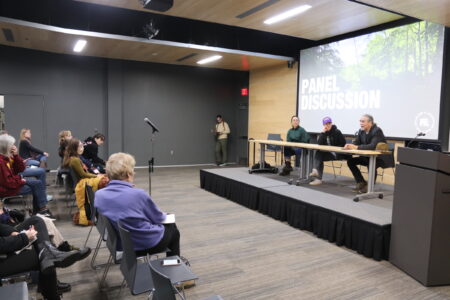
photo by: Josie Heimsoth/Journal-World
Activists and educators with Haskell Indian Nations University hosted an educational forum Saturday, March 7, 2026, calling on the community to defend the Wakarusa Wetlands from future development.
Daniel Wildcat said his opposition to a proposed development in the Wakarusa River Valley is rooted in an understanding of wealth — one measured not by land or money, but by relationships with people, the Earth and all living beings.
“We understood wealth resided in the number of good relatives you have,” Wildcat, a professor at Haskell Indian Nations University, told a crowd on Saturday. “We’ve lost a sense of kinship even amongst our human selves, but we really got to work on reestablishing a kinship with this Mother Earth and all the life that we’re related to.”
Wildcat said everyone has a responsibility to stand for the wetlands in the river valley and to be good relatives, so they can work together to promote systems of life enhancement on the planet.
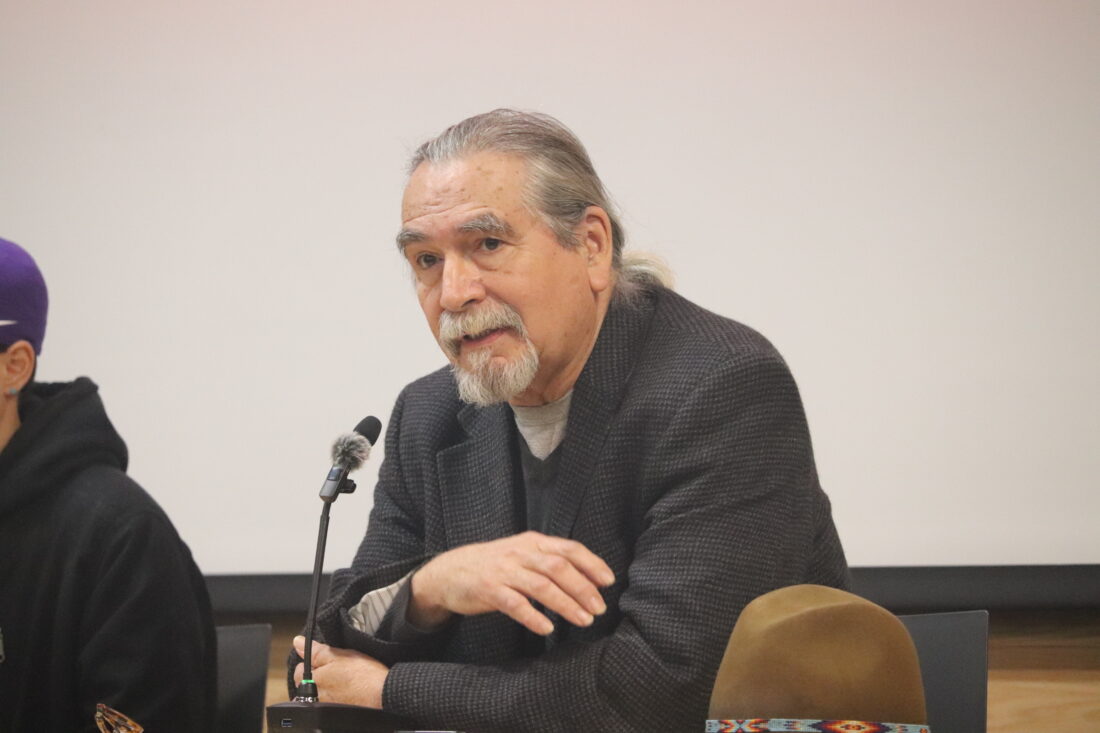
photo by: Josie Heimsoth/Journal-World
Dan Wildcat, a professor at Haskell Indian Nations University, spoke at a forum on Saturday, March 7, 2026, aiming to bring awareness to development proposed for the Wakarusa River Valley.
“We’re not anti-development, but we’re going to develop something different here,” Wildcat said.
Dozens of people attended a forum on Saturday hosted by the Kansas City branch of the Party for Socialism and Liberation, bringing together students, educators and activists from Haskell Indian Nations University to discuss the cultural and environmental importance of the Wakarusa Wetlands.
The gathering aimed to raise awareness about the potential impacts of a development proposed for an area in southeast Lawrence situated in a floodplain area near the Wakarusa River, known as “New Boston Crossing.”
“We have an opportunity to do something good for this Mother Earth,” Wildcat said. “I think you know this mindless development that surrounds us everywhere we look, we have an opportunity to really call on Lawrence.”
The developers of the project proposed a new idea at the end of last year on how to develop on the vacant land, and the new concept is the latest in what has been more than a half-dozen plans presented to Lawrence city officials in the last decade.
The latest development plan shifted toward more commercial and recreation uses. It eliminated all the single-family and duplex housing that was previously proposed for the site and replaced it with a variety of outdoor sporting fields and recreation facilities that would presumably be operated by commercial businesses, as the Journal-World reported.
Lawrence-Douglas County planning commissioners have approved a change to a land use map in the city-county comprehensive plan, Plan 2040, to include more area for commercial and high-density residential uses at the proposed “New Boston Crossing” site. And while the same request was later scheduled to appear on the agendas for the city and county at the end of 2025, the item was deferred by the applicant.
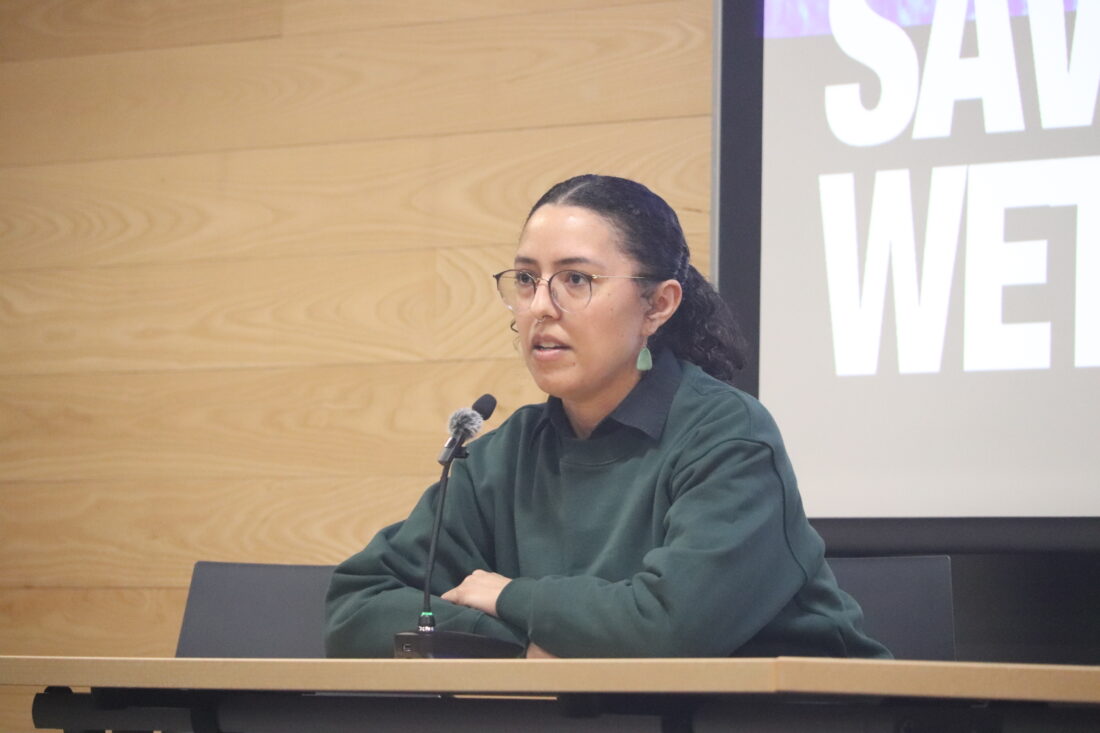
photo by: Josie Heimsoth/Journal-World
Alex Kimball Williams, an artist and activist, speaks at a forum on Saturday, March 7, 2026.
The proposal has drawn concern from environmental activists and Indigenous leaders who say development in the valley could threaten the wetlands and the cultural connections many people have to the land.
Alex Kimball Williams, an artist and activist, said the wetlands have been deeply inspirational and a metaphor for everything else about Indigenous philosophies.
“I do have songs actually about the wetlands, songs about prairie native plants, perennials, a song about the change of seasons,” Kimball Williams said. ” … The wetlands have been deep, creative and educational.”
Wildcat told the crowd that while there’s a lot going on in the world right now, do not let sorrow and pain translate into fear.
“People want us to be afraid,” Wildcat said. “They want us to be afraid to talk honestly about issues that are really important, and this is an important issue. Let’s let our friends and neighbors in Lawrence know we have an opportunity to make a statement about what is truly of the most important value here in Lawrence, Kansas.”
…
In the late 1800s and early 1900s, Indigenous children from many tribes were forcibly taken to boarding schools like the Haskell Institute, the former name of the university known today. Children were separated from their families, prohibited from speaking their languages, and forced to adopt Euro-American customs.
“During this time, Indigenous children were taken away from their tribal communities, homelands and families and forced to attend Haskell Institute, and children restricted their identities through this process, including cutting of hair, forbidding native languages and destruction of traditional clothing,” Courtney King, the program and land stewardship manager for Haskell, said.
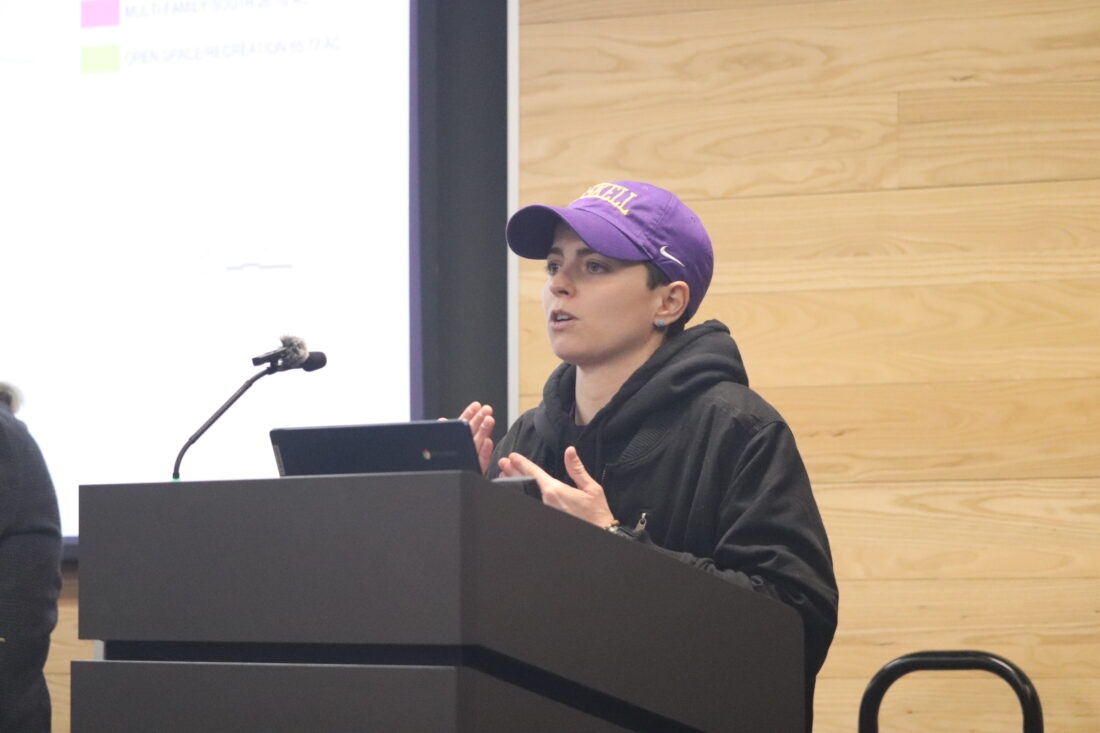
photo by: Josie Heimsoth/Journal-World
Courtney King, program and land stewardship manager at Haskell Indian Nations University, speaks at a forum on Saturday, March 7, 2026.
King said children were often punished, including floggings or beatings, for minor mistakes. There was also a jailhouse located on campus that children were forced into as well. King said to escape the atrocities at Haskell Institute, children would run away to the Wakarusa Wetlands to meet with their families and play with their friends.
“It’s been estimated that about 500 to 1,000 children have died at Haskell Institute,” King said. “Many of them were laid to rest in the Wakarusa River Valley, including in a cemetery on campus with over 104 children buried there today and in unmarked burial sites within the flood plain.”
This was described to be the Assimilation Era, and King said when talking about this era, it’s also talking about the assimilation of the land on a large scale.
“This is done through the destruction of the natural areas in the Wakarusa Wetlands, including heavy tilling, fertilizer use and compacted soils,” King said, adding that the shift from Indigenous land stewardship to single-crop farming across large areas, along with other non-native land practices, has damaged ecosystems at Haskell.
“We’ve lost over 70% of our original lands and currently hold 320 acres of the original 1,011 acres,” King said.
The biggest battle over the wetlands occurred during the long debate about the South Lawrence Trafficway. Environmental groups, Haskell students and tribal advocates opposed the project because it would cut through wetlands, and lawsuits and protests delayed the project’s construction for many years. Ultimately, courts allowed the road to be built along a route across Baker University-owned land in the wetlands.
King said there were many promises to Haskell that there would be no development through the wetlands, but the issue keeps arising.
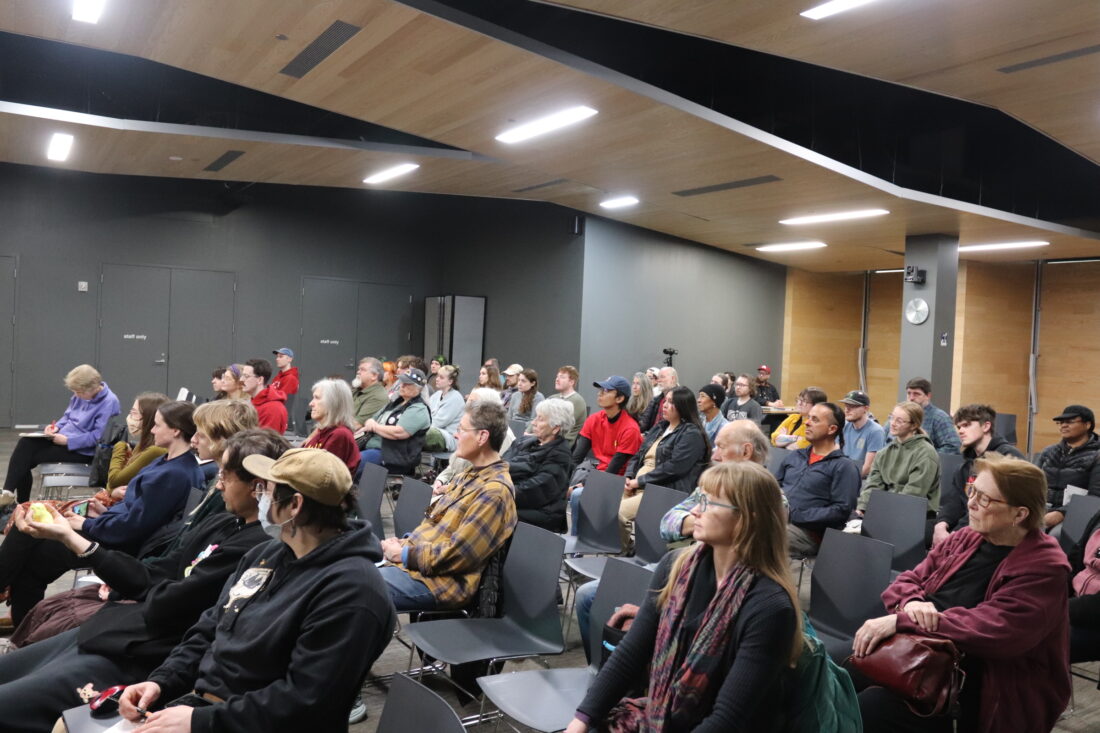
photo by: Josie Heimsoth/Journal-World
Community members attended an educational forum Saturday, March 7, 2026, urging the public to protect the Wakarusa Wetlands from future destruction.
“I’m angry,” King said. “And there are various ways we can reduce our anger for good. My way is caring for the land at Haskell Indian Nations University.”
King said because of recent restoration efforts in the last year, a beautiful native species, willow-leaf aster, has been able to grow.
“They were not growing in the wetlands a couple of years ago,” King said. “And because of our restoration efforts, last year, we saw dozens of Monarch butterflies drooping from the leaves of these plants. And this gives me hope in terms of healing these lands back to who they’re meant to be. And in conjunction with that, healing people who have connections to these lands.”
Other News
Haskell educators, activists rally community to protect Wakarusa Wetlands from future development

Lawrence school board to consider $3.5 million in renovations to prepare for district’s new Choice Campus at Centennial

Ohtani homers for 2nd straight day, Suzuki hits 2, Japan beats South Korea 8-6 at WBC
Local historians celebrate 170th anniversary for Lecompton’s Constitution Hall, a hotbed during ‘Bleeding Kansas’ era that changed the country
The Lawrence Community Shelter is an ‘iceberg,’ and its leader provides a glimpse beneath the surface
