At a gas station, in the garden, at Clinton Lake – armadillos have lived in Kansas for decades, and you’ll be ‘seeing them more and more’

photo by: Eudora Police via Facebook
A Eudora Police officer escorts an armadillo out of the Kwik Shop parking lot in Eudora on April 20. 2026.
Maybe it thought it was a Shell station – this armadillo that Eudora police found in the parking lot of the local Kwik Shop last week.
An off-duty officer called it in after seeing it there, and police posted photos on social media of them guiding it with a long pole. They got it into a crate, police chief Wes Lovett told the Journal-World, and then took it “to a safer spot in a rural area,” according to their Facebook post.
But after that? It’s entirely possible that the armadillo just went straight back to town, said Dara Wilson, supervisor at Prairie Park Nature Center.
For a typical armadillo, “your territory can be almost like half a mile, mile radius,” she said, “so you’d have to go pretty (far away) to make sure he doesn’t go right back to where he was.”
Armadillos are more common in Kansas than most people think, Wilson said. Originally, they’re from Central and South America, but they’ve been living in Kansas for decades now.
“They’re an established population in Lawrence, for sure,” Wilson said. “… Everyone thinks they’re kind of new in the last 10 to 20 years, but they’ve seen movement into Kansas since like the 1930s, 1950s.”
Nowadays, Wilson said, armadillos can be found as far north as Nebraska or even Illinois. That’s because the winters are getting milder. Armadillos don’t migrate seasonally like birds, and they don’t have much fat to keep them warm, so they don’t like places where winter temperatures are frigid for weeks on end.
“That shell actually makes it so they can’t retain body heat very well,” Wilson said. “So, they like the warmer winters so they can get out and about more.”
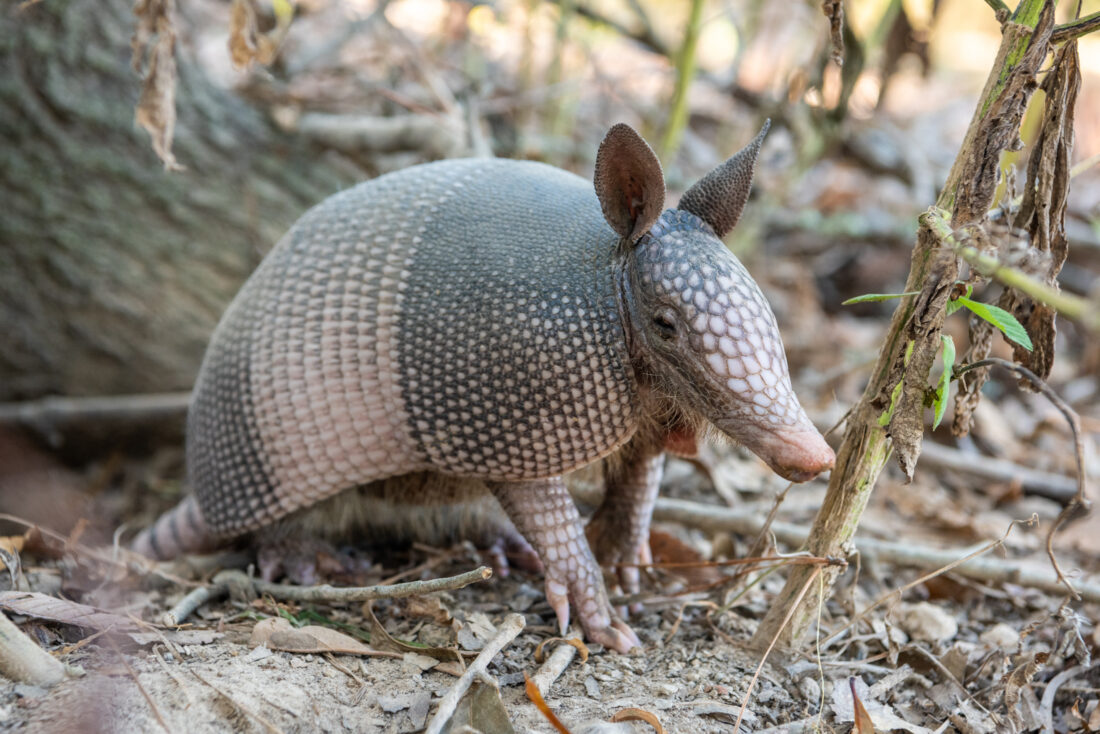
photo by: Adobe Stock
With their protective shells, armadillos don’t have any natural predators in Kansas.
Operation WildLife, the animal rescue organization in Linwood, had an armadillo encounter of its own this past week. Executive Director Diane Johnson said they had an injured armadillo as a patient, but that it had to be euthanized. Its spine was damaged and it couldn’t be repaired, she said.
“We don’t see them that often – maybe 1 in 5 years,” Johnson told the Journal-World in an email. “They are primarily killed by automobiles, and because they have a soft body underneath their outer ‘armor’ they don’t fare well with traumatic impact.”
Armadillos’ defensive instincts make them even more vulnerable to being hit by cars, Wilson said. If they feel they’re in danger, they’ll often jump 3 to 5 feet in the air and then curl up into a ball. That deters predators, and in fact they don’t have any natural predators in Kansas, Wilson said, but it doesn’t work against cars.
“If they did just go straight into a ball, they’d probably be fine,” she said, because the car might just pass right over them without hitting them, but that’s just not what they do.
What should you do if you see an armadillo in town? First of all, even if you’re concerned for their safety, they probably don’t need your help. Wilson said armadillos are always on the go and can “scurry away pretty quickly” if there’s danger.
“They’re constantly traveling. They’re like little athletes,” Wilson said. And they’re very adaptable. Even if they’re separated from their hunting territory, she said, they can set up a new one.
“They can also swim,” she said. “They can actually walk at the bottom of rivers and lakes for a few minutes and then pop back up. That’s part of the reason they migrated this way, is they can cross river boundaries, no big deal.”
If an armadillo really looks like it’s in danger and has curled up in a ball, it’s not likely to bite or attack you, so you could wear some gloves or other protective gear and pick it up “if you had to absolutely move one,” Wilson said. But most of the time, they’re fine.
“The best thing to do is just leave it alone, to be honest,” she said.
While armadillos can carry leprosy, you shouldn’t worry too much about that. Not all of them carry the disease, and Wilson said you’d have to be handling one for a while to be in any danger.
If you want to see them yourself, the best time to look for them is usually in the morning and evening. “They’re pretty secretive during the day,” Wilson said.
One of her favorite places to look is on the west side of Clinton Lake, near Bloomington Beach. In general, she said, they’re fond of digging holes and like places with moist soil.
“Kansas has some pretty good dirt here that’s just perfect for an armadillo to dig around in,” she said.
You might even see them digging in your yard or garden, especially if you have soil with a lot of earthworms or insects in it. Some people think they’re a nuisance, she said, but they’re not bad for the environment like invasive species. Their burrows, when they abandon them, can be reused by other animals. And if you’re lucky they might even do some pest control for you.
“At my house, I saw an armadillo digging under my mailbox because there was a ground-hornet nest under there,” Wilson said. “He dug it out and ate it. They’re one of the few animals out there that can eat hornets.”
With the population growing, the climate getting warmer and possibly the critters themselves getting more comfortable living near humans, Wilson said you’ll probably be “seeing them more and more.”
“I just like watching them,” she said. “They’re fun to watch. I could spend the whole afternoon watching them just dig around for insects.”
Other News

A student-run coffee shop will open at Community Connections at Pinckney next week

Douglas County commissioners to discuss proposed changes to funding agreements with community partners

RJ Mitte, ‘Breaking Bad’ actor and disability rights champion, dies at 34

Clinton State Park and other state parks will increase overnight camping, vehicle permit fees starting next month
‘No day is like the other here’: Students from Lawrence’s German sister city discover football, new foods and new friends on exchange