KU researcher will study policies related to sexuality in long-term care facilities
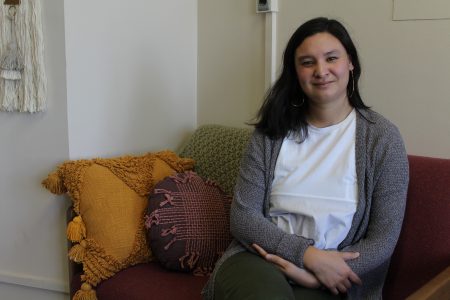
Sarah Jen, an assistant professor at the University of Kansas, recently received an internal "New Faculty Grant" to study sexuality policies and trainings at Kansas long-term care facilities.
An associate professor at the University of Kansas has won an internal grant to research Kansas long-term care facilities’ practices and policies related to sexuality.
Sarah Jen, an associate professor in the School of Social Welfare, plans to survey long-term care administrators in Kansas and provide an update on whether policies addressing sexuality have changed within the last ten years.
The last time a similar study was completed in Kansas was in 2008. Gayle Doll, director of the Kansas State University Center on Aging, found that only 26% of survey respondents reported that their nursing home had a policy addressing sexuality.
Jen is hoping that 26% has increased.
“But if not, it demonstrates a real area of need, right? A lot of potential,” she said. “I think it’s a right that we all should have — that we should all be able to explore intimacy…And that age shouldn’t necessarily be a determining factor.”
In a 2013 article called “Sexuality in Nursing Homes,” Doll writes that older adults’ sexuality and sexual expression are often overlooked in long-term care facilities. She notes that practices such as keeping doors unlocked and having residents share rooms can make it difficult for elderly people to explore intimacy.
Doll will retire at the end of the academic year and said she is “thrilled” that Jen will continue the study.
“It’s time to redo it,” Doll said.
Jen moved to Kansas a year and a half ago in part due to Doll, who will guide Jen in her research. Doll said it will be a great way to bridge the transition to retirement while still keeping her “toe in the water.”
Jen plans to include many of the same questions Doll asked in the 2008 survey in order to compare results. She also plans to ask whether long-term care administrators are aware of residents’ sexuality and gender diversity and how issues of consent are handled related to residents with dementia or cognitive impairment.
“In my mind this survey is about providing an update but it’s also about figuring out what the right next steps would be and what’s useful for the field moving forward,” Jen said.
She received a $20,000 “New Faculty Grant,” which Jen plans to use to pay a research assistant, create the survey, conduct data analysis, create participation incentives, pay for travel expenses and pay interview participants. (After the survey, Jen hopes to conduct in-depth interviews this summer with care facility administrators and long-term care ombudsmen.)
Jen, who’s 30 years old, said that as a young person doing aging research, she sees her work as a means of creating a better future for her generation.
“Sometimes people are discouraged from thinking about long term care because people think it’s not the ideal future,” Jen said. “But the truth is all of us are aging and whether sexuality in later life is stigmatized or supported is honestly an issue for everyone to be invested in.”
Health
Florida’s dengue outbreak is largest in a US state in decades
NEW YORK — Florida’s current dengue outbreak is the largest in several decades of any U.S. state. State ...

Doctors warn about risks of energy drinks to kids
Kansas measles cases grow to 5
TOPEKA — Five measles cases reported in Kansas are related to out-of-state travel, health authorities said ...

Lawrence city leaders want to toughen tobacco licensing rules ‘sooner than later’

At 40, her first mammogram changed everything: LMH Health nurse urges others to get screened