Lawrence’s biggest stories of 2020
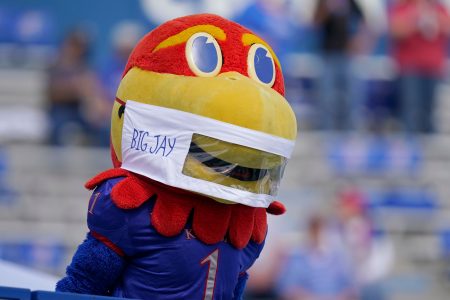
photo by: Orlin Wagner
Big Jay shows off his face mask during the Jayhawks' football game against Oklahoma State on Saturday, Oct. 3, 2020 at David Booth Kansas Memorial Stadium.
2020 will always be remembered as the year of the coronavirus pandemic, which, to date, has infected nearly 20 million Americans and killed more than 340,000, including more than 2,500 Kansans.
It will be the story of 2021 as well, and for many of us, the story of our lifetimes. The deadly virus not only relentlessly dominated headlines for 10 months of the year but also affected virtually every aspect of our community and the way we live our daily lives — how we interact socially, how we work and attend school, how we entertain ourselves, how our local governments operate and how our businesses and the economy function.
As we donned protective masks in public and retreated into our homes, interacting with others through Zoom calls and FaceTime, many of us knew people — or were people — who lost jobs, businesses and loved ones.
In Douglas County, more than 6,000 people got the virus, and more than 30 have died from it.
Unemployment numbers, which early on had overwhelmed the state department of labor, in Lawrence had shot up past 5% in November.
The University of Kansas campus became a ghost town in the spring, as classes went online and university athletics disappeared, including the much-anticipated NCAA basketball tournament, where the Jayhawk men were expected to dominate.
The virus, like almost everything else in recent times, also became politicized as sharp divisions emerged about mask-wearing and social gatherings. At the Statehouse, the Republican-controlled Legislature battled over health orders with Gov. Laura Kelly, a Democrat and the first governor in the nation to shut down schools for the remainder of the academic year. In Douglas County, disputes — or at least confusion — arose over who had the authority to enforce health mandates regarding large gatherings and social distancing.
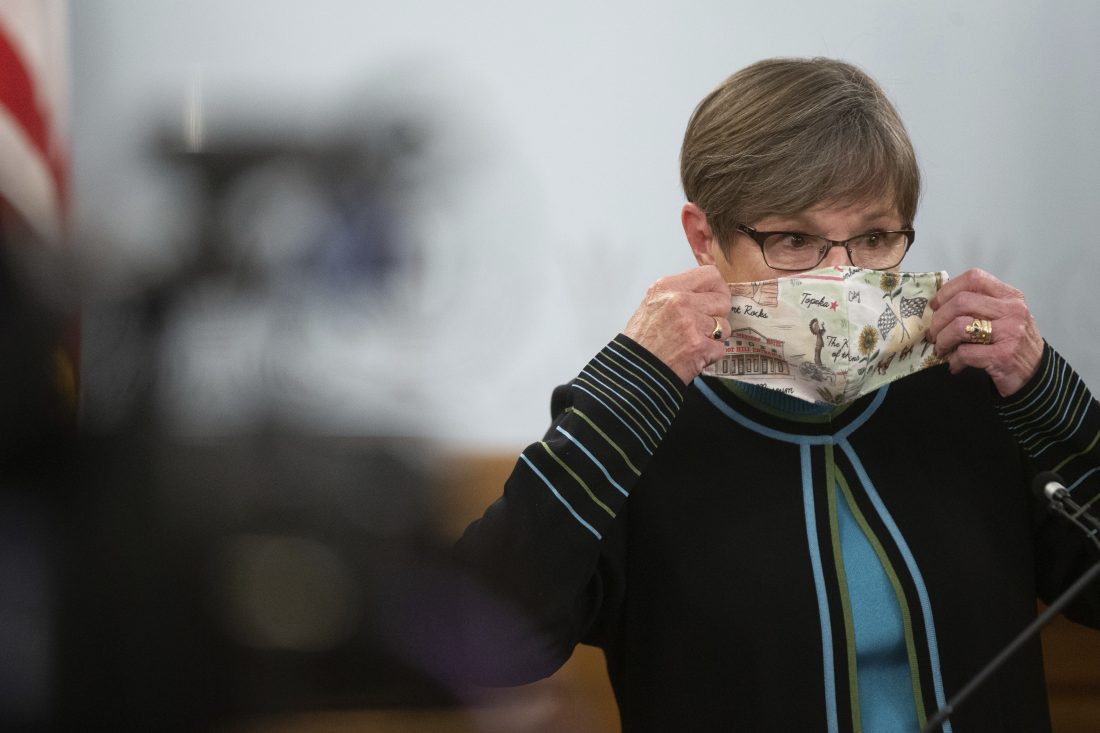
photo by: Associated Press
Kansas Gov. Laura Kelly gave updates related to COVID-19 in the state of Kansas during a news conference Monday, Oct. 5, 2020, at the Statehouse in Topeka, Kan.
Rays of hope appeared only this month as vaccines arrived and tentative schedules were announced for the eventual vaccination of all residents. Still, with most of us being months down the list and “pandemic fatigue” setting in, health experts warned of a long, dark winter with soaring infection rates.
As the year draws to a close, as coronavirus seems to blot out everything, it’s worth remembering some of the other events that managed to make local headlines in 2020, including the following.
In politics, we saw history made in Douglas County, where more than 60,000 votes were cast in November’s general election, leading to a record-shattering 73% turnout. As Joe Biden won Douglas County — and the presidency — new leaders were elected down ballot, including Republicans Roger Marshall to the U.S. Senate and Jake LaTurner to the 2nd congressional district. In the county, a new sheriff and district attorney — Jay Armbrister and Suzanne Valdez, both Democrats — were chosen, as were two new county commissioners, Shannon Reid and Shannon Portillo, whose progressive politics are likely to change the face of local government.
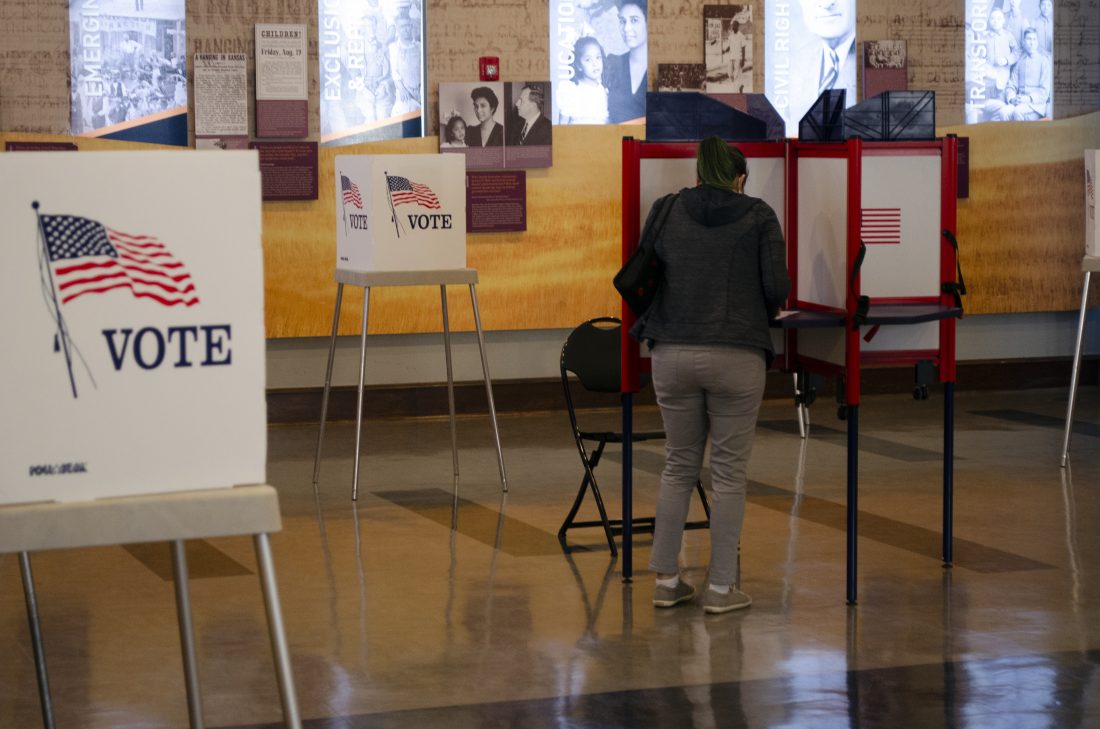
photo by: Ashley Golledge
A Lawrence citizen casts their vote in the U.S. Presidential Election at the Carnegie Building on Tuesday, November 3, 2020.
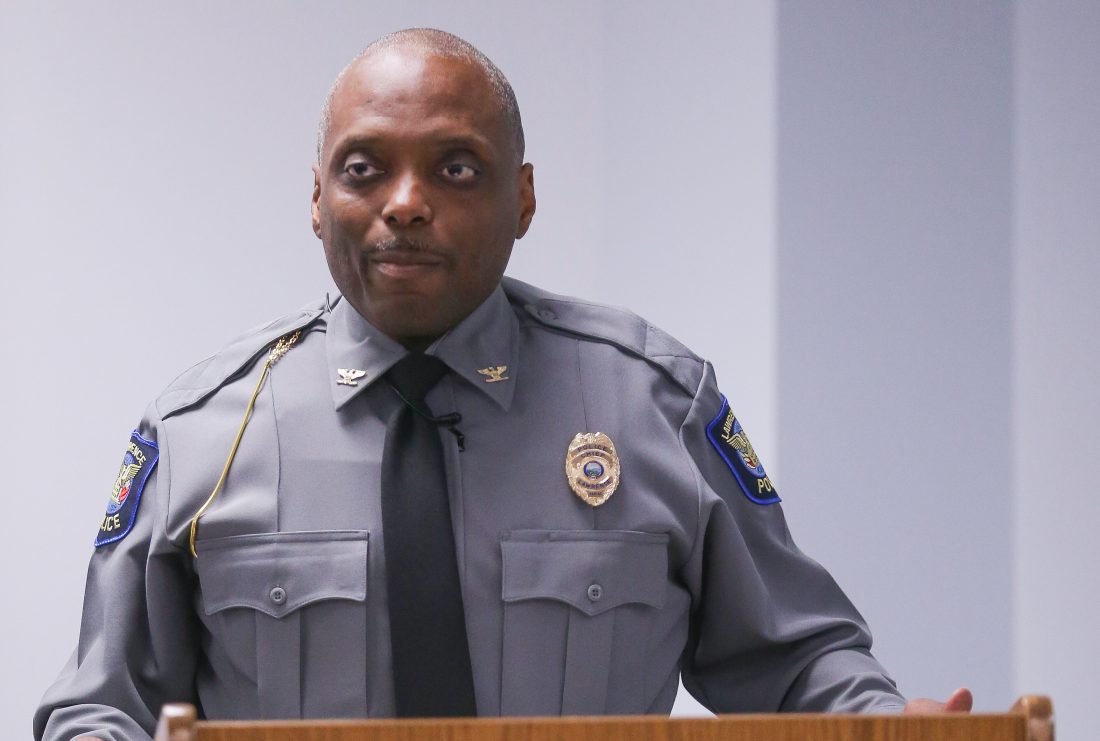
photo by: Nick Krug/Journal-World File Photo
In this file photo from Oct. 2, 2017, Lawrence Police Chief Gregory Burns Jr. gives some remarks following his swearing-in ceremony at the Lawrence Police Department Investigations Center, 4820 Bob Billings Parkway.
Also on the local leader front, 2020 saw the resignation of Gregory Burns Jr., Lawrence’s first Black police chief. Burns stepped down in June after less than three years on the job to pursue other opportunities. The resignation followed a no-confidence vote by the police union months earlier for reasons that have never been entirely clear. Adding to the mystery was the city’s decision in May to approve a six-figure separation agreement for Burns with virtually no public discussion.
Since Burns’ departure, the city has been operating with an interim chief, Anthony Brixius, who oversaw police operations during one of the other big stories from 2020: the social unrest following the killing of George Floyd on May 25 by Minneapolis, Minn., police officers. Residents in Douglas County, like elsewhere across the U.S., protested the police violence in a heavily attended march down Massachusetts Street in late May. Later in June, a group associated with the Black Lives Matter movement occupied Massachusetts Street in front of South Park for several days — an event that was prompted in part by the placing of a banner in the park depicting the lynching of Floyd and in part by the incarceration of Rontarus Washington Jr., who had been in the Douglas County Jail for five years awaiting the disposition of his murder trial. Washington, in the wake of the protest, was finally released on bond pending the outcome of his case.
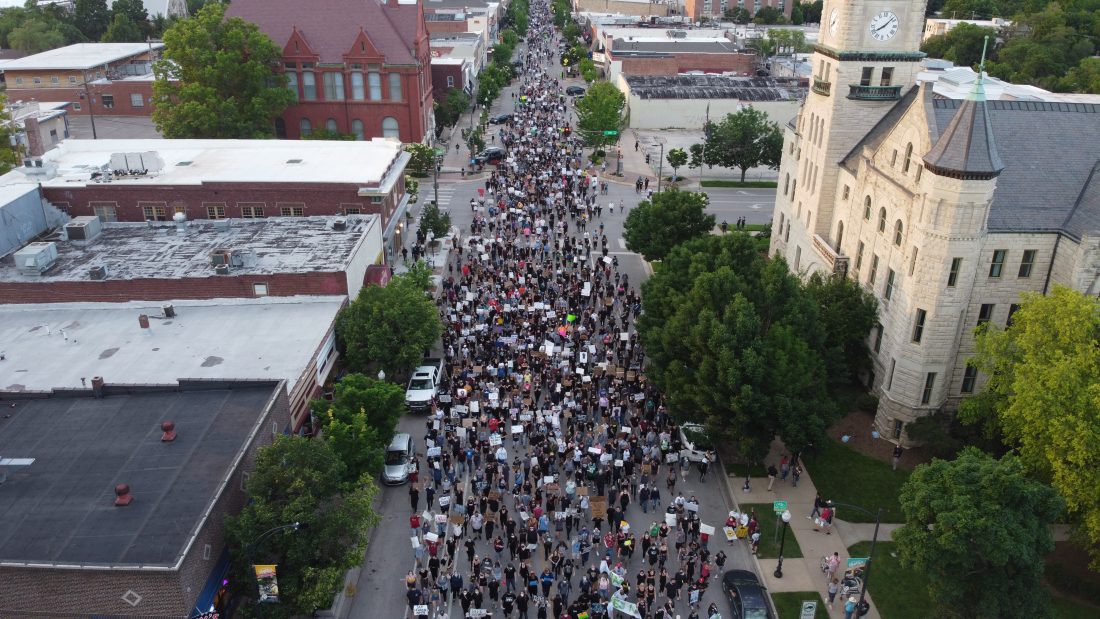
photo by: August Rudisell/Contributed Photo
Protesters make their way down Massachusetts Street during a march against police brutality on May 31, 2020.

photo by: Mackenzie Clark
Interim Lawrence Police Chief Anthony Brixius, in focus, speaks with protesters near 11th and Massachusetts streets on Monday, June 29, 2020.
Also in police news, the city began examining its police oversight board after it became clear that the board had very little actual power regarding complaints brought against police. The board called for a review of its structure and powers in June, and has spent the months since then creating and refining a draft ordinance and seeking public input.
Also on the criminal justice front, the County Commission decided to reverse course on a controversial expansion of the county jail that would have cost nearly $30 million. After years of planning and ultimate approval of the jail, county commissioners pulled the plug on the project in September, amid the COVID-19 pandemic and growing insistence at finding alternatives to incarceration.
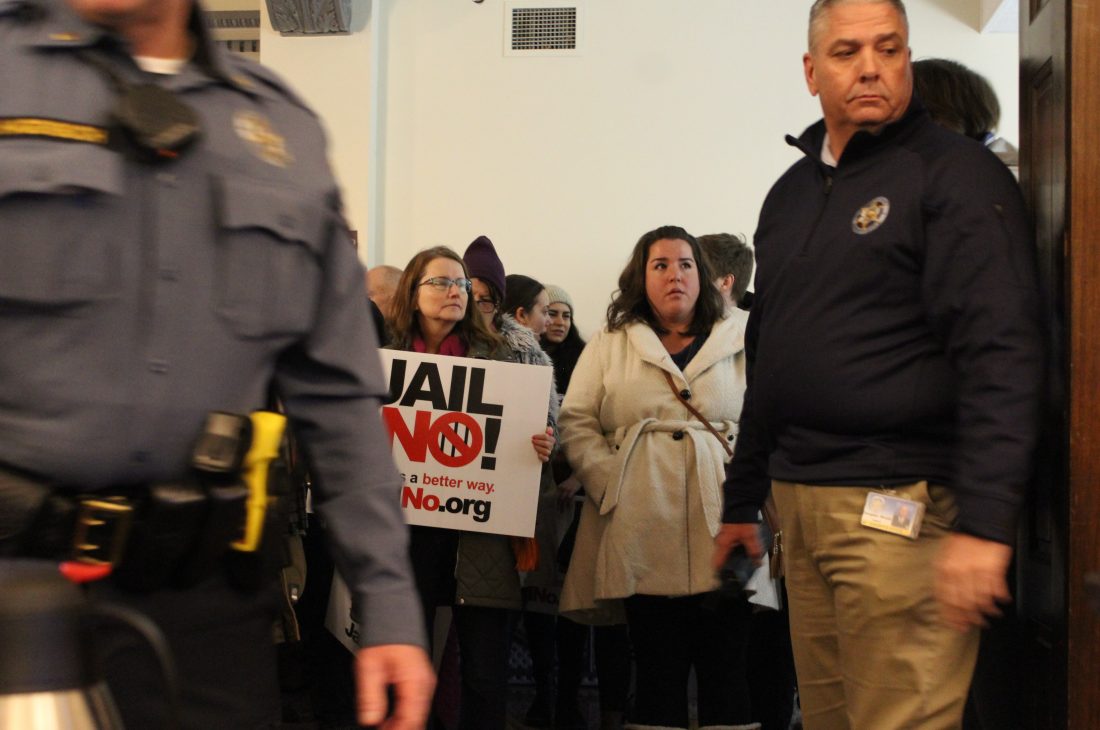
photo by: Dylan Lysen
Members of the public watch the Douglas County Commission meeting from the hallway of the Douglas County Courthouse on Wednesday, Jan. 29, 2020. The public seating for the meeting was full as the commissioners considered authorizing a controversial expansion of its jail facility.
2020 also saw the incarceration of Lawrence developer Thomas Fritzel after he was found guilty in federal court of tax fraud and illegal disposal of asbestos. The case against him began in 2018 and culminated in an approximately one-year prison sentence, which he is now serving.
The University of Kansas landed in hot water with the NCAA and is awaiting word regarding possible major sanctions. Regulators allege the university and coach Bill Self committed major recruiting violations in a scheme that involves KU’s apparel partner, Adidas, and others. They also allege lower-level violations by the KU football program under former coach David Beaty. KU maintains the case for sanctions is baseless. The allegations carry potential punishments that could keep the basketball program from the NCAA tournament for the first time since 1989 and result in a long-term suspension for Self, among other possible penalties.
Also in higher education news, Provost Barbara Bichelmeyer began her tenure as second in command at KU. Previously she was provost and executive vice chancellor at the University of Missouri-Kansas City. In February she took the reins from interim Provost Carl Lejuez, who oversaw a series of contentious budget discussions at KU before later resigning for a job out of state.

photo by: Mike Yoder
University of Kansas Provost and Executive Vice Chancellor Barbara Bichelmeyer speaks during an interview March 4, 2020.
Haskell Indian Nations University also hired a new president after more than a year of interim leadership. Ronald Graham, a former division dean of instruction at Victor Valley College in Victorville, Calif., started his new role at Haskell in May. In October he was in the news after threatening to discipline a student journalist at Haskell — a move that some groups denounced as an attack on First Amendment freedoms.
And finally, in health news, LMH West opened in northwest Lawrence. An outpatient clinic with a $100 million price tag, it was one of the biggest construction projects in town in recent memory, and it’s a reflection of the changing nature of health care as outpatient care is expected to become an even bigger part of the hospital industry.
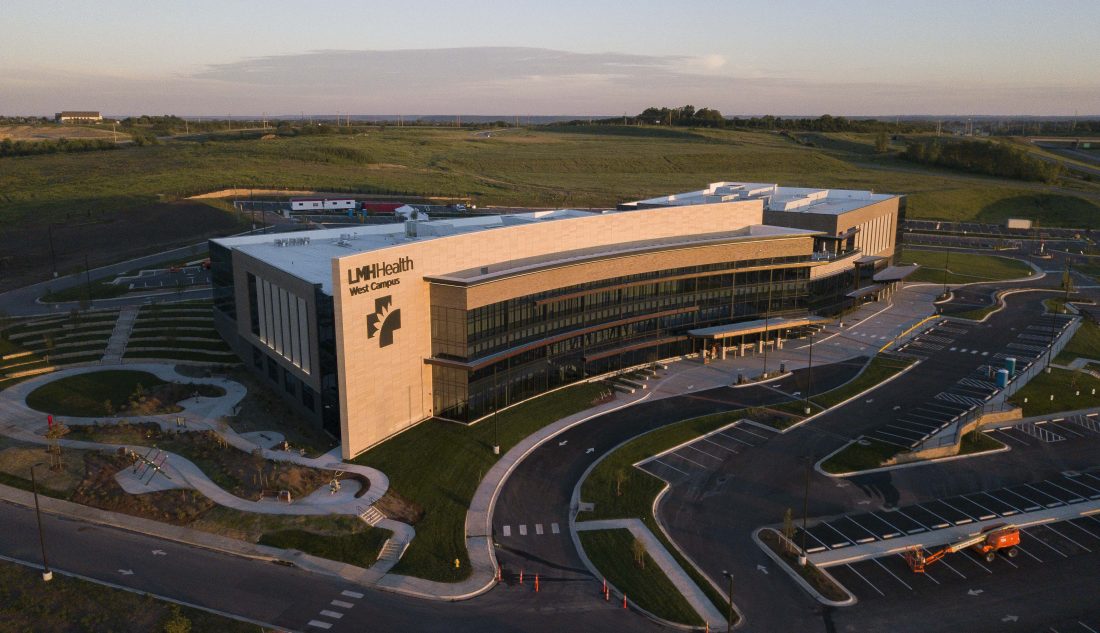
photo by: Nick Krug
The LMH Health West Campus is pictured on Tuesday, Aug. 18, 2020.
Other News
Peaslee Tech’s new homes made from garage doors arrive in North Lawrence
KDOT awards $104.7-million contract for north segment of South Lawrence Trafficway expansion
At 40, her first mammogram changed everything: LMH Health nurse urges others to get screened
Lawrence filmmaker explores program uniting incarcerated mothers and their children in new documentary
Clinton State Park to open new 1-mile, accessible trail and improve two boat ramps near marina