

Housing Stabilization Collaborative’s new system directs rental and utility aid to more vulnerable households, review finds
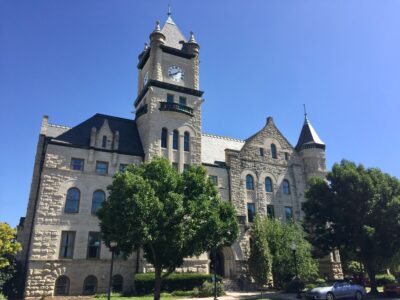
photo by: Journal-World
The west side of the Douglas County Courthouse, 1100 Massachusetts St.
A review of the Douglas County Housing Stabilization Collaborative found that its new prioritization system is directing emergency rental and utility assistance toward households facing greater housing instability.
The six-month review of the HSC – which was shared with the Douglas County Commission at the end of September – found that its new system for prioritizing households for emergency rental and utility assistance is changing who receives funding and is directing assistance towards vulnerable populations that weren’t previously receiving as much assistance. It also examined the HSC’s shift from a lottery system to a points-based questionnaire that began in March 2026.
The HSC first relied on COVID funding and ran out. This resulted in the HSC changing its operations from a first-come, first-served approach to a lottery system with distributions of funding twice a month. Then, in 2025, it reduced the lotteries to once per month and limited eligibility to households with active eviction notices or disconnected utilities.
This year, it replaced the lottery with rolling, need-based allocations that give priority to demographic groups most at risk of housing instability, as the Journal-World reported.
Kristen Egan, the county’s Housing and Human Services program manager, told the Journal-World via email that the reason for the shift from a lottery to a prioritization system was to ensure that HSC’s limited funding reached households facing the greatest barriers and highest risk of becoming homeless, rather than relying on chance.
“While the lottery gave everyone an equal opportunity, it did not distinguish among households based on vulnerability or the potential consequences of not receiving assistance,” Egan said.
Looking back on the six months worth of data, Egan said the data is encouraging.
Egan said the review showed that the HSC was able to reach more individuals in priority populations, including families with children, single-parent households, individuals with disabilities and households experiencing significant housing instability.
“Compared with the six months under the lottery, the percentage of funded households with children increased from 58% to 78%, single-parent households increased from 43% to 65%, and households reporting a disability increased from 21% to 36%,” Egan said.
“Early data suggests the prioritization is working as intended: directing limited resources to households experiencing greater vulnerability,” Egan said.
For 2026, the HSC has received $330,000 from Douglas County, $150,000 from the City of Lawrence’s Affordable Housing Trust Fund and $73,258 in federal Community Development Block Grant money administered through the city.
But even with all of the changes, the six-month review found that the demand for assistance continues to exceed the program’s available funding.
Between 85% and 94% of questionnaire respondents reported several common indicators of housing instability, including unpaid rent or utilities, an expectation of losing housing within 30 days, having a single-income household, receiving a landlord warning or notice, and experiencing a recent destabilizing event.
“HSC found that about half of respondents reported needing additional resources, underscoring that a one-time payment can stabilize an immediate housing crisis but does not necessarily resolve the underlying financial pressures households face,” Egan said.
The report said the HSC will continue evaluating each of these circumstances and whether they will continue to carry prioritization points or be reweighted.
The households receiving funding from the HSC are generally only limited to one award per year, Egan said. The award amounts are based on the household’s specific need rather than a standard award amount, whether that’s assisting with past-due rent, utilities and move-in costs.
A majority of the funded households in the last six months lived in Lawrence. According to the report, 35% lived in ZIP code 66046, 30% in 66044, 18% in 66049 and 12% in 66047. The remaining 5% lived in ZIP codes 66025, 66006 and 66045.
The average assistance amount was approximately $2,116 per household over the last six months. Egan said the HSC partners follow up with households to see if they remain housed after receiving assistance from the program.
“Among households that HSC was able to reach, approximately 96% reported they were still housed after the first six months,” Egan said.
Egan said the goal of the review was not only to assess whether the prioritization system is working, but also to identify areas of improvement.
She said that the HSC will continue reviewing whether the questions in the prioritization tool accurately capture the vulnerabilities it intends to prioritize and whether any questions should be added, removed, reworded or weighed differently.
“HSC will also continue examining populations that may be underrepresented, particularly seniors and households facing language or access barriers, and will seek ongoing feedback from partner agencies that work directly with applicants,” Egan said. “The overarching goal is to refine the process so that HSC can make difficult funding decisions as thoughtfully, consistently and equitably as possible.”
As the Journal-World reported, the county submitted its application for Affordable Housing Trust Fund money late, resulting in the fund’s advisory board denying funding for 2027 on Wednesday evening.
County staff said they will continue to seek additional funding opportunities. In the meantime, if individuals, businesses or other organizations are interested in supporting the HSC’s rent and utility assistance program, donations can be sent to https://www.dccfoundation.org/fund/Housing-Stabilization-Collaborative-Fund.
Other News
Housing Stabilization Collaborative’s new system directs rental and utility aid to more vulnerable households, review finds

Go, See, Do: Maple Festival, concerts and a haunting tour
Douglas County commissioners discuss tracking results of awarded funding to community partners

Baldwin High already has won $25K and is competing for $1M through national sports program
On sister city visit, delegates from Hiratsuka, Japan, see Lawrence’s friendship firsthand