Sexual Trauma and Abuse Care Center seeks county funding after state grant delays create budget gap
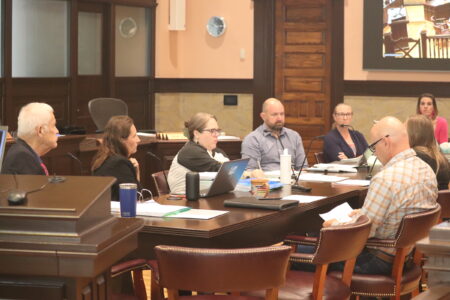
photo by: Josie Heimsoth/Journal-World
Douglas County commissioners hold their final day of budget hearings with community agencies and county departments on Thursday, July 9, 2026.
The Sexual Trauma and Abuse Care Center is seeking additional funding from Douglas County and the community after delays in state grant awards created an immediate budget gap that threatens survivor services.
The Sexual Trauma and Abuse Care Center – a nonprofit providing 24/7 support to anyone affected by sexual trauma and abuse – is seeking additional funding support after it was notified that new State of Kansas requirements included in House Bill 2513 – the state’s comprehensive, multi-year budget legislation – will delay notifications for state funded grant awards.
The STA Care Center has submitted two additional funding requests to the county. One of those requests is for $40,000 to help the organization maintain operations and continue providing comprehensive sexual violence prevention, advocacy, and survivor support services throughout the county after losing state grant funding.
Last year, the STA Care Center approached commissioners with similar challenges and asked for additional funding. The organization had to stabilize after it took some time to find a new executive director and faced financial pressures from an anticipated reduction in other grant funding sources.
Sarah Bariya, executive director of the STA Care Center, told commissioners on Thursday that the organization has struggled to maintain any kind of reserve funds. When Bariya came into the position in January 2025, she said there was hardly any money in funding reserves.
“I’ve tried over the year I’ve been in charge to build reserve through fundraising,” Bariya said. ” … We did all kinds of events just to make sure that we get those resources that cannot be funded through grants.”
The second request is for $38,000 to support the engagement of a dedicated fund developer for 25 hours a month to work in partnership with the executive director for the purpose of building the organization’s unrestricted funding base.
Bariya said that while the hope is that the grant funds will eventually be released, the uncertainty surrounding when those dollars will become available creates a significant funding gap for the organization. She added that the organization has increased its outreach in hopes of gathering further donations, but there has been limited engagement.
“There’s very little interest in what we do, even though the need is still there and growing,” Bariya said. “So, hopefully the Commission and the city will see value in the work that we do and support us.”
On the STA Care Center’s website, a letter to the community has been posted in hopes of acquiring additional donations to keep the facility’s doors open. People interested in donating can visit https://www.stacarecenter.org/.
“(W)e are turning towards our community for help because the impact of halted, delayed or reduced services by our agency could be a devastating reality for many survivors of sexual assault and abuse in Douglas, Franklin and Jefferson Counties,” the website said.
INCREASE TO MOTOR VEHICLE FEES
As the Journal-World reported, a new Kansas law passed this year, Senate Bill 325, that authorizes county commissioners to increase vehicle registration transaction fees up to $10 to help fund motor vehicle services. While the county treasurer can increase the fee to $5, any amount greater than that needs to be approved by the County Commission.
Currently, the county charges a $3 fee for all transactions handled in person at the Treasurer’s Office, and in the county staff’s proposed budget, they’ve increased the fee to $5 so some property tax dollars currently being used by the Treasurer’s Office can be allocated elsewhere. The new fee would apply to all transactions, whether county residents renew their vehicle registration tags online or in-person.
Increasing the fee beyond $5 is an option for counties so the Kansas Legislature can see if the increase is actually needed for motor vehicle operations and what counties do with the additional funding. In 2030, transaction fees cannot exceed $5, according to state law.
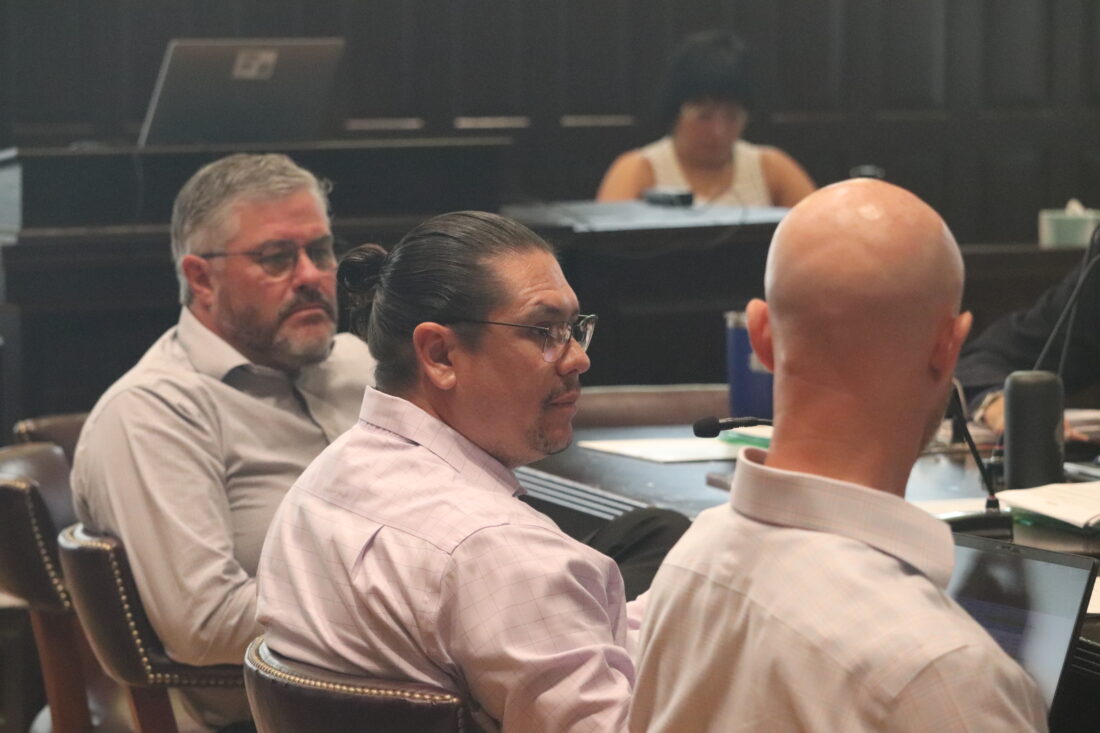
photo by: Josie Heimsoth/Journal-World
County Treasurer Adam Rains speaks with county commissioners on Thursday, July 9, 2026.
County Administrator Sarah Plinsky said the $5 fee would cover a lot of motor vehicle operations and part of key staff’s salaries, but it would not cover employee benefits. Benefits would still need to be funded with property tax revenue.
“In essence, the fee is not supporting the benefits for any of the employees,” Plinsky said. “That’s still being borne by property tax dollars that go into the employee benefits fund.”
To cover all motor vehicle operations and employee benefits in 2027, County Treasurer Adam Rains said the fee would have to increase to $10. If commissioners do increase the fee amount over $5, it would begin in 2027 and expire Dec. 31, 2029.
County commissioners may decide to increase the fee if they want to free up additional funding in the general fund – the county’s largest operating fund. Last week, county staff told the Journal-World that it was already challenging putting together a proposed budget with a flat mill levy and the assessed valuation increase at 4.9%.
REVIEW OF ZONING AND CODES
County commissioners also heard about the next step in the county’s efforts to improve the clarity and structure of the county’s land use regulations. As the Journal-World reported, the county has partnered with the City of Lawrence and consulting firm Clarion Associates to complete a comprehensive review of two sections of the county code – Chapter 11, Subdivision Regulations, and Chapter 12, Zoning and Planning.
While the results of the review will not produce a new zoning ordinance, it will assess how effectively the current regulations are working and outline an implementable roadmap for future updates.
Following a preliminary review shared with county commissioners in March, the consultants have identified four main problem areas: outdated and sometimes unclear zoning rules; increasing pressure from rural land divisions on roads and services; inconsistent guidance from Plan 2040, the city-county comprehensive plan; and a confusing, overlapping city-county planning process.
To continue these efforts, Douglas County Zoning and Codes has requested $300,000 in additional funding to go towards restructuring and modernizing the zoning and subdivision regulations. The rewrite will immediately start once the final diagnostic review is completed, and the process is estimated to take at least two years. This request was funded in the county staff’s proposed budget for 2027.
Commissioner Erica Anderson asked why the county was pursuing a partnership to assist with rewriting the county code instead of completing the work internally. Tonya Voigt, director of zoning and codes, said the last time the county updated the code, it took four years for staff to do it alone.
Deputy County Administrator Sean Pederson said the final diagnostic report from the review is nearing completion and should come before county commissioners soon.
WHAT’S NEXT?
Douglas County staff has proposed a $201.5 million budget, holding the property tax rate flat at 40.669 mills, as the Journal-World reported. One mill is equal to one dollar per $1,000 of a property’s assessed value. With the proposed budget, a homeowner with a $600,000 home would pay $2,805 in property taxes to the county under the proposed mill levy. A $300,000 home would have a bill of $1,405 and a $200,000 home would incur $935 in taxes.
The tax a property owner pays is determined by both the mill levy and the property’s assessed value, so even if tax rates stay steady or are lowered, rising property values might still cause tax bills to go up for many residents. The total assessed property valuation increased by 4.9% in 2026, compared to a 5.7% increase the previous year.
County commissioners officially concluded their budget hearings on Thursday. On Friday, commissioners will follow up with Consolidated Fire District No. 1 staff for its 2027 budget. Then, commissioners will begin discussing their priorities for the county’s budget as they prepare for deliberations next week.
The public is welcome to attend in person or join virtually on Zoom. There is no opportunity for public comments during hearings or deliberations. The details from the meeting and recordings will be available on the county’s YouTube page.
The full 2027 proposed budget can be accessed on the county’s website at dgcoks.gov/administration/budget.
Other News

Douglas County commissioners to discuss whether to increase the number of days fireworks can be sold in the county
Lawrence’s first bike lanes with physical barriers are installed on Ninth Street
Data center company plans up to $1,000 a year in tax, utility credits for De Soto households

Supernatural thriller filmed in Lawrence to have multiple showings at Liberty Hall
Eudora voters to decide sales tax election to fund increased fire protection in the city