After hearing audit results, Douglas County leaders signal financial policy review could be coming soon
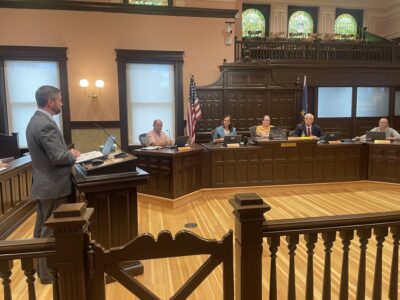
photo by: Sylas May/Journal-World
Jonathan Nibarger of Allen, Gibbs & Houlik briefs the Douglas County Commission on audit results on Wednesday, Aug. 19, 2026.
At a brief meeting about Douglas County’s 2025 audit results on Wednesday, county leaders signaled that a review of some financial policies might be coming soon.
“Now that we’ve gotten two major projects for the year, budget and audit, out of the way, we can return our attention to policy,” said County Administrator Sarah Plinsky, in response to a question from County Commissioner Karen Willey about when the commission might discuss that topic.
Plinsky said county staff had recently asked the Government Finance Officers Association for help with reviewing its policies and determining what changes might need to be made. “That should make a very comprehensive list,” she said, and she hopes to bring that back to the commission within the next 30 to 60 days.
While the county leaders spoke about policies in general, they didn’t mention any specific kinds of policies, such as a new fund balance policy for the county’s reserve funds.
There have been questions from the public for years about the size and purpose of the county’s more than $100 million in reserves. The county does have a policy that caps the reserves at 25% of expenditures in certain funds, but, as the Journal-World has reported, commissioners have decided not to follow the policy for the past several years. Rather, they’ve said that they will discuss modifying the fund balance policy at a future, undetermined date.
The audit, conducted by the firm Allen, Gibbs & Houlik, showed that the county had $133.9 million in unencumbered cash balance at the end of 2025, and that it had spent down some of its reserves, largely to pay for the expansion of the Judicial and Law Enforcement Center and a new public safety building at the Douglas County Jail.
However, it also showed that the county’s general operating fund, the largest and broadest fund which covers day-to-day operations, was over the 25% cap at the end of 2025. It began 2026 with $25.6 million in reserves, up from $22 million a year earlier, and it had 29 cents in reserves for every dollar that it was budgeted to spend on general operations in 2026.
Plinsky wanted to clarify at Wednesday’s meeting that the county did have future uses in mind for some of the $133.9 million in unencumbered cash balance. She said that over $60 million of that amount was actually for future equipment and infrastructure investments. “Since those plans span multiple years, it would be inappropriate to encumber them, but that doesn’t mean they’re unplanned,” Plinsky said.
The county’s current policy exempts certain funds, such as the Capital Improvement fund, from the 25% cap on fund balance amounts for that reason. However, the county’s fund balance policy, which was approved by commissioners in 2023, doesn’t provide any such exemption for the general operating fund, for example.
The county’s fund balance policy states: “Actual fund balances, whether calculated based on regulatory, accrual or modified accrual basis in accordance with Government Auditing Standards, shall not exceed 25% of all budgeted revenue in any fiscal year.”
The definitions section of the policy does not specifically define the purpose of fund balances, but a separate portion of the policy states that “a healthy budgetary fund balance is essential to ensuring the county’s ability to meet expected or unexpected obligations in response to a disaster or an economic downturn.”
The commissioners had few comments on the audit, which revealed no material weaknesses or significant deficiencies. But they did praise those involved for what Willey called “a phenomenal piece of work.”
County Government

Opinion: Local government made a small mistake. Taxpayers shouldn’t be on the hook to fix it
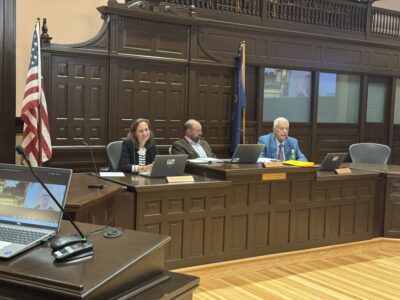
Douglas County commissioners express interest in fireworks sales dates that include a weekend

Douglas County commissioners to discuss whether to increase the number of days fireworks can be sold in the county
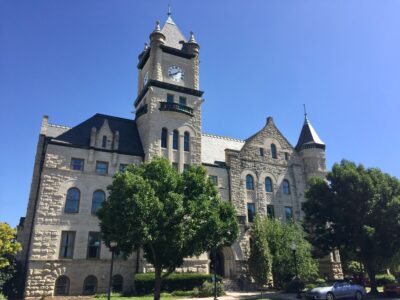
Housing Stabilization Collaborative’s new system directs rental and utility aid to more vulnerable households, review finds
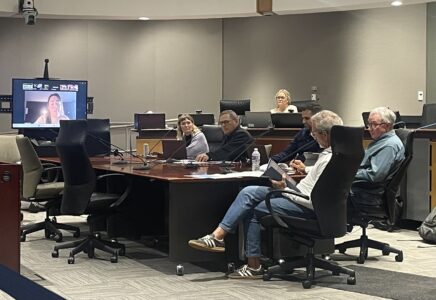
Housing Stabilization Collaborative’s request for city trust fund aid won’t be considered because it was filed late