

Recent trail closure at Rock Chalk Park reveals city has abandoned cost-sharing agreement with KU
City now paying full cost of maintenance, but believes it is saving money
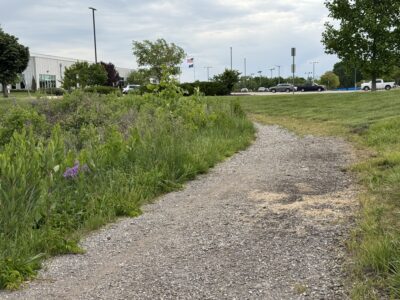
photo by: Chad Lawhorn/Journal-World
A crushed asphalt trail at Rock Chalk Park is pictured on May 8, 2026. The city's Sports Pavilion Lawrence recreation center is in the background
The heavy rains came in late April and covered the trails at Lawrence’s Rock Chalk Park sports complex with mud and debris.
The city’s decision to temporarily close the trails for repairs, though, has uncovered something as well: The City of Lawrence for years has disregarded a signed agreement that requires Kansas Athletics — a partner at Rock Chalk Park — to pay for half of all the costs associated with maintenance and general repair of the miles of trails at the complex.
Instead, the city has been fully paying for those costs, an investigation by the Journal-World has found.
“The Rock Chalk Park Trails are maintained by the city,” city spokeswoman Cori Wallace told the Journal-World via email when asked about who was conducting the work that was underway at the trails.
However, that is not what an agreement that set the terms of development for Rock Chalk Park — a public-private partnership between the city, KU entities and private developer Thomas Fritzel — says about the trails. The agreement states that Kansas Athletics Inc. is the entity responsible for maintaining the trails. The only role the city is supposed to have in the process is to pay half of the maintenance costs, as determined by Kansas Athletics.
How much the city has been paying in maintenance costs — and for how long — is unclear. In a brief statement to the Journal-World, Wallace said the city, KU and the Fritzel-led entity did complete a couple of joint maintenance projects on the trails shortly after they were built in 2014.
Since that time, the city has been solely conducting and paying for maintenance of the trails, which has involved sending crews to the trails a couple of times per year to operate leveling equipment and to add more asphalt millings to the trails’ surface.
The statement from the city said the maintenance activities have “not involved significant costs.” After the Journal-World asked for a dollar estimate on how much the city spends — including cost of wages for city employees, fuel, materials and use of city equipment — the city said each maintenance event likely costs between $400 to $900.
If the city did such maintenance twice a year for about 10 years, as the city’s response suggested, the city would have spent between $8,000 to $18,000 on trail maintenance without being reimbursed by its partners at Kansas Athletics.
City officials, though, said they think deviating from the agreement has been a good deal for city taxpayers. That’s because the city, at some point after signing the agreement, determined that it likely would cost the city more to pay Kansas Athletics half the cost of the trail maintenance than it would cost the city to simply do the work itself.
“If KAI were to perform this same work, we would be paying a portion of a potentially higher contracted rate that could include materials, trucking, equipment, and labor, while also being dependent on contractor availability to complete the work,” Wallace said via email. “This can lead to extended trail closure periods.
“We believe it is more cost-effective and provides better customer service for the City to perform this minor maintenance in-house, allowing the trails to reopen sooner and avoiding paying a portion of a significantly higher contracted cost.”
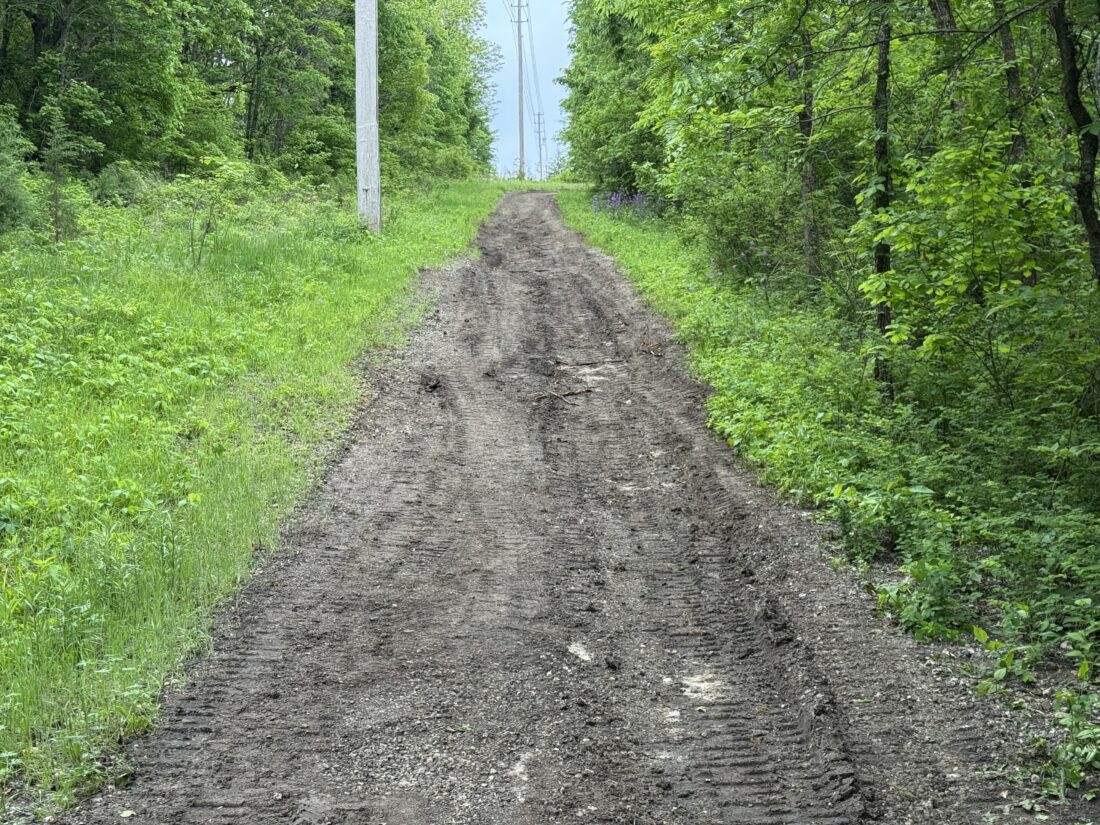
photo by: Chad Lawhorn/Journal-World
Markings of recent trail maintenance at Rock Chalk Park are pictured on May 8, 2026.
However, that change means that no KU entity is responsible for any of the trail’s maintenance costs, even though the development agreement contemplated an equal partnership on the maintenance. The development agreement does give KU Athletics a full easement to use the trails for its own purposes.
The city’s response to the Journal-World didn’t address whether the city had sought to modify the maintenance agreement so that the city would be the responsible party for maintenance activities and that Kansas Athletics would reimburse the city for half of the maintenance costs.
The city’s decision to pay the full cost of the maintenance rather than half the costs, comes at a time when the city — and particularly the parks and recreation department — have struggled to find revenues and balance their budgets. The budget challenges became most evident during the last budget session when city commissioners agreed to start charging entrance fees at city recreation centers, despite significant opposition from the public.
The Rock Chalk Park development agreement was a highly negotiated and much scrutinized document when it was crafted and approved more than a dozen years ago. Many members of the public had grown skeptical of the public-private partnership to build Rock Chalk Park after KU and Fritzel entities insisted that much of the park’s infrastructure be built with no-bid contracts.
The development agreement was touted as an assurance to the public that the city would not pay more than its fair share in the public-private partnership. The provisions about the trail maintenance were far from the most prominent details of the agreement, but they were one of several provisions meant to ensure the parties were sharing in costs of the sports complex.
The deviation from the cost-sharing agreement on trails raised questions about whether the city was deviating from other cost-sharing agreements in the development agreement. Wallace said those other cost-sharing agreements remain in place.
Two of the most significant involve maintenance of landscaped areas and parking lots.
The Rock Chalk Park complex is comprised of 89 acres. The city owns 26 acres where its recreation center — Sports Pavilion Lawrence — sits. A KU Endowment entity owns the remaining 63 acres, while a private entity led by Fritzel owns many of the buildings that sit on the 63 acres. Kansas Athletics rents many of those buildings, which include facilities for college soccer, softball and tennis.
The agreement states that Kansas Athletics is responsible for overseeing the landscape maintenance, mowing and trimming of the entire 89 acres. Kansas Athletics is solely responsible for all of the costs of that landscape maintenance and mowing. Wallace said that is the case. City crews do not mow or maintain the landscaping at the complex.
The agreement also states that the city shall only be responsible for parking lot maintenance — work such as patching, sealing and line striping — for parking lots located on the 26 acres that the city owns. Kansas Athletics is responsible for maintenance on the parking lots located on the remaining 63 acres. Wallace said the city is only doing parking lot maintenance on the lots located on city property.
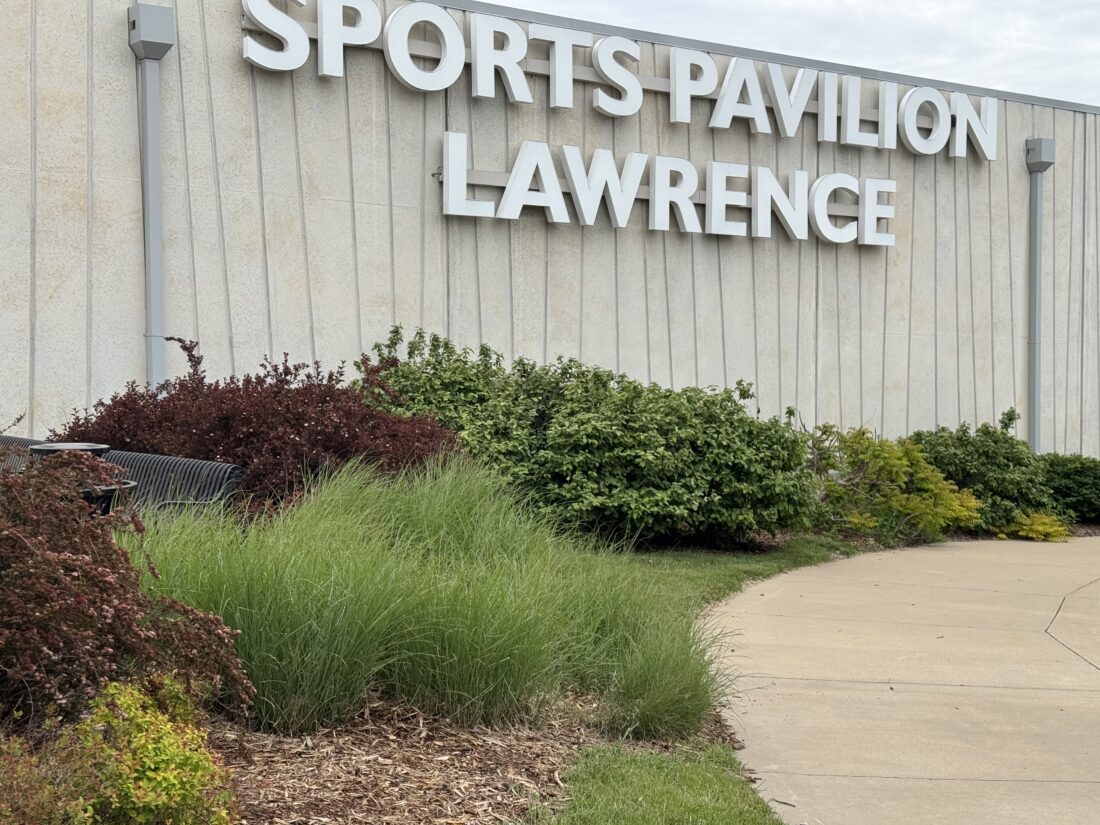
photo by: Chad Lawhorn/Journal-World
A landscaped area at Rock Chalk Park is pictured on May 8, 2026.
City Government
As they approve bikes plan, Lawrence city leaders ask about data collection, Kentucky and Tennessee streets
Lawrence city leaders want to toughen tobacco licensing rules ‘sooner than later’
Algerian government invites Mayor Brad Finkeldei, Lawrence delegation for a visit
Construction on Wakarusa Drive to resume; city manager says KDOT’s secretary has apologized for delay
Evacuation drill planned Tuesday at Lawrence City Hall
