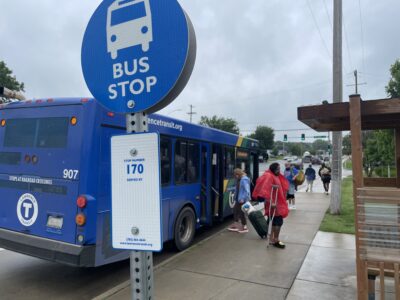
2 city-owned parcels might be suitable to donate for affordable housing, advisory board hears
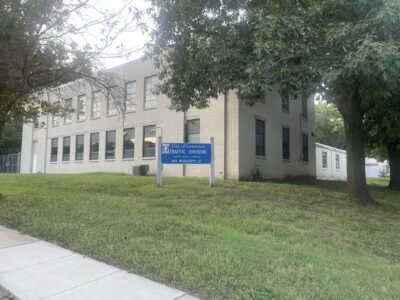
photo by: Sylas May/Journal-World
The Traffic Control Building is pictured on Thursday, Aug. 13, 2026, at Fifth and Mississippi streets.
A strip of land near Oak Hill Cemetery and a traffic building that’s no longer needed – these city-owned sites could have a future as affordable housing, some of the city’s advisers think, and they’re in talks with city staff about a land donation.
At its meeting on Thursday, the Affordable Housing Advisory Board reviewed research by board members Monte Soukup and Barry McMurphy on parcels that the City of Lawrence could donate for affordable housing projects. Soukup said he and McMurphy had met with Planning and Development Services Director Jeff Crick and several other city staff members about these projects and went through their pros and cons.
“Monte has spent actually years doing a really thorough review of all city-owned land,” Affordable Housing Administrator Lea Roselyn said. “It sounds like you’ve identified two parcels that might be really good candidates that we could move forward with.”
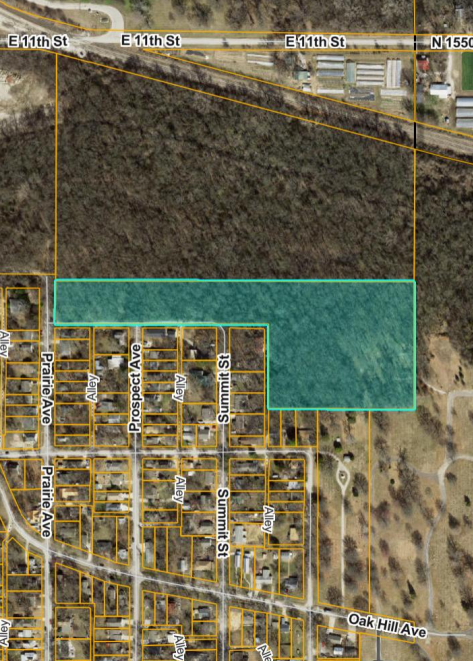
photo by: Screenshot
A map shows city-owned land that could be a candidate for affordable housing near Oak Hill Cemetery. Only the “panhandle” of this Oklahoma-like shape would be suitable for housing development.
The one near Oak Hill Cemetery is just west of the cemetery’s natural burial area. It would require extending some streets, but it’s already platted, and he said city staff thought that was “a very plausible thing to move forward with.”
A report to the board on the potential sites says that “with a short extension of Prairie Ave., Prospect Ave., Summit Street, and re-aligning 12th Street, 15 lots could easily be recovered” in this area.
The city also owns land to the north of this site, Soukup said, but it would be much more difficult to develop; it’s not platted and falls down in elevation.
“I looked at contours, and yeah, it’s an awful piece,” board member Mark Buhler said. “You wouldn’t pick it if you were developing it.”
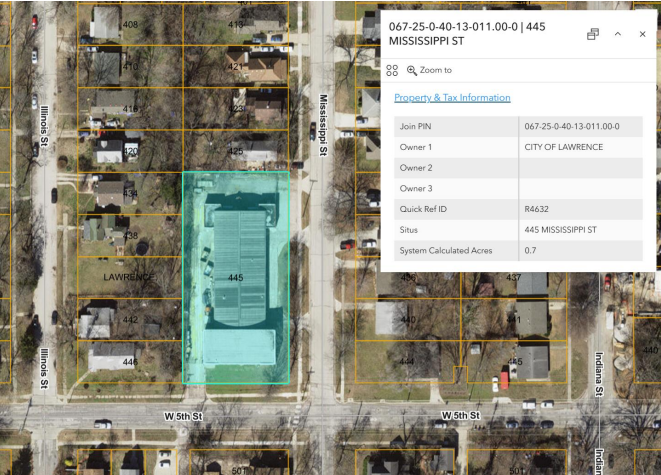
photo by: Screenshot
A map highlights the Traffic Control Building in the Pinkney neighborhood.
The other good candidate, the Traffic Control Building at Fifth and Mississippi streets, was suggested by city staff, Soukup said.
The city has moved operations out of this building and into the new Municipal Services and Operations campus. According to the report, the underlying plat is five single-family lots, and Soukup said that could turn into 10 homes under the city’s density rules.
“This animal has a little bit of hair on it in the sense that we don’t know environmentally what’s there,” Soukup said. After years of city operations and vehicles being based there, he said, there would have to be some research to make sure it’s safe and suitable for housing.
“But the city’s going to have to do that if they’re going to sell it, anyway,” he said.
Buhler asked if anyone had considered doing a multifamily housing project and potentially preserving the building. He said he was a fan of its design. Soukup said it was “worth considering,” but that the environmental review would have a lot to do with it.
Soukup and McMurphy also looked at several other sites, but staff wasn’t as enthusiastic about these for a variety of reasons.
“Some of them have some planning cons, some of them have some political cons that nobody wants to touch,” Soukup said.
One of those is a strip of land in western Lawrence on the east side of Eisenhower Drive, which Soukup said was probably his favorite of the bunch. “To be frank, I pushed them pretty hard on that one,” he said.
The problem was that this land was part of the area set aside to become a park when the Lawrence Police Department’s headquarters building was constructed nearby, and Soukup said planning for that park was already underway.
“I really struggled to get them to budge at all, mostly because that process has already started,” Soukup said. “They’ve probably made promises, and they’d be backing out.”
Another was a parcel along Peterson Road that is currently vacant but is subject to a deed restriction from Hallmark Cards, which donated the land across from its facility for use as a park. Hallmark didn’t show any interest in changing that arrangement, Soukup said.
Yet another is along Maple Lane. That site does have platted lots, but it would encroach on Edgewood Park and could prevent access to the park from the south. Soukup said that the neighborhood already had a high density of affordable housing, and that if the park were affected, that would hurt the neighborhood.
“The neighborhood shouldn’t have a loss for those lots,” Soukup said. “If they lose the park, that’s a loss there to me.”
Buhler also noted that the city owns many other vacant lots already, but Community Development Analyst Brad Karr said most of those were in the floodplain. He said that after severe flooding in 1993, the U.S. Department of Housing and Urban Development gave the city money to buy properties that had been flooded, with the understanding that they would never be developed as housing again.
For now, Soukup said he and McMurphy would be meeting again with Crick and other city staffers to figure out what the next steps might be. He said it would be best to pick a site that’s easier to work with as a test case.
“We need to demonstrate that we can do one of these, and we should pick a simple one and one that we know we can be successful at,” Soukup said. “And then we’ll go on to the harder ones.”
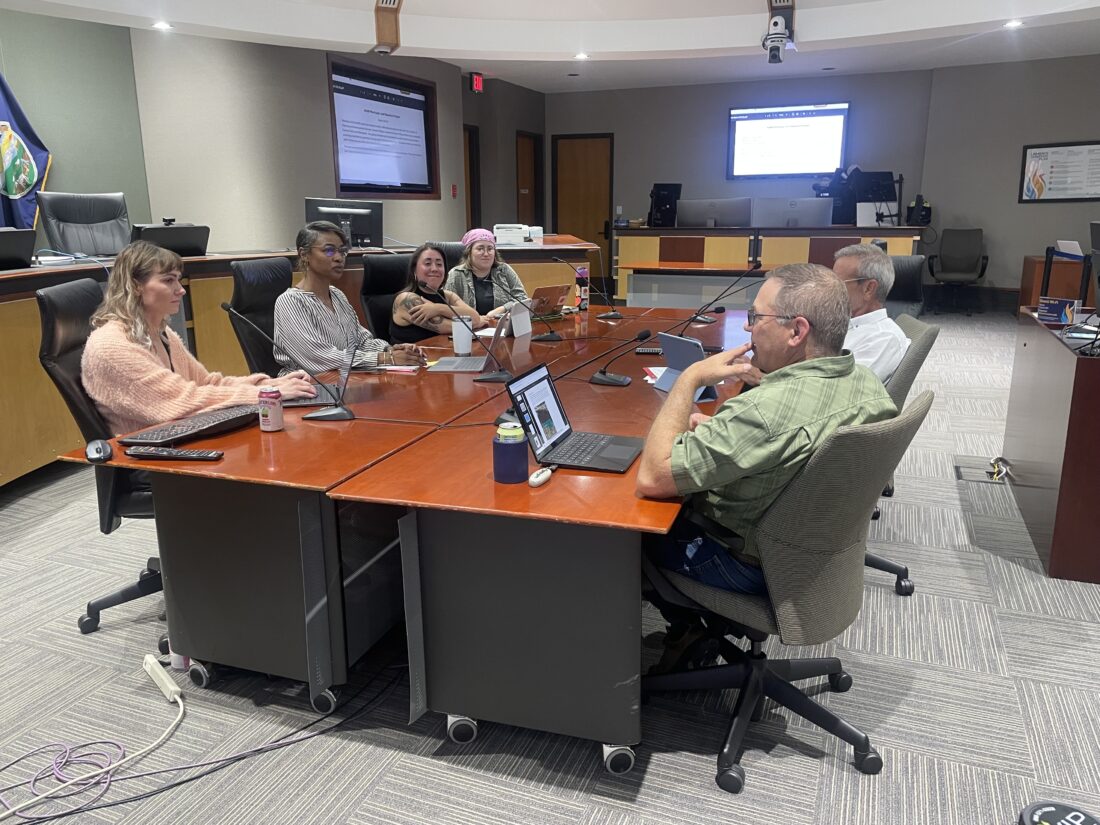
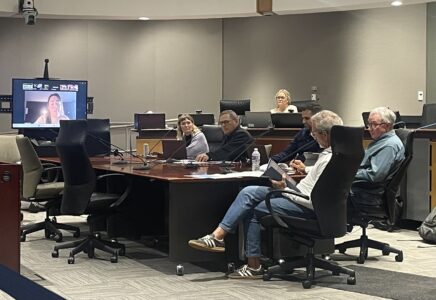
photo by: Sylas May/Journal-World
Monte Soukup, front right, tells the Affordable Housing Advisory Board on Thursday, Aug. 13, 2026, about city-owned land that could be donated for affordable housing.
A funding split
In other business, AHAB discussed how to allocate its funding for 2027 as the city transitions to the new Affordable Housing Incentive Policy.
Currently, the city’s Affordable Housing Trust Fund allocates its money on a once-a-year grant cycle. But the new incentive policy will create a second process in addition to that – a rolling application process that goes on throughout the year and is just for new development and comprehensive housing rehabilitation projects. Both will draw from the trust fund, and AHAB’s task was to decide how much money would be set aside for the rolling process in the 2027 transition year.
“Moving forward, the AHAB must reserve funds,” Roselyn said. “Otherwise there will be no funds available to support the new development and comprehensive rehab applications.”
The trust fund has about $1.26 million to distribute for 2027, and AHAB decided to allocate $760,000 of that in its normal grant process and reserve $500,000 for rolling applications in the 2027 calendar year.
Some members asked whether it might be better to reserve a smaller amount, or just to not allocate all of the money when they make their funding recommendations this fall. But Roselyn said the latter could be difficult if the board didn’t set parameters.
“The fact is they’re all worthy applications, and it’s already difficult to not fully allocate,” she said.
Board member Mariel Ferreiro said it was important to her that the set-aside amount would be appealing for a developer. If the amount was so small that no developer would actually be motivated to apply, she said, that money would just be sitting there.
“My desire is that every time we get money, we allocate it and we’re not holding money,” Ferreiro said.
City Government
Opinion: Don’t give up on trying to use Costco to take tens of millions of dollars from the state of Kansas
Abandoned housing pilot program, data center rules, funding clawback for Bert Nash project on City Commission’s agenda
KU professors, middle school band director, radio personality among this year’s Phoenix Award honorees: ‘It’s a cool mix’
Housing Stabilization Collaborative’s request for city trust fund aid won’t be considered because it was filed late
On sister city visit, delegates from Hiratsuka, Japan, see Lawrence’s friendship firsthand