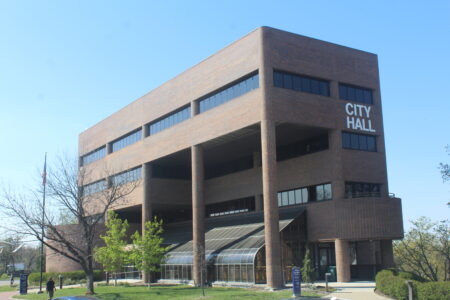

After fire under the Kansas River bridge, city leaders want more action to prevent illegal camping
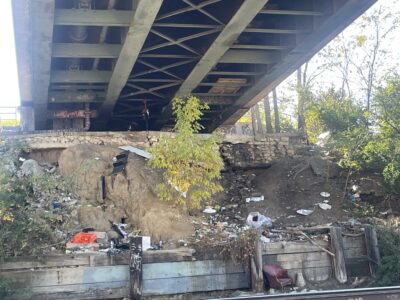
photo by: Sylas May/Journal-World
Debris beneath the southbound Kansas River bridge is pictured on Tuesday, Nov. 10, 2026, after a fire was extinguished under the bridge.
For the staff going to work at Bowersock Mills and Power Company, encountering people living outside with serious mental health or substance use problems is not new.
“I and my staff can’t get to work any day of the week without encountering someone that is really suffering from addiction or mental health issues,” Sarah Hill-Nelson, president of the company that operates the Bowersock Dam, told the Lawrence City Commission on Tuesday night.
But on Tuesday, her business experienced something that Lawrence hadn’t seen before: a fire just a block away from the dam that closed the southbound Kansas River bridge for hours, and that started in an illegal shelter.
She was at the City Commission’s meeting just a couple of hours after the incident to urge commissioners to make “a clear prohibition on camping anywhere in the city, and to empower the City of Lawrence police department to assist people that are camping and get them to the shelter where we have space and they can get connected to the services that they need.”
“What I want people to hear us say is that the camping is not good for anyone. It’s profoundly difficult to watch these people suffering, living through camping,” Hill-Nelson said. “… It’s not good for the people, nor is it good for the community.”
The commission – at least, the three members of it who weren’t in Algeria for the week – agreed.
“Is there anything we can do to empower you immediately to prevent situations like this?” Commissioner Kristine Polian asked Sgt. Bill Bradford of the Lawrence Police Department. She acknowledged that it was often difficult to get longtime campers into indoor shelter, but she wondered if there were additional tools the city could use “that would allow us to compassionately do something about these camps.”
The city does have an anti-camping ordinance, which, according to the online version of the city code, makes it illegal to camp on public property in the downtown commercial district if there are beds available in the Lawrence Community Shelter. In 2025, the city announced that enforcement would be broadened to include the entire city, not just the downtown district.
Bradford said that, “in a nutshell, yes, it’s being enforced.” He said that the officers assigned to the downtown patrol were doing much of the enforcement work.
As the Journal-World reported, the fire under the bridge actually followed an attempt by city staff to enforce camping rules.
LPD spokeswoman Laura McCabe said that an officer and an employee from Lawrence’s Municipal Services and Operations department had been sent to provide notice that the illegal structure under the bridge was going to be cleared. But, around noon on Tuesday, the structure was reported to be on fire, with “heavy smoke and flames,” she said. By around 1:15 p.m, the fire was out and city public works employees, fire department staff, the Kansas Department of Transportation and electric utility Evergy were all on the scene; KDOT cleared the bridge’s structural integrity, and it was back to moving traffic as normal within a couple of hours.
Polian and Commissioner Mike Dever both said they’d heard about camping going on despite the city’s ordinance. Dever said there were problems in the downtown commercial district “that we have to address immediately,” and Polian mentioned camping in other areas, too, such as near Sixth and Iowa streets.
“I’ve been getting a lot of calls that there’s been a lot of camping going on right now,” Polian said.
But Bradford and Municipal Services and Operations Director Melissa Sieben said that in some parts of the city, there were limits on what staff could do, because those areas weren’t under the city’s control. The Sixth and Iowa area involved KDOT property, Bradford said, and in areas like that, “I think we’re trying to do the best we can with what we have.”
Sieben said the area under the bridge was one of those spaces, as well. The city helps maintain the area, but the bridge is KDOT’s, and the right-of-way underneath it is the BNSF railroad’s. “It is a collision of three different entities in one small space,” she said.
In Dever’s view, the city should be talking with these other agencies about getting some sort of “permanent approval” to enforce camping bans in the areas they controlled.
For the near term, the city is going to take some steps to prevent another incident from happening under the bridge. Sieben said there were plans to install a fence there, and that “hopefully will remedy this issue.”
She also said she was pleased with the speed of the response on Tuesday. MSO crews were setting up cones to convert the northbound bridge into one lane in each direction within an hour and a half of the fire’s outbreak, and Vice Mayor Mike Courtney also praised Lawrence-Douglas County Fire Medical for putting a truck on the north side of the bridge during the incident, “just in case something crazy happened.”
But the broader issues of what to do about illegal camping weren’t something that the commission wanted to discuss too much with two of its members, Mayor Brad Finkeldei and Commissioner Amber Sellers, absent.
Dever said it should be a top priority when they’re back, and an opportunity may be coming up fairly soon. There’s a homelessness-related topic on the commission’s future agenda items – a discussion on the status of the winter emergency shelter, which is scheduled for Dec. 1.
“For me, this is something we can’t ignore,” Dever said. “… We’ve got to make sure that we have rules, they’re in place, you can’t camp in the central business district. And if you do, we’re going to have you sleep somewhere else, and it’s probably going to be a lot safer place.”
City Government
After fire under the Kansas River bridge, city leaders want more action to prevent illegal camping
Fines for illegal parking outside of downtown Lawrence nearly double, to $100 plus court costs

Get your clever names ready for Lawrence’s snow plow naming contest — deadline is this Sunday
Douglas County Emergency Management to host winter weather readiness workshop

World Cup hospitality returned as Algeria rolls out the welcome mat