‘We can do much better as a city’: Amid outcry about herbicide on prairie, official cites loss of knowledge, vows to work closely with experts
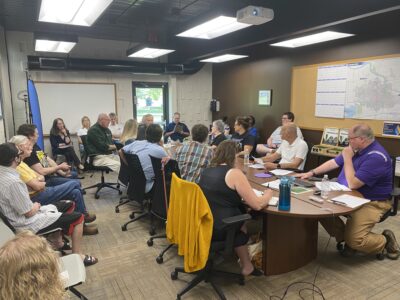
photo by: Austin Hornbostel/Journal-World
Members of the public listen to the City of Lawrence's Parks and Recreation Advisory Board discuss the aftermath of a herbicide application at Prairie Park last week at the board's Monday, May 8, 2023 meeting.
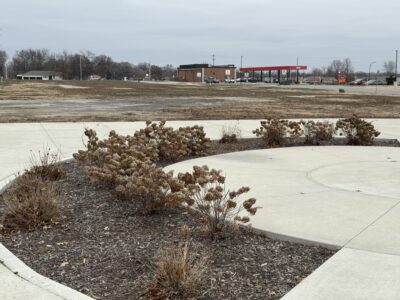
On Monday, public outcry about the decision to spray herbicide on a five-acre stretch of native prairie behind Prairie Park Nature Center continued, and one leader in the City of Lawrence’s Parks and Recreation Department cited a lack of knowledge for the error and promised to work closely with ecological experts to make sure it doesn’t happen again.
The city’s Parks and Recreation Advisory Board met Monday evening, a week and a half removed from when city employees sprayed herbicide on the prairie remnant. More than a dozen community members showed up to the meeting, most of them to express further concern about what happened last month, and Parks and Recreation Director Derek Rogers told the group the department was focused on making sure this doesn’t happen again.
“Our department’s focused on ensuring that this doesn’t happen again, rectifying the damage to the natural prairie through collaboration with the Kansas Biological Survey and local and regional experts,” Rogers said.
The Lawrence City Commission has asked the Parks and Rec department for an “after-action report,” Rogers said, which should be made available as a public document in the near future. He didn’t offer a specific date when that document will be posted, though.
The city has already admitted that the incident happened in error, and one of the department’s three assistant directors, Mark Hecker, offered a couple possible reasons why at Monday’s meeting.
For one, Hecker cited a gap of institutional knowledge lost because the whole division responsible for spraying practices — from its manager down to the field staff — has retired within the past three years.
Hecker said he was aware of the existence of the native prairie and the city’s standing practice of spot-applying pesticides to help manage it, but the staff responsible for spraying this time around thought they were “cleaning up the weeds.”
“I still believe it shouldn’t have happened, but I can’t blame staff if they didn’t know better,” Hecker said. “That’s my fault, that information didn’t get passed down to the next set of management for that park district.”
On top of that, it appears that the department may have violated the City of Lawrence’s policy for pest management by failing to post public notice that there’d be any spraying occurring at Prairie Park on April 27. According to the city’s Integrated Pest Management policy manual, the Parks and Rec department is required to post signage one hour before the application of pesticide, and it must remain posted for at least 24 hours after application.
But at Monday’s advisory board meeting, Hecker said that didn’t happen this time. And, Hecker added, the policy doesn’t address how the city should be managing prairie remnants in the first place.
The members of the public who offered comment Monday told the board and Parks and Rec staff that, though it’s clear there are plans to work with experts toward whatever restoration efforts may be possible, the prairie remnant will “never recover” fully. Other commenters called on the department to be more transparent about when spraying occurs and to acknowledge the lack of inclusion for Indigenous people when it comes to stewarding Native prairie land.
“We can do much better as a city,” one commenter said.
Other News
Community workshop explores ways to help Douglas County families move from survival to stability

4th grade teacher at Deerfield Elementary receives $5,000 Dedication to Education Award
Lawrence school board members will meet for an annual evaluation of the superintendent
Mass Street Mutts can change dogs’ lives, one walk at a time

Photo gallery: Community gathers to light the menorah as Hanukkah begins