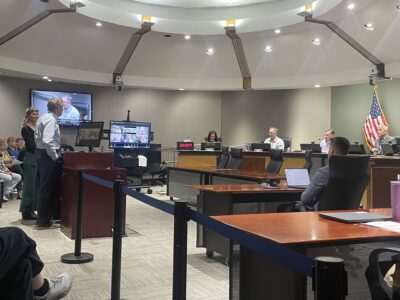
Lawrence City Commission adopts revised version of downtown plan that will shape development for next 20 years

photo by: Mike Yoder/Journal-World File Photo
The 800 block of Massachusetts Street is pictured on Nov. 17, 2015.
After making a couple of changes, city leaders have approved a plan that will shape development in the downtown district for years to come.
As part of its meeting Tuesday, the Lawrence City Commission voted 3-1, with Commissioner Lisa Larsen absent and Commissioner Stuart Boley opposed, to adopt the Downtown Lawrence Plan with the changes agreed to during the meeting. Commissioners voted to change the wording of the plan to make a stronger commitment to increasing housing downtown, and they also added a reference to an existing plan that would serve as a guide for arts and culture efforts.
After those changes, the commissioners who voted for the plan agreed that they were happy with the process and the finished product.
“I’m excited about this plan and I think it’s a good step forward,” Mayor Brad Finkeldei said.
Finkeldei also noted that only a few people commented on the plan Tuesday, which he said indicated to him that the consultants hired to draft the plan had successfully engaged with the community through the process.
The commission’s review was previously delayed after a community steering committee reviewing the plan asked for more time to consider the comments and concerns it had received from members of the public. The commission gave the committee additional time to review the comments and suggest revisions, and several revisions were incorporated into the draft that was presented to the commission Tuesday.
The 120-page plan, which was delayed by the pandemic, has been under development since August 2018. The city hired Houseal Lavigne Associates at a cost of $147,070 to complete it.
The plan will guide growth and development downtown for the next 20 years, and it includes recommendations regarding land use, development, building heights, parking, transportation, infrastructure, streetscapes and public art installations, among other elements, as the Journal-World previously reported.
In the section on land use, the commission voted to strengthen the commitment to providing more housing downtown by changing the word “could” to “should” in the following sentence: “Downtown Lawrence could support a greater level of residential density and a wider range of housing types, including townhomes and apartments/condominiums, either as stand-alone products or as a part of mixed-use.” The commission agreed that other areas of the plan that emphasized the importance of affordable housing were also crucial.
But Boley said that the plan didn’t go far enough. He cited the city’s environmental sustainability goals and the new city-county comprehensive plan’s strong emphasis on increasing residential density, and he said that the downtown plan should emphasize those issues even more.
“The requirement of environmental sustainability just cries out for greater residential density in this area, greater utilization of public transit,” Boley said. “There are all kinds of aspects that I think this plan simply doesn’t emphasize greatly enough.”
The other change that the commission made was related to arts and culture. The plan calls for enhancing and broadening downtown arts and culture, and the commission voted to add a reference to the city’s existing cultural plan as a guide for doing so.
Before the City Commission made its two changes, the plan had already gone through another round of revisions that were recommended by the Downtown Master Plan Steering Committee.
Last month, in response to public comments, the committee called for changes related to historic preservation, equity and inclusion and some of the plan’s redevelopment recommendations. Specifically, a negative statement about the city’s historic preservation ordinance was removed from the draft, as were some specific suggestions to weaken the ordinance; they were replaced with a more open-ended recommendation that the ordinance be reviewed. Recommendations regarding equity and inclusion, including a business incubator with a focus on women and minority entrepreneurs, were also added. The plan provides development guidance for specific sites should they become vacant in the future, and mentions of the Replay Lounge and the Red Lyon Tavern were taken out. The bars were originally included in a recommendation to replace some one-story buildings with taller, mixed-use buildings should those properties become available.
The completed plan includes 22 “key actions” that the city should take to accomplish the plan’s goals. Those include updating the downtown design guidelines; completing the downtown section of the Lawrence Loop; exploring a permanent outdoor event space that could better accommodate the farmers market and other events; and determining whether it would be feasible to charge a vacancy fee for unused commercial spaces downtown.
Finkeldei also emphasized that creating a good plan wasn’t enough — the city would also have to implement it well. He said it would be important for the commission to work with partners and take other steps to implement the plan, including providing funding for capital projects.
City Government
Opinion: Local government made a small mistake. Taxpayers shouldn’t be on the hook to fix it

As club cancels ‘Beetlejuice’ screening at Oak Hill, city says there are no specific rules about events at cemeteries
Opinion: An $80 million Hail Mary that combines Costco and Lawrence’s love of trails
Lawrence Police Department receives KDOT’s top traffic safety award for second straight year
Lawrence City Commission approves extra layers of oversight for data centers, asks for patience on further regulations