Uber will change the world, company exec and KU alum says during KC talk
OVERLAND PARK — Uber is not just giving people rides, it’s changing the face of transportation — and the world, company executive and Kansas University alum Brian McClendon told a crowd Friday in Overland Park.
McClendon was the special guest speaker at “KU Elevate: Innovation in Action,” a TED-style event KU hosted at its Edwards Campus. He joined four current KU professors in presenting talks on their innovative research and ideas.
McClendon, a 1986 KU electrical engineering graduate, is vice president of advanced technologies at Uber and a former vice president at Google, where he co-founded Google Earth and other technologies reliant on a web-based maps computer language he invented.
McClendon left Google for Uber earlier this year, saying in a recent interview with the Journal-World that “Uber needs maps even more than Google does” and calling Uber’s potential “exciting.”
“We’re trying to make transportation as reliable as running water — everywhere, for everyone,” he said Friday.
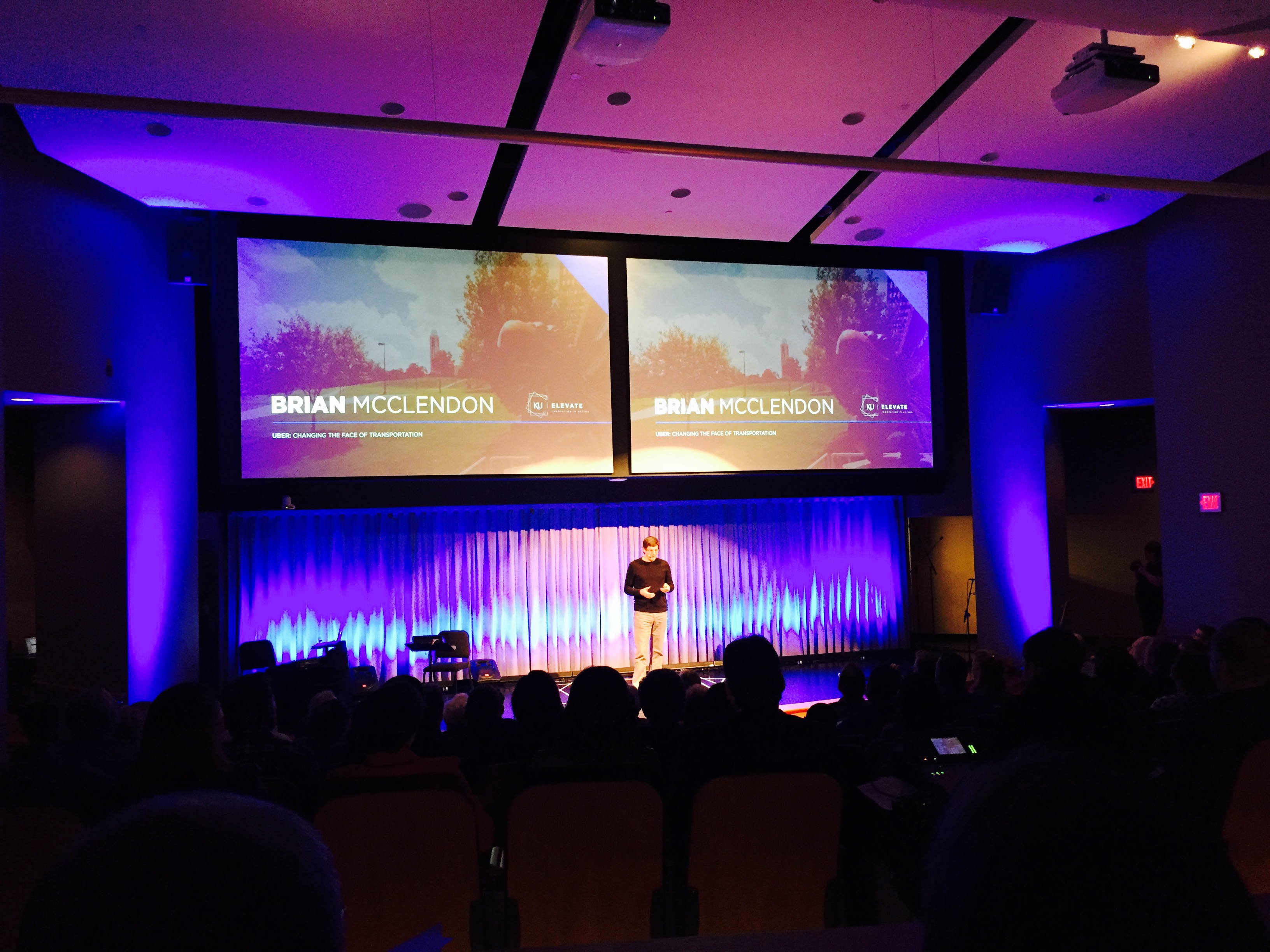
Brian McClendon speaks Friday, Oct. 16, 2015, at KU
One of Uber’s keys to succeeding at that goal is and will be efficiency, he said, and at the crux of that is ETAs.
That’s the estimated time of arrival an Uber customer will see when they request a ride.
If they get on their phone, request a ride and see that the closest Uber driver seems to be a long time out, they’re more likely to jump in their own car and drive, McClendon said. Conversely, “if that number’s low, it becomes magic.”
Incidentally, McClendon said right now in Kansas City area the average Uber ETA is 5 minutes, while the average is 3.4 minutes in New York City. They’re working on it, though Kansas City poses a special challenge: more roads per capita than any of Uber’s other markets.
Uber is pursuing all kinds of ways to improve efficiency and customer experience, McClendon said.
One tackles the problem of the “last 100 yards,” which often pose the biggest challenge to ETAs because even sometimes with a specific address drivers and riders can’t find each other. Using machine learning, Uber now has launched “hotspots” to help identify and map precise locations that are popular pickup spots.
Uber also is trying UberPool in San Francisco, enabling drivers to pick up multiple riders who may be strangers but need transportation along the same routes, enabling them to share a car and cut their costs.
Big picture-wise, Uber being successful stands to make a big difference in the world, McClendon said.
The faster, cheaper and more available Uber can be, the more people may choose to use it instead of owning a car. The fewer cars on the roads, the less traffic jams and harmful environmental emissions.
Improved access to affordable transportation helps low-income people, too, McClendon said. Uber can also make a difference in safety, McClendon said, specifically reducing drunk-driving related injuries and deaths.
Uber is a popular choice among people who’ve had some drinks and, finding it easy to use, will summon an Uber instead of getting in their own car and driving, McClendon said.
He said DUI incidents have dropped 10 percent within a year of Uber launching in Seattle, drunk-driving crashes fell 6.5 percent among drivers younger than 30 in California, and alcohol-related driving fatalities have dropped about 5 percent after Uber’s entrance into various markets in California.
Uber has a lot farther to go, McClendon said. “It’s still early stages, and it’s all very exciting.”
Other KU Elevate presentations
• William Elliott, associate professor of social welfare: “Restoring the American dream of a college education”
• Bala Subramaniam, professor of chemical and petroleum engineering: “Ad astra, per renewables”
• Neal Kingston, professor of educational psychology: “Stay found: How maps can improve outcomes in education”
• Lisa Stehno-Bittel, professor of physical therapy and rehabilitation science: “Overcomplexified: How I learned to love my simple mind”
Find video of Oct. 16 KU Elevate talks by Uber exec Brian McClendon and other presenters online at elevate.ku.edu.
City Government
Soccer gear honoring Lawrence history’s all-star team is now on sale as part of city’s public art exhibition
To honor public servants, Lawrence’s July 4 celebration will have a whole gallery of their photos on display; submissions open now
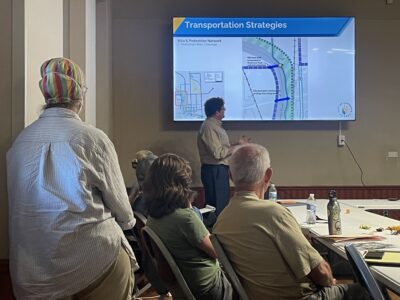
North Lawrence study consultants look at possibilities for a grocery store, food truck park, traffic calming and more
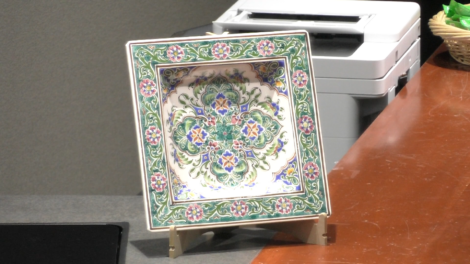
Algerian ambassador gives Lawrence a gift for supporting national team – a piece of art
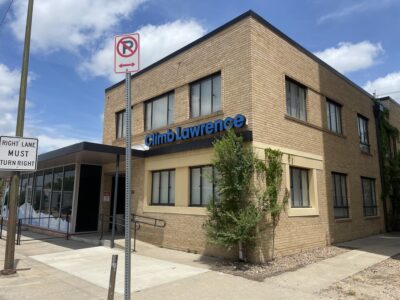
Lawrence City Commission approves incentives for Alarm.com’s office project in downtown building