With the arrival of spring, annual burns going on in Flint Hills, Baker Wetlands
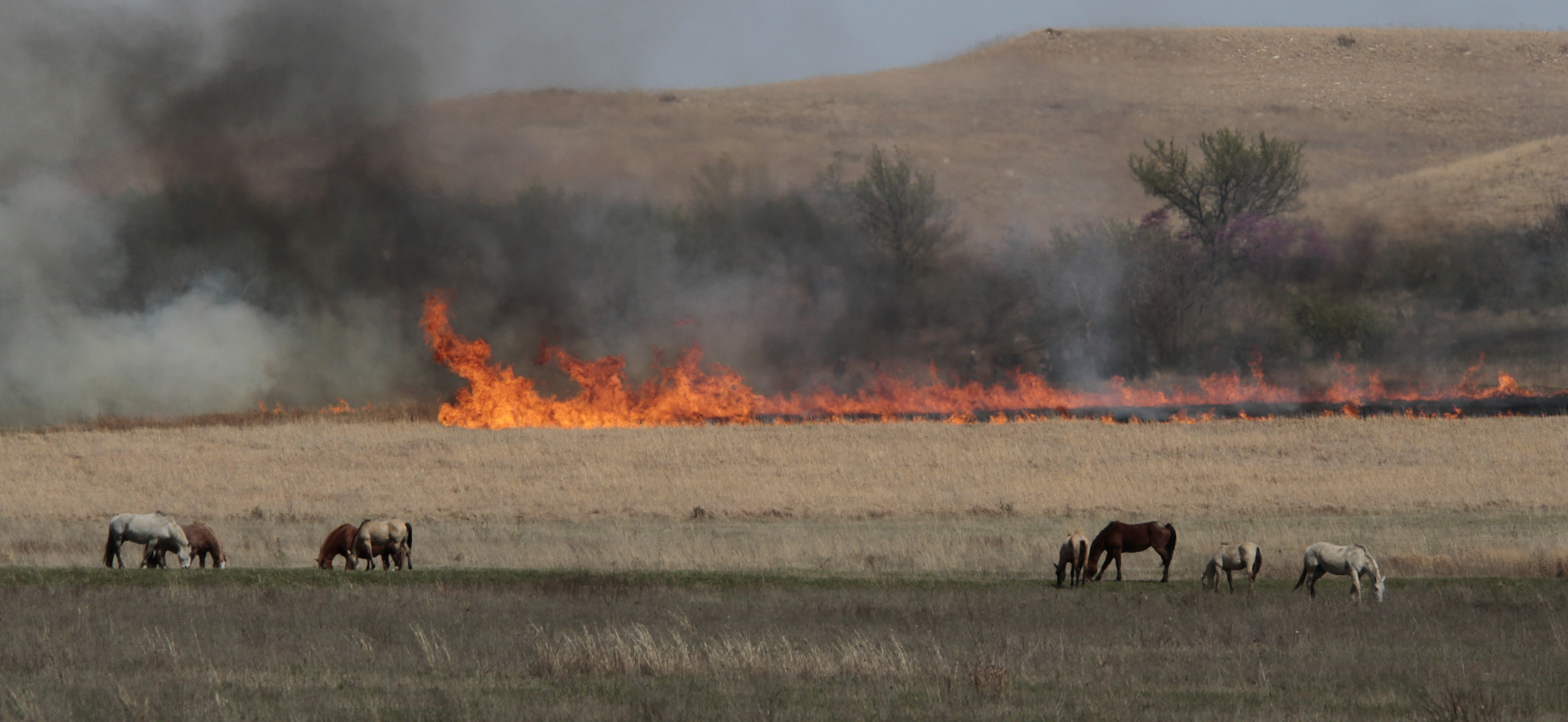
Horses graze in a pasture in Chase County as crews begin a burn of the field Saturday, April 14, 2010. The annual spring burning of the Flint Hills has been taking place this month to clear the way for new growth.The Flint Hills covers approximately 4.5 million acres, and each year as many as 2 million acres are burned.
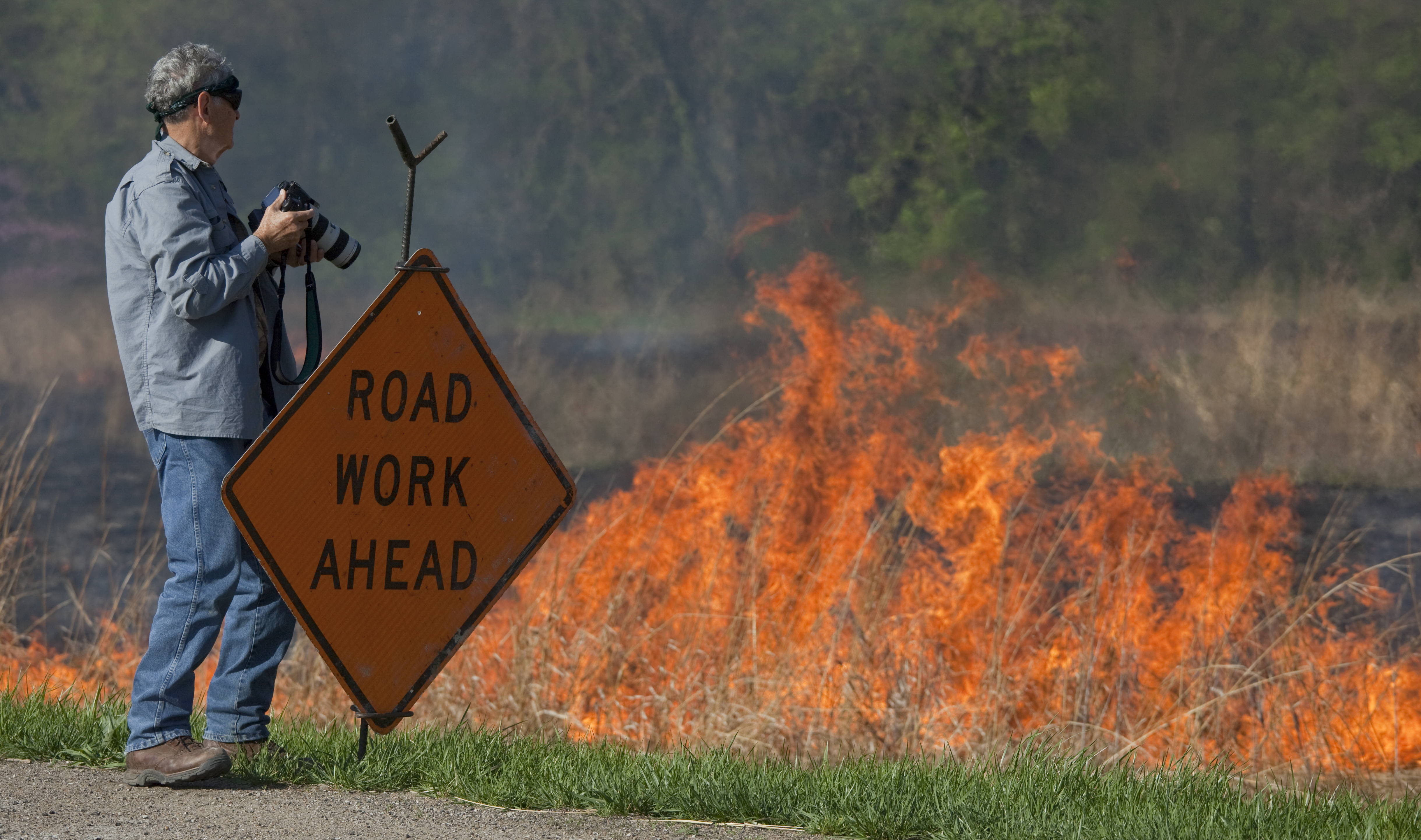
Former Lawrence High school biology teacher Ken Highfill was photographing the burning of the Baker Wetlands Wednesday, April 14, 2010. The annual burn took place between Haskell Avenue. and Louisiana Street, south of 31st Street.
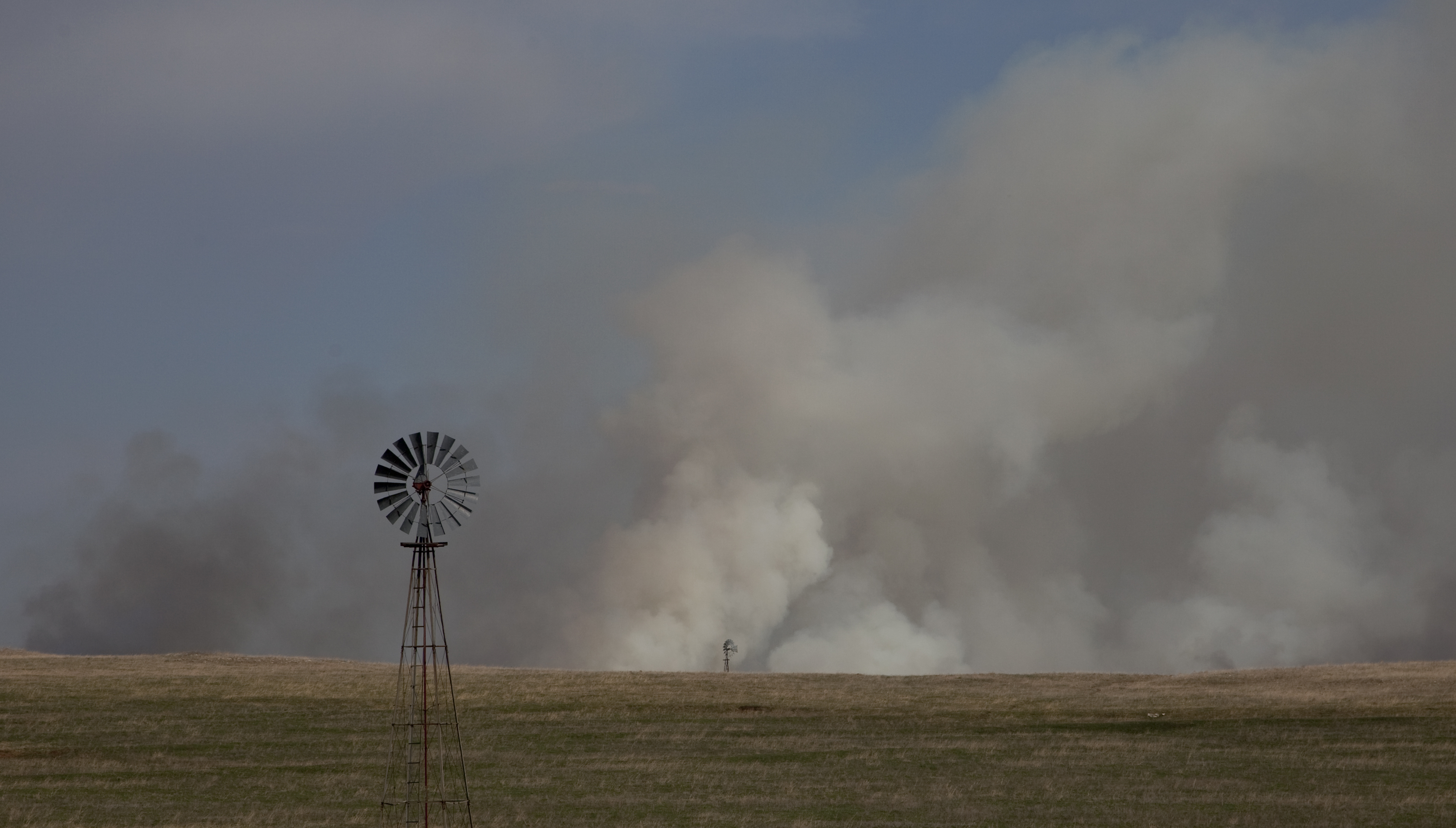
The sky fills with smoke during prairie burning in the Flint Hills Saturday, April 14, 2010. In March a state Senate committee approved a resolution aimed at exempting burning in the Flint Hills from federal environmental restrictions. Ranchers support the resolution, but environmentalists don't. In past years, smoke drifting from the burning has affected air quality in the Kansas City and Wichita areas.
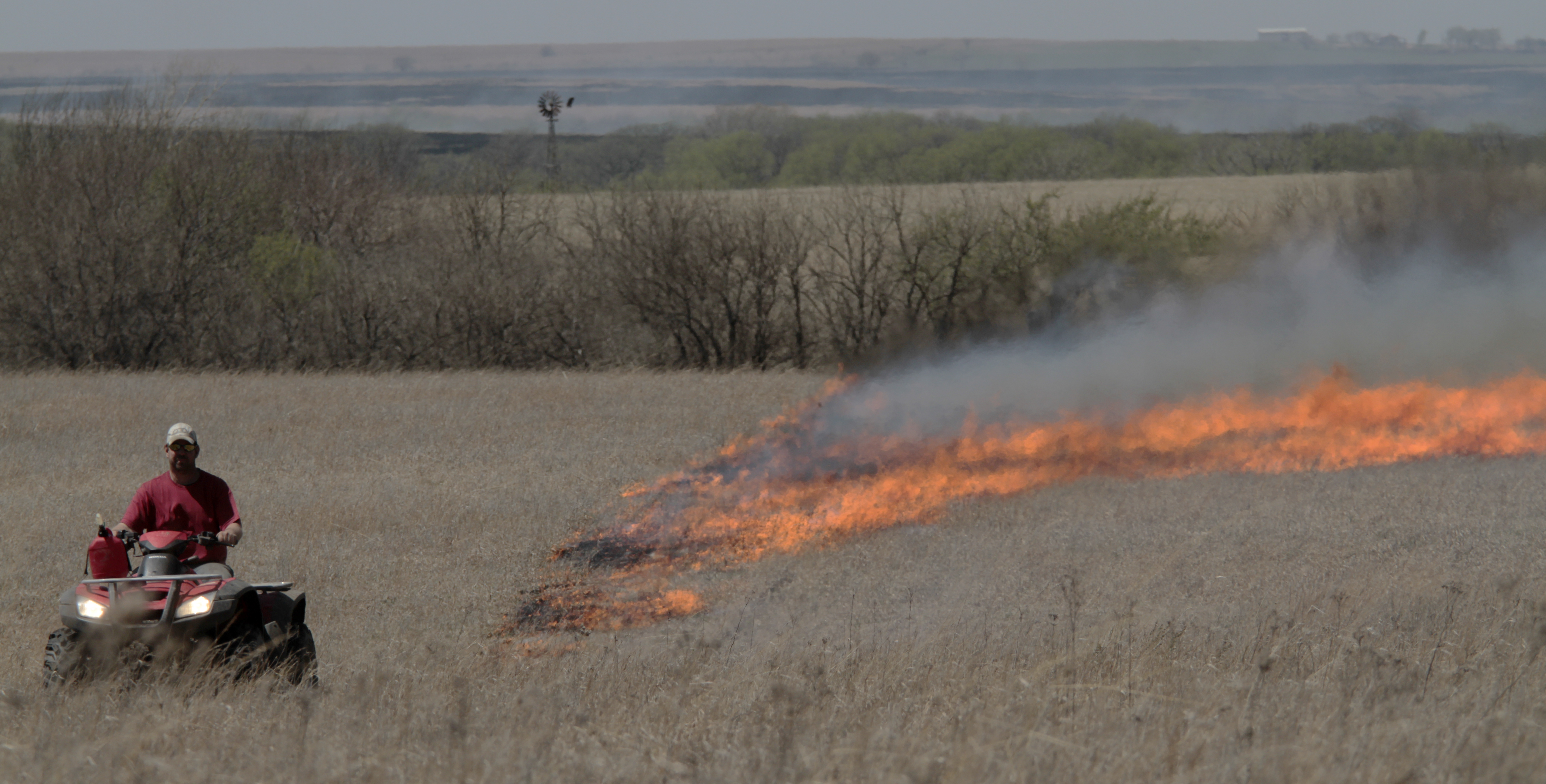
Ranchers burn the Flint Hills Saturday, April 10, 2010. The annual burns help return nutrients in the soil and promote grass growing, but have been criticized for the pollution it generates in larger communities in eastern Kansas, like the Kansas City metro area.
Flint Hills farmer Larry Soyez is setting the prairie on fire.
Dragging a gasoline-dripping “fire stick” behind a four-wheeler last weekend, Soyez burned about 1,000 acres of Chase County pasture, part of an annual ritual to rejuvenate the green grass that beef cattle love.
Clouds of smoke look like air pollution to some.
“I know it reduces the air quality but I think it’s more environmentally friendly than spraying our pastures every year and putting tons of chemicals on all this grassland,” Soyez said.
It was much the same story Wednesday morning just south of Lawrence, where Roger Boyd, director of the Baker Wetlands, was burning at the wetlands.
“The only way we can manage the native plants and promote the growth of beneficial plants — prairie plants, native plants — is basically to burn it,” Boyd said.
Boyd said the dilemma is managing natural areas when people live nearby.
“At some point we’ll have to develop a compromise,” he said. “We try to burn when the smoke’s not going to blow into Lawrence or it’s going to blow through so fast that it’s going to have minimal impact.”
In March, a Kansas Senate committee approved a resolution aimed at exempting burning in the Flint Hills from federal environmental restrictions.
City Government

Per aspera: Outgoing Lawrence City Manager Craig Owens looks back on challenges good, bad and traumatic
PHOTOS: Compass rose painting at Lawrence Regional Airport
Lt. Gov. Toland in Lawrence to celebrate downtown affordable housing project, urges city to be ready for more growth
Functional compass rose with sunflower design will be ‘a really wonderful focus point’ for Lawrence airport

City of Lawrence and Douglas County leaders to weigh in on a proposed Fire Medical funding formula next week