

Cycle of abuse can be seen in families
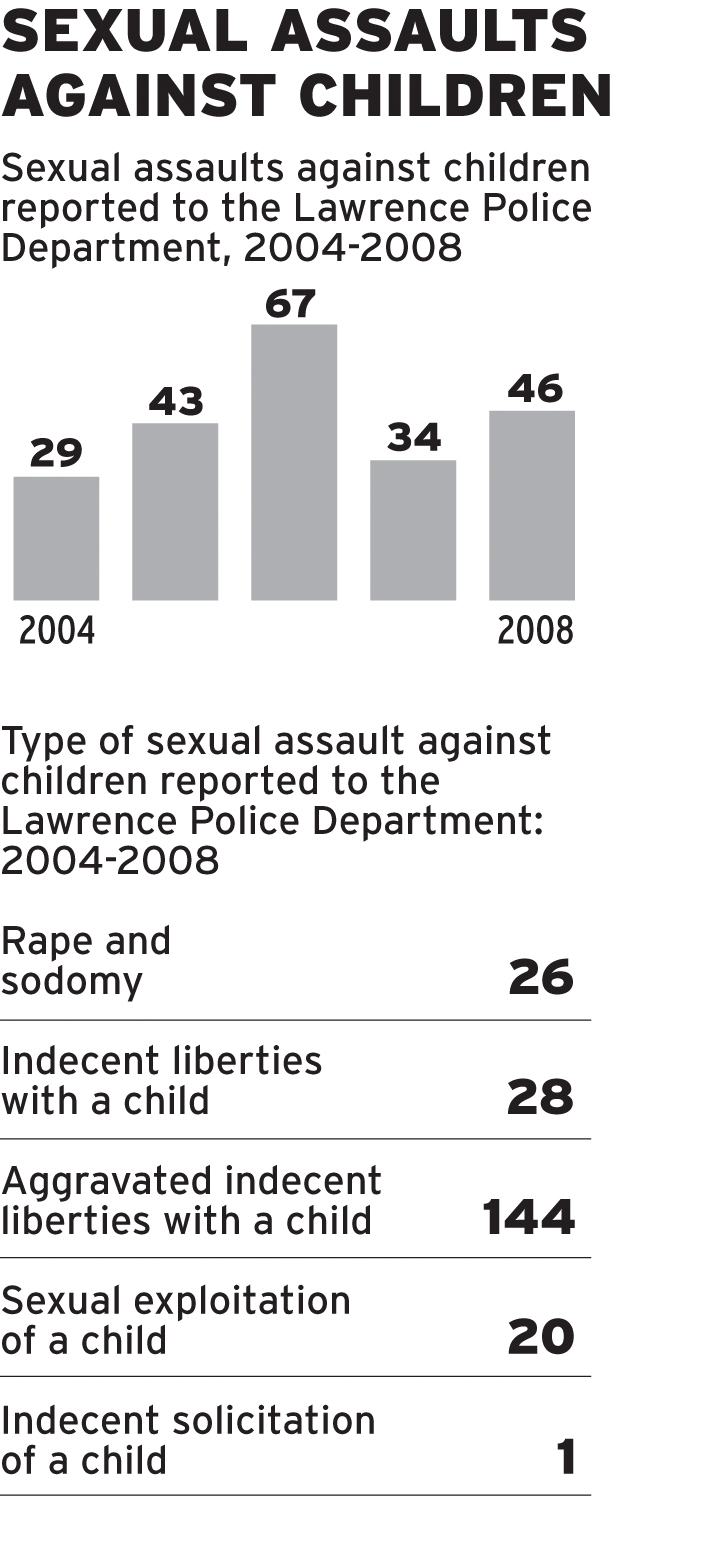
Judy Dutton says she sees the fear in some of her clients, victims of sexual crimes in childhood, that they might perpetuate the cycle of abuse.
“They’re worried that somehow they might also become abusers,” said Dutton, a Lawrence clinical counselor.
While most people who were sexually abused as children will not grow up to be an abuser, it is a risk factor, she said.
“A lot of abusers were abused themselves,” said Dutton, who cautioned that any connections as to who becomes an abuser are complicated by many variables.
Yolanda Jackson, a Kansas University professor of psychology who specializes in sexual abuse, said that understanding why some people who were abused become perpetrators, and why some don’t, remains unclear.
“There isn’t a formula,” said Jackson, adding that research into that specific area of psychology is still underdeveloped.
Further complicating the dynamics of the cycle of abuse is research showing that even when someone who was abused does not become an abuser, his or her own children are at a greater risk of being abused.
Laura McCloskey, a psychology professor at the University of Michigan, said studies show that the children of mothers who had been sexually abused were three times more likely to also be abused.
Why that’s the case also is a complicated issue, said McCloskey, who explained that mothers who were sexually abused might lack some of the ability to spot an offender who comes into their home. That’s a factor that offenders take advantage of.
“Single moms are sometimes targeted by pedo-philes,” said McCloskey.
Psychologists do know that treatment can significantly reduce the chances that someone who was abused will commit a sex offense later in life, and can provide those who were abused the tools to recognize and spot potential threats to their own children, McCloskey said.
But because of the taboo nature of sex offenses, barriers exist in encouraging treatment.
“It’s so difficult to reach out to victims and potential perpetrators,” said Jackson. “There’s a tremendous amount of shame (with sexual abuse).”
Jackson said she also sees parents who resist getting treatment for their abused children. She attributes this to guilt and because many times children do not exhibit outward signs or dysfunction stemming from abuse.
“The guilt stops us from acting rationally,” said Jackson. “Stop ignoring it. Ignorance just adds gasoline to it.”
Sexual assaults and children
- It’s a reporting issue: Risk factors for abuse not easy to pinpoint
- Sexual abuse reports at Central not cause for alarm, district says
- The littlest victims: Legal system not always a good fit for children who suffer sexual abuse
- Child sex predators not usually strangers: Family members, friends responsible for most assaults
- Signs of sexual assault
- How to help a child
- Who must report suspected abuse
State Government

Property tax protest bill would let a few dozen voters block tax increases in some parts of Douglas County

Lawmakers pass bill to create sports authority to oversee new Chiefs stadium in Kansas
Kansas Legislature passes a bill that would give 10% of voters the power to stop some property tax increases
Kansas Senate, House pass budget bill that pegs raises at 1% for most state employees
U.S. Supreme Court Justice Sonia Sotomayor to visit KU next month; will speak to students, select guests
