LAWRENCE USER GUIDE: Campus museums have plenty to offer
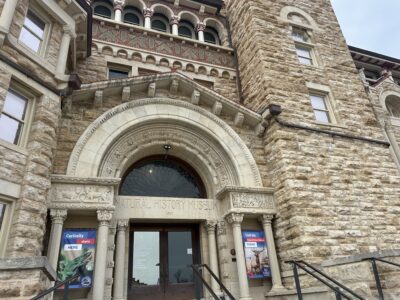
photo by: Bremen Keasey/Journal-World
The KU Biodiversity Institute and Natural History Museum, at Dyche Hall, 1345 Jayhawk Blvd. It's one of the many museums at Lawrence's university campuses.
Editor’s note: This is an installment in an occasional series of “user guides” that aim to provide readers information on how to access and use everything from public spaces to community organizations. If you have an idea for a future user guide article, send it to news@ljworld.com.
When college students come back to Lawrence, it can mean busier roads, scarcer parking and varying traffic patterns. But it also means that museums across college campus open back up to the public after breaks in the academic calendar.
While the weather this week might not feel accurate as a “spring semester,” the return of students to the University of Kansas and Haskell Indian Nations University means the various on-campus museums open back up to the public.
Covering topics from the natural world, to basketball, to an often-forgotten period of United States history, the museums offer residents a sharper glimpse into the world and the surrounding community. This is a user guide for many different campus museums in Lawrence.
KU NATURAL HISTORY MUSEUM, DYCHE HALL, 1345 JAYHAWK BLVD
The story for the KU Natural History Museum goes as far back as 1864, according to Natalie Vondrak, the communications coordinator with KU’s Biodiversity Institute and the museum.
It was then the Kansas state legislature required that KU, as part of its university charter, create “a cabinet of natural history.” As the university steadily worked to amass its collection, the museum and Biodiversity Institute now have over 12 million specimens and archaeological artifacts in its collection, growing from an idea on a piece of paper to conducting research that has a global impact, Vondrak said.
The four-story museum houses exhibits that cover everything from animals to insects to fossils that help introduce the public to the natural world and stress how important biodiversity is to the world. Vondrak said all of the pieces on display are rooted in field work from KU researchers that happen both locally and globally, and the museum hopes to tell the story about that crucial research.
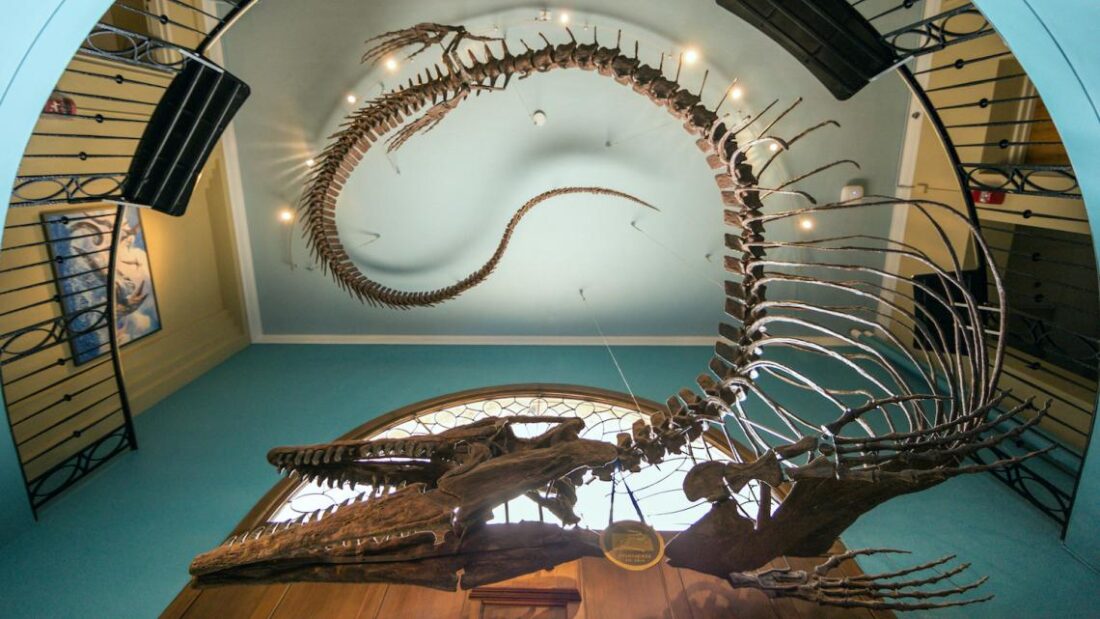
photo by: KU Screenshot
A view of a fossil of a Tylosaurus on display at the KU Natural History Museum. The Tylosaurus is the official marine fossil of the state of Kansas.
“We’re really this treasure at KU,” Vondrak said.
One thing that Vondrak said is super unique about the museum is that it is home to all three of Kansas’s state fossils: the Silvisaurus condrayi, the official land fossil; the Tylosaurus, the official marine fossil and the Pteranodon, the official flying fossil.
The Silvisaurus condrayi is the only known dinosaur that lived in Kansas — most of what is now Kansas was part of a seaway millions of years ago — and the fossilized remains of the armored dinosaur were found in Ottawa County in 1955 and donated to KU, as the Journal-World reported.
“You can’t find it anywhere else in the world,” Vondrak said.
The museum is open to the public Tuesday through Saturday from 9 a.m. to 5 p.m., and open on Sunday from 12 to 4 p.m. Members and KU students can enter for free, while the suggested contribution is $7 per adult and $4 per child.
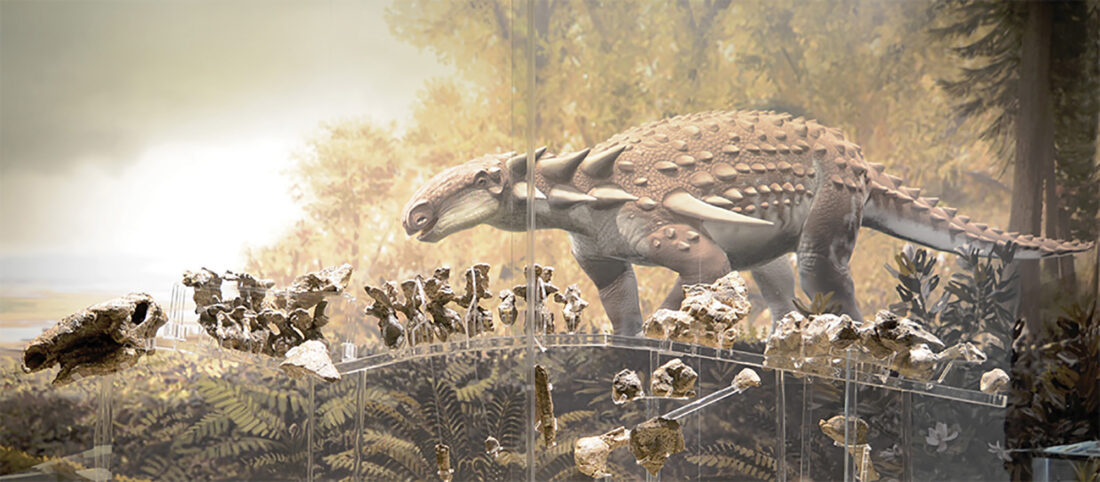
The Silvisaurus exhibit at the KU Natural History Museum is shown. (Credit: University of Kansas)
DEBRUCE CENTER, 1647 NAISMITH DRIVE
Any Lawrence resident or relative college basketball junkie knows that Kansas equals basketball, but the DeBruce Center puts that reputation literally on display.
The building, which opened in late April of 2016 right near Allen Fieldhouse, houses the original copy of the 13 basic rules of basketball written up by Dr. James Naismith.
That copy was purchased at an auction in 2010 for $4.3 million, a sports memorabilia record according to Sotheby’s in New York City by David Booth — who you might know from his name being on KU’s football stadium. The journey of the rules was included in a 30 for 30 sports documentary from ESPN, titled “There’s No Place Like Home.”
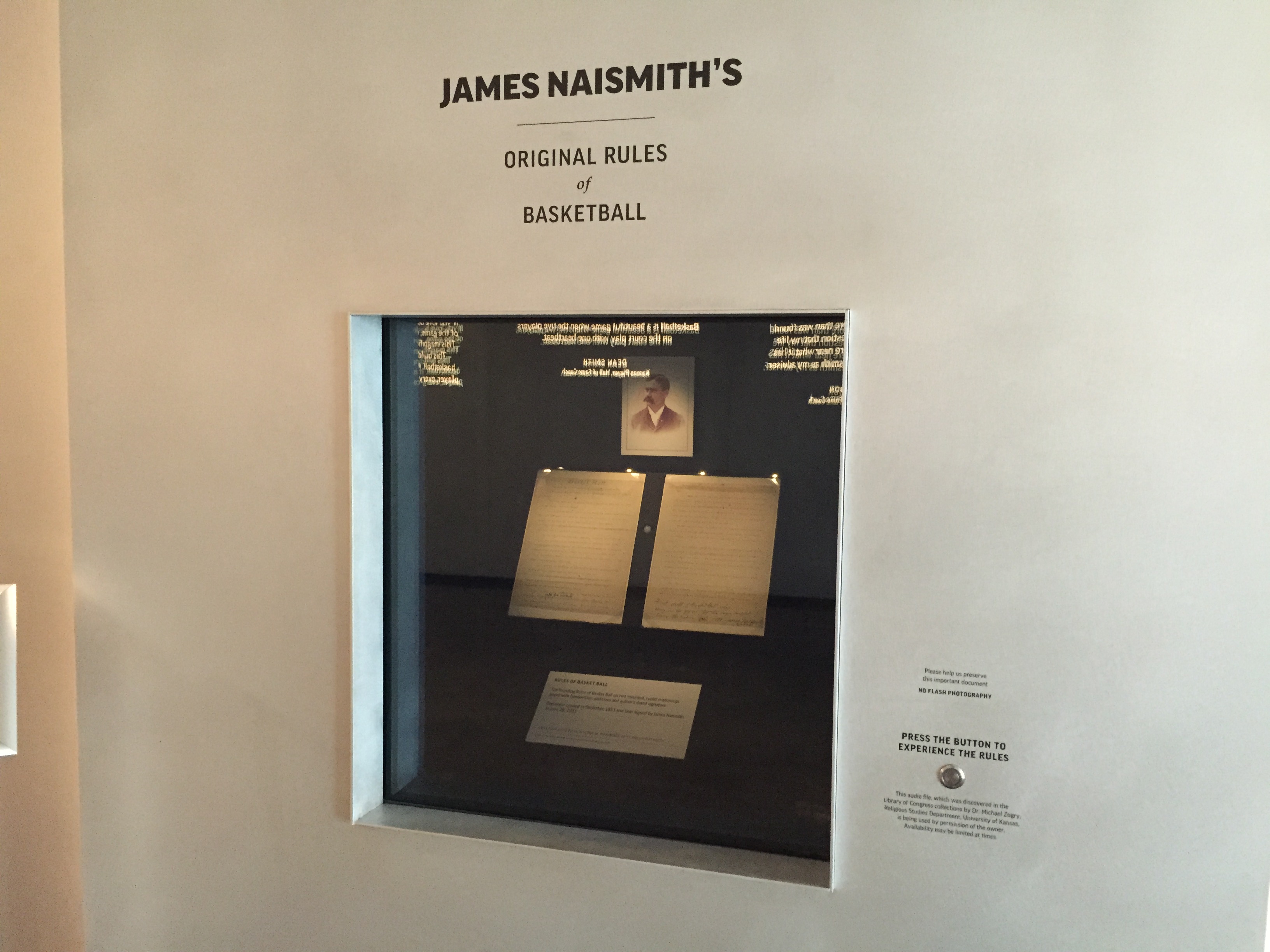
photo by: Sara Shepherd
James Naismith’s original rules of “Basket Ball” are displayed inside the DeBruce Center on the University of Kansas campus. Lighted quotes on the wall across from the rules are reflected in the display case glass.
The DeBruce Center was created to serve as a “shrine for the rules,” according to KU’s website, but it also serves as a dining and common area for students. In addition to the rules, there are exhibits in the center that tell the history of KU’s basketball program — both men and women’s. The center staff also can provide private, guided tours of the DeBruce building and its exhibits, which you can book online.
The rules are installed in a dimly lit case in a gallery between the DeBruce Center and the Field House. The case is darkened by design to protect the historic document, but the rules and the story behind it detail the passion for basketball that has been a theme for Lawrence and KU since the game was invented.
HASKELL CULTURAL CENTER AND MUSEUM, 2411 BAKER AVE.
In Lawrence’s consideration as a college town, KU takes up a lot of the oxygen, but Haskell Indian Nations University’s story and culture has its own unique history that should not “get swept up by KU.”
That’s what Travis Campbell, the director of the Haskell Cultural Center & Museum, said during a tour of the museum on Thursday. Campbell said the aim of the museum is to showcase Haskell’s history and evolution “from a boarding school to a four-year university.”
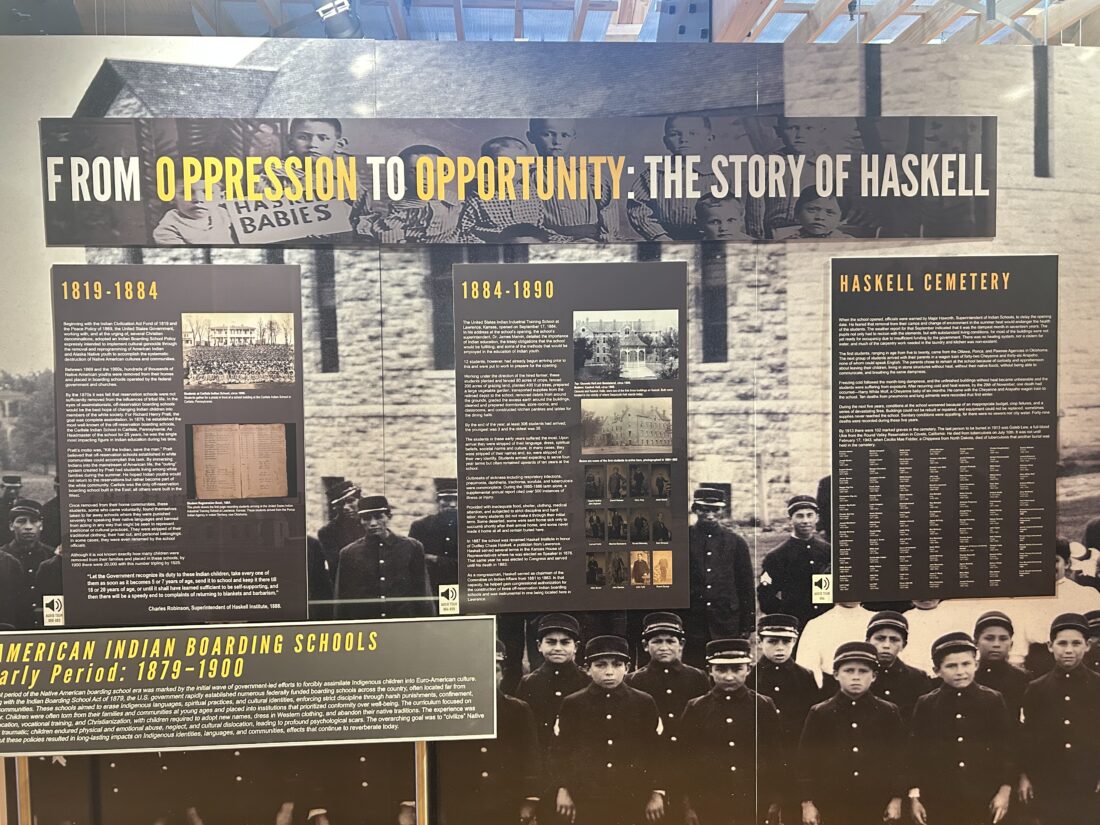
photo by: Bremen Keasey/Journal-World
Part of the exhibition at the Haskell Cultural Center & Museum that details the university’s evolution from a Native boarding school to a four-year university.
As a boarding school that was founded in 1884, the initial aim of the institution was to “assimilate” Native children into the culture of the United States, which meant denying students their ancestral cultures and languages. Campbell said the museum includes “firsthand accounts of what happened” at the school, where students faced cruelty and harsh conditions that led to at least 103 Native American children buried in the Haskell cemetery between 1885 and 1943.
With the information of the conditions of the land and the area before the founding of Haskell, the museum also showcases how Haskell evolved through some of its “worst times,” according to Campbell. Some of the other stories the museum tells highlight the military service of Haskell students and alumni and the athletic success that Haskell built.
Campbell said that four people who attended Haskell represented the U.S. as Olympians in track and field, while Haskell Stadium, which is in its centennial year this year, was the first lighted stadium west of the Mississippi River. Campbell said that around 200,000 people attended the dedication of thes stadium in 1926 — then the largest event to ever take place in Lawrence — and the Haskell football team was known as a “powerhouse” in the 1920s, taking on teams like Harvard, Navy and even playing a game at the University of Hawaii.
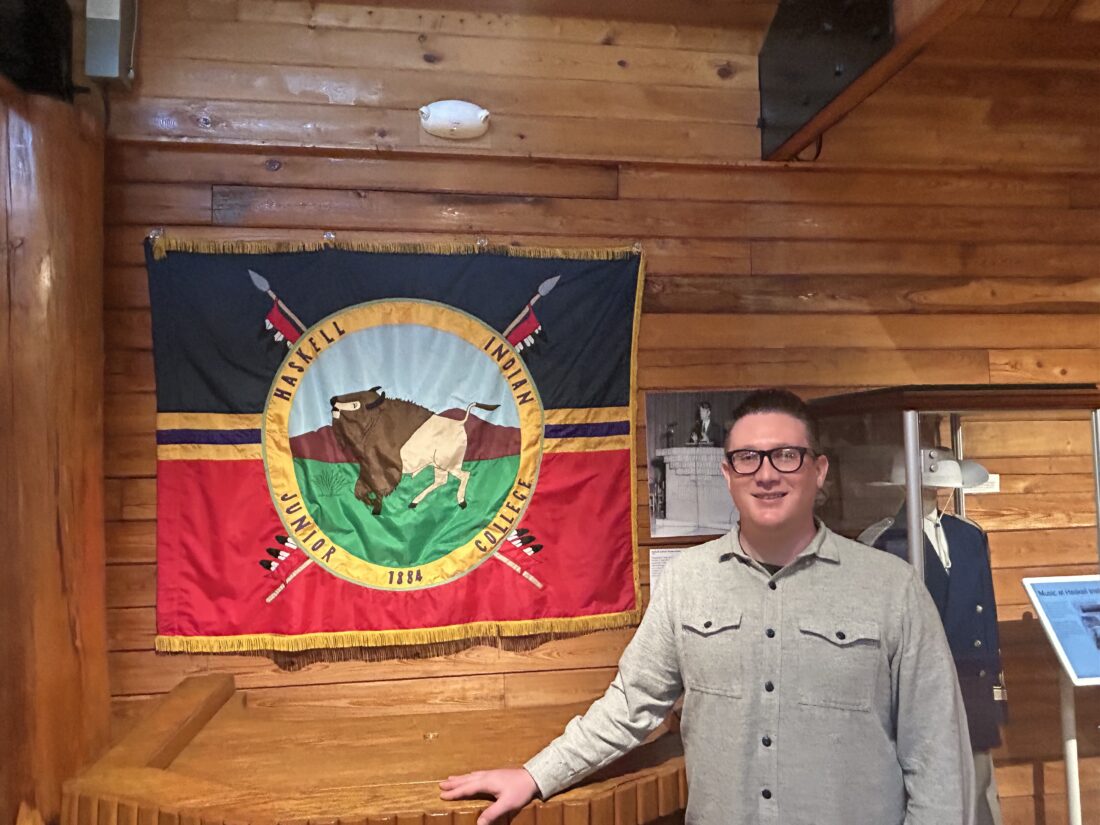
photo by: Bremen Keasey/Journal-World
Travis Campbell, the director of the Haskell Cultural Center & Museum.
Along with the exhibits about the history of Haskell, Campbell said the center has a rotating exhibit space for art exhibits. The current exhibition on display is the first one the museum has ever hosted from a current student, and that will be up until May, according to Campbell.
Boarding schools for Native children loom large in the history of the country and the treatment of its Native population. Campbell said that having a former site that was preserved and being able to tell those stories makes it a real historic asset for Lawrence and the wider community.
“There aren’t many of these former boarding schools still (around),” Campbell said. “For us to have one here is really phenomenal.”
The museum is open from 10 a.m. to 4 p.m. Monday through Friday.
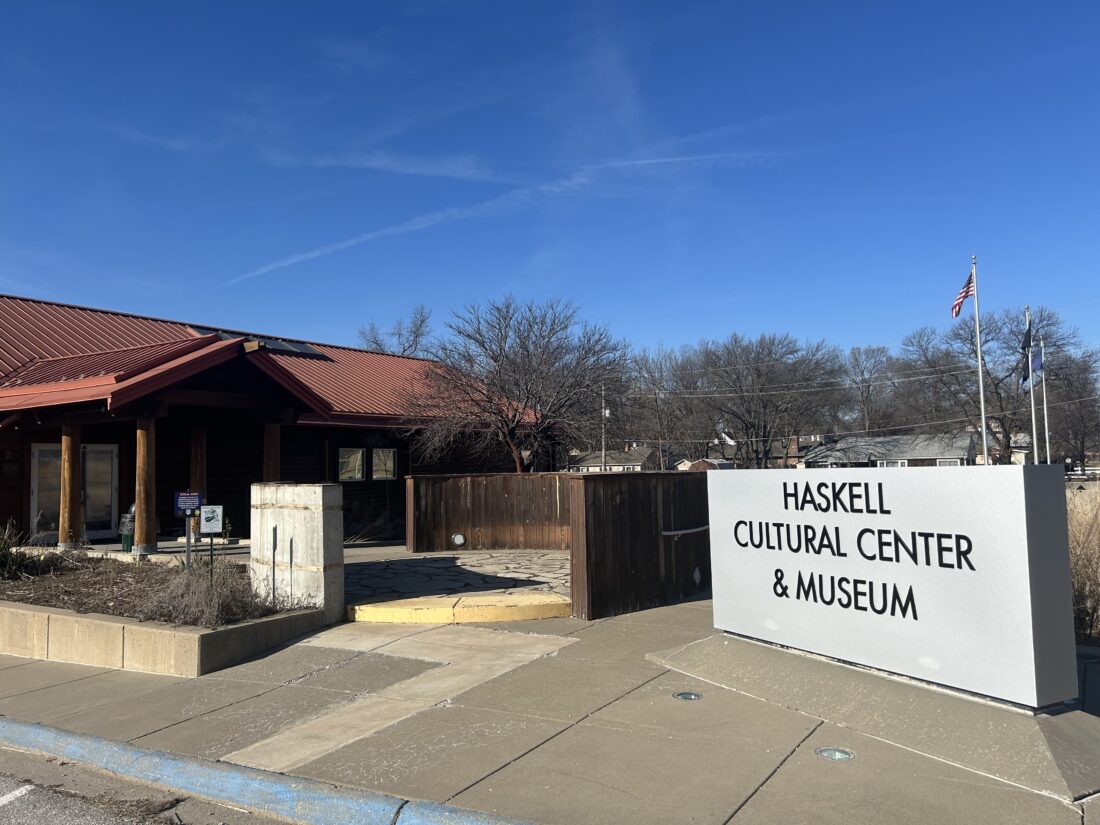
photo by: Bremen Keasey/Journal-World
The Haskell Cultural Center and Museum, 2411 Barker Ave., on Haskell Indian Nations University’s campus in Lawrence.
SPENCER MUSEUM OF ART, 1301 MISSISSIPPI ST.
Located a short walk from the KU Natural History Museum, the Spencer Museum of Art has two floors of galleries that range from ancient stone carvings from Egypt to contemporary modern artwork.
Instead of being grouped by the type of art like how Kansas City’s Nelson-Atkins Museum of Art is divided, the Spencer Museum groups its works on the fourth floor by four different themes.
The themes of those galleries according to its website are called Intersections, which features art related to “social ritual, creativity and innovation and legacies of colonialism and consumption;” Displacement, which explores how items on display in a museum reveal “both historical records and lived experiences;” Empowerment, which has works that ask visitors to think about how “power and being empowered take form” and Illumination, which highlights how various emotions or themes are explored in art by using “light and darkness.”
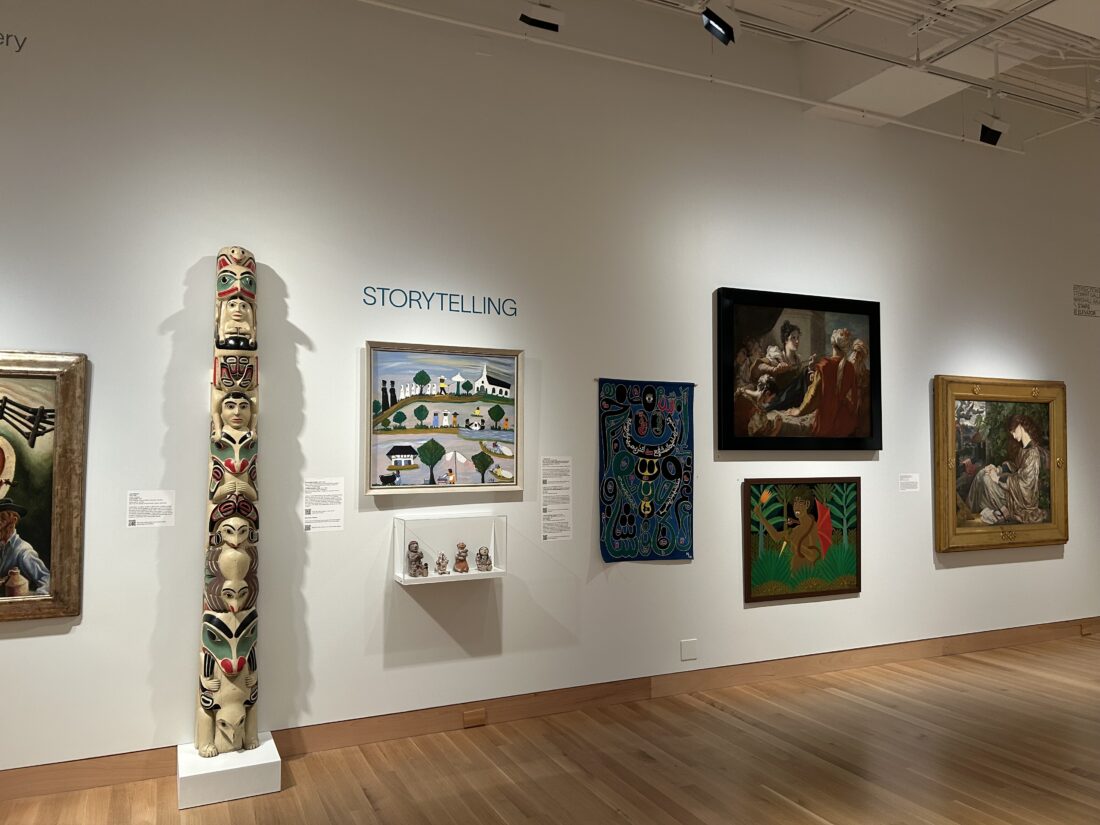
photo by: Bremen Keasey/Journal-World
Varying pieces of artwork on display at the Spencer Museum of Art at KU.
Along with the pieces on display, the museum has an explorable online collection and a mix of rotating galleries. One of the next exhibitions is called “In Conversation with the 2025-2026 KU Common Book,” which will feature artwork based on KU’s Common Book, “The Anthropocene Reviewed: Essays on a Human-Centered Planet” by John Green. That exhibition will open Jan. 27.
As part of the common book, the Spencer Museum selected a “KU Common Work of Art.” This year, the selection is Haunted by the Ghosts of Our Own Making by Hollis Sigler, which is on display at the Empowerment exhibition.
The Spencer Museum is open Tuesday, Wednesday and Friday from 10 a.m. to 5 p.m.; Thursday from 10 a.m. to 8 p.m. and Saturday and Sunday from 12 to 5 p.m. Admission to the museum is free.
Arts and Entertainment
LAWRENCE USER GUIDE: Campus museums have plenty to offer
Robert Redford remembered for his mentorship of new filmmakers at Sundance gala
For Theatre Lawrence’s ‘The Mountaintop,’ actor had to find a vulnerable, human way to play MLK
Events: Cinema, KU basketball, Elizabeth Dole leadership lecture, Kansas Day and more

Lawrence library picks John Green’s ‘The Anthropocene Reviewed’ as community book with hopes it can inspire readers