Large portion of East Lawrence set to be rezoned to protect it from dense development
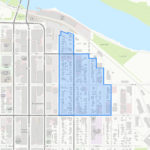
A rezoning proposal for a portion of the East Lawrence Neighborhood will be reviewed by the city’s Historic Resources Commission on March 16, before going to the Planning Commission on April 26. The proposal would decrease the density of most of the parcels in the area, pictured above.
A rezoning request is moving forward that proponents say would help preserve a portion of East Lawrence bordered on two sides by new development.
The East Lawrence Neighborhood Association initiated the rezoning proposal, which would downgrade high-density zoning in the approximately eight square blocks between downtown and the Warehouse Arts District.
Neighborhood leaders say that the proposal, set to begin its review process with the city in coming weeks, would protect the area from significant changes in use.
“We kind of perceive this as being the low-hanging fruit that helps put additional protections, or that helps give people a sense of what our neighborhood is,” ELNA President Phil Collison said. “I think that good planning helps predict the future, and this is the future, I think, that we’ve all bought into: that it’s predominantly single-family residential through this area.”
The rezoning proposal would change the zoning for 124 parcels, most of which are zoned for high-density, multi-dwelling residential (RM24) even though they are single-family homes. The current zoning could allow for structures with more dwelling units to be built instead, according to City Planner Becky Pepper.
“If somebody wanted to come develop multifamily they would have the zoning to do that,” Pepper said. “So, lots could be consolidated and structures with more dwelling units in them could be built, as opposed to the existing single-family nature that exists in that neighborhood now.”
Collison said that possibility creates uncertainty in the neighborhood. And although he said such proposals would be entertained, he thinks the area should be zoned to current use for the sake of residents.
“You get it to be zoned residential so that you don’t have to think about somebody moving in next door and building an apartment building,” Collison said. “I think that that’s the biggest reason. It provides security so that the individual owners can invest in their properties without fear that somebody’s going to come in and ruin it for them next door.”
Specifically, the proposed rezoning would affect the properties north of Ninth Street, bounded by Rhode Island Street and the alley between New Jersey and Pennsylvania streets. If approved, the rezoning would bring the area more in line with the rest of the East Lawrence Neighborhood, most of which is zoned single-family. Streets in the area currently are lined with dozens of yellow yard signs, which are signs providing public notice of upcoming hearings as required by city code.
Before the city adopted its current zoning codes in 2006, the area was zoned multi-family residential, defined as areas with single-family and two-family dwellings that are centrally located and appropriate for “ultimate multi-family development.”
Pepper said when the new code was put in place, the residential parcels were converted to the RM24 zoning because it was similar in density to the zoning under the old code. She said that the rezoning would align the zoning with current uses.
“Basically it’s the residential land uses in that area being zoned to a more appropriate zoning code,” Pepper said. “A lot of the properties in that area have single-family land uses but they have that multi-family zoning district or commercial zoning district.”
More information on the rezoning, as well as a locator map with the current and proposed zoning for each parcel, is available on the city’s website.
The rezoning plan will go first to the city’s Historic Resources Commission on March 16, before going to the Planning Commission on April 26. The recommendations from those bodies will then go before the City Commission for final review.
City Government
Opinion: Environmentally conscious Lawrence is not focused on the biggest problem with electric vehicles
Locust Street apartments, Holcom housing development among this year’s applicants for $700K in Affordable Housing Trust Fund money
Business owners hurting from Wakarusa Drive closure say they’re getting no answers, no signs, no accountability
Planning Commission recommends adding more layers to approval process for data centers in Lawrence
Lawrence Loop trail may go along busy downtown street; city wants to steer clear of Riverfront for development reasons