Defense wins right to psychological report at trial in slaying of CiCi’s Pizza owner
A Douglas County district judge ruled Wednesday that statements a 20-year-old woman made to her psychologist could be admitted during the woman’s trial on charges of first-degree murder.
Sarah B. Gonzales McLinn is accused of killing Harold M. Sasko, 52, McLinn’s roommate and the owner of CiCi’s Pizza restaurants in Lawrence and Topeka.
At issue were McLinn’s statements about abuse she said she suffered as a child and information about Sasko’s conduct while he was alive. The psychologist McLinn gave the statements to was hired by the defense to assess her mental state when she killed Sasko.
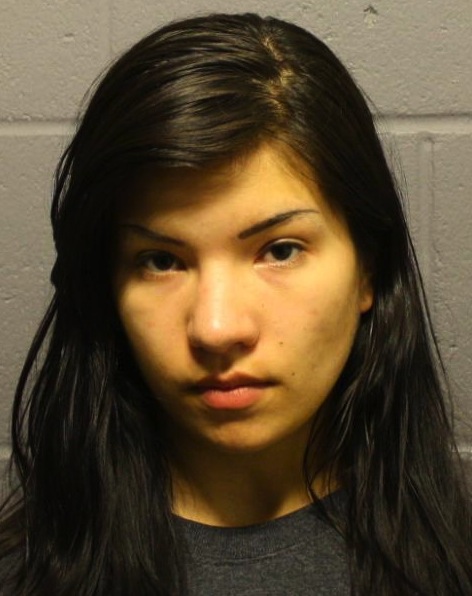
Sarah B. Gonzales McLinn

Harold Sasko
Douglas County District Attorney Charles Branson challenged the statements’ relevance, but McLinn’s attorney, Carl Cornwell, argued they were crucial to his defense strategy. Cornwell has planned for more than a year to argue in court that McLinn cannot be found guilty of first-degree murder because of mental illness.
Sasko’s body was found last January at the home he shared with McLinn in the 2900 block of West 26th Street. McLinn was missing in the wake of Sasko’s death and was found more than a week later in Everglades National Park in Florida.
At a preliminary hearing in May, investigators said McLinn drugged, bound and gagged Sasko, then slashed him to death with a hunting knife. His throat had been cut from ear to ear, they said, and the letters “F” and “R” had been written on a wall with his blood in what police said was an attempt to write the word “freedom.”
McLinn appeared before District Judge Paula Martin on Wednesday as Branson argued that the court should prohibit or limit her defense of not guilty by reason of mental illness or defect. Branson said portions of the report written by McLinn’s psychologist should not be admissible during the trial.
Branson said that during the guilt-finding stage of court proceedings, jurors should not hear the psychologist’s assessment that McLinn had allegedly been abused as a child because that would be “information used to create sympathy.”
“The purpose of our motion is to make sure the doctor has significant leeway to justify her conclusion, but not to garner irrelevant sympathy,” Branson said.
Branson said the allegations of McLinn’s abuse at a young age “does nothing to determine intent to commit the crime and have nothing do with Mr. Sasko.”
To be found not guilty by reason of mental disease or defect in Kansas, a defendant must be found to have been so mentally ill that he or she could not formulate intent.
A family member of McLinn’s in the courtroom let out an audible grunt of disapproval after Branson’s request.
Branson said that after jurors find McLinn guilty and move on to deciding her sentence, then the abuse allegations should be admissible. But Cornwell said he wanted to use the entirety of the report in both stages of the trial because McLinn could be found not guilty and not need to be sentenced.
“I have to have that, Judge,” Cornwell said. “I’m kind of hoping we’re not going to get to the sentencing phase.”
Martin agreed that the account of abuse was necessary to Cornwell’s defense.
“(The abuse allegation) lays the foundation for other things that may have followed,” Martin said.
Branson also said parts of the report that discussed Sasko’s alleged behavior should not be allowed in court, either. Branson said the portion he wished to prohibit the jury from seeing included “self-serving statements” McLinn made to the psychologist “with regard to things told to her by Sasko.”
“Unless she takes the stand, the state cannot cross-examine (her statements),” Branson said. “Any damning conduct by him should not be admissible.”
Cornwell said the portion to which Branson was referring was “vital” to his defense and that he “has to put that in.”
Martin agreed, saying that the statements gave necessary context to the information presented in the report.
Cornwell has not yet revealed whether his client plans to take the stand at her trial, now set for March. McLinn remains in the Douglas County Jail on a $1 million bond.
Public Safety
Lawrence police arrest 25-year-old who they say confessed to murdering his grandmother

2 Lawrence judges and 1 local attorney apply again to fill Kansas Supreme Court vacancy
Massage therapist at Baldwin City yoga studio charged with 4 more sex crimes, bringing total to 11
Affidavit indicates driver was arrested for DUI 9 weeks before student’s death; case wasn’t charged until last month due to KBI testing delay
Violent offender who used pit bull as weapon now facing 2 more felonies