Regional differences complicate Kansas redistricting
Topeka ? Regional differences are complicating a redistricting debate in the Kansas Legislature that political differences have already made contentious.
State senators are reviewing proposals for redrawing their districts in committee and huddling over maps in pairs and small groups. Some Republicans want to use redistricting to maintain the GOP’s dominance, but at the same time, some GOP conservatives worry about a bipartisan alliance cutting them out.
Adding to the tension, some rural senators hope to preserve their collective clout, despite population losses in their districts. If they’re successful, they could keep Johnson County from picking up a senator, though it has gained by far the most residents over the past decade.
“It’s a difficult process, with a lot of things, a lot of nuances, in play,” Senate President Steve Morris, a Hugoton Republican, said during a news conference last week.
Intricate process
Legislators are required to redraw political districts every 10 years to account for population shifts. Guidelines tell them to preserve the cores of existing districts, avoid splitting cities or counties where possible, avoid diluting minorities’ voting strength and preserve existing, social and cultural ties within a district.
But, of course, no legislative task in Kansas is more political — or personal, as individual lawmakers contemplate losing friendly voting precincts or gaining unfriendly ones.
“These decisions ought to be made on data, geography, communities of interest,” said House Minority Leader Paul Davis, a Lawrence Democrat. “But inherently, they’re going to be made based on political considerations, and they are. And they are skewed toward incumbent protection.”
The House actually made redistricting look relatively easy by approving a bipartisan plan for redrawing the 125 state representatives’ districts with a relative lack of rancor. The plan eliminates one district each in southwest, southeast and central Kansas and adds three districts in the faster-growing Kansas City area.
In the Senate, political tensions are rife. Republicans hold a 32-8 majority, but the GOP split, and conservatives hope to gain control over the chamber by targeting eight moderate incumbents in primary races this year, including Morris. Their efforts could be hindered if a bipartisan coalition emerges and draws lines that help the moderates, such as one proposal that drew two conservative challengers out of the districts of moderates they planned to challenge.
Gov. Sam Brownback is pushing senators to give Leavenworth County its own senator, instead of splitting the county between two nonresident senators, arguing the change will benefit the home of Fort Leavenworth and federal and state prisons. Democrats suspect he’s more interested in hurting the two incumbents, who ran as a ticket against him in the 2010 governor’s race.
Regional differences
But regional differences are proving just as divisive as the Senate Reapportionment Committee considers a proposal to preserve all existing rural seats.
The committee’s guidelines say that Senate districts should be as close to the ideal population of 70,986 as possible, but they allow a variance of plus or minus 5 percent, or 3,549 residents.
Senators could keep all their rural districts under-populated by 5 percent and their urban ones, including those in Johnson County, overpopulated by 5 percent. That would help western, central and southeast Kansas.
But if senators decide they should eliminate a rural district and create one elsewhere, there’s likely to be a fight over which area loses the seat.
In 2002, the state went from dividing its western half primarily among six districts to dividing the huge region among five. Collectively, those five districts have lost almost 25,000 residents since.
But the five Senate districts with parts of southeast Kansas have lost nearly 26,000 residents during the same period, making some senators look to that region to lose a seat, if there’s one to be lost.
“There are losses in population across the whole state and not just western Kansas,” Morris said.
City Government
A STAR Bond application raises questions for city leaders about Costco and housing west of the SLT
Soccer gear honoring Lawrence history’s all-star team is now on sale as part of city’s public art exhibition
To honor public servants, Lawrence’s July 4 celebration will have a whole gallery of their photos on display; submissions open now
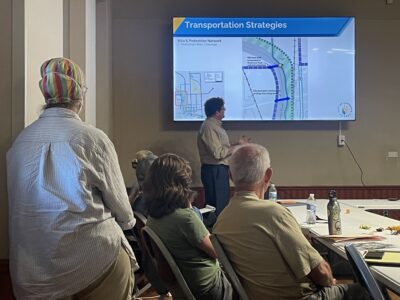
North Lawrence study consultants look at possibilities for a grocery store, food truck park, traffic calming and more
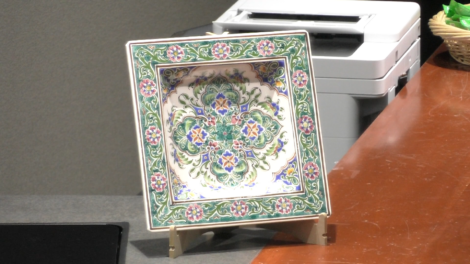
Algerian ambassador gives Lawrence a gift for supporting national team – a piece of art