State budget battles fuel debate about who pays
Proposed federal and state budget cuts and the looming specter of a U.S. government shutdown have put elected officials from coast to coast under some intense public scrutiny.
After state workers took over the Wisconsin statehouse to protest a host of spending reductions and job-related concessions, smaller demonstrations erupted in Ohio and Indiana over similar proposals.
Across the country, cash-strapped states and local governments are cutting jobs, services and benefits because of budget shortfalls caused by declining tax revenue. On Thursday night, the Providence, R.I., school board voted to send termination notices to all of the city’s 1,900 teachers to close a $40 million budget gap.
Since August 2008, state and local governments have trimmed some 426,000 jobs, about 253,000 in the past year alone. The depth of the cuts has hit families hard, and their frustration is boiling over and is sparking a growing public backlash reminiscent of the tea party protests that began in the summer of 2009.
But unlike the tea party’s aversion to recessionary spending by congressional Democrats and President Barack Obama, recent state-level protests have mainly targeted GOP budget-cutting measures that many feel are deeper than necessary and politically motivated against labor unions, which traditionally back Democrats.
Wisconsin Republican Gov. Scott Walker’s plan to scrap collective bargaining rights for nearly all state workers has become a rallying point for many Republicans who feel that public employees have had it too good for too long.
“We have a collective bargaining process that is heavily skewed toward labor. It has become an albatross around our necks, and it can’t continue,” said Erik Helland, the Republican House majority whip in Iowa, where public union rights are also under fire.
The GOP push for union pay and bargaining concessions in Wisconsin has prompted a $30 million campaign by labor unions to fight similar proposals in Iowa, Ohio, Indiana and elsewhere. Democratic supporters, such as President Barack Obama’s political entity Organizing for America, are pitching in to recruit demonstrators.
Democrats say Republican efforts to dilute union clout wounds the middle class.
“Using the state budgets to execute cynical political attacks against working families is a brand of politics Democrats cannot tolerate,” said Iowa State Senate Majority Leader Mike Gronstal.
Balancing acts
About 45 states and the District of Columbia face a collective shortfall of $125 billion for fiscal 2012, and every state but Vermont is required by law to balance its budget each year. For the past few years, states have used spending cuts, tax hikes and stimulus dollars to close their shortfalls. Some have even borrowed from their pension funds for state employees.
With stimulus money no longer available, most states must close their budget gaps through lower spending or higher taxes.
But after seizing control of 26 state legislatures in the November elections, a new wave of fiscally conservative Republicans are loath to raise taxes — especially after campaigning on a platform of less government.
“Anybody that has gotten elected knows that no one is voting for a tax increase,” said Florida’s new Republican governor, Rick Scott.
Freshman U.S. Sen. Marco Rubio, R-Fla., agreed, telling the state legislature this week, “An increase in taxes will destroy the ability of our economy to grow, which will mean less revenue to government.”
Nobel Prize-winning economist Joseph Stiglitz disagrees.
Stiglitz said drastic state budget reductions were, in fact, exacerbating the economic downturn and hurting the recovery because every dollar in spending cuts leads to roughly $1.50 in lost economic activity.
Increasing state taxes for the wealthy, along with targeted budget cuts, would be far less harmful to the economy, Stiglitz said.
That’s because some of the tax increase would result in reduced saving rates, whereas spending reductions reduce consumption.
“It’s unambiguous,” Stiglitz said. “For our economy, if we want to get back to recovery, cutting spending is a road to disaster.”
National
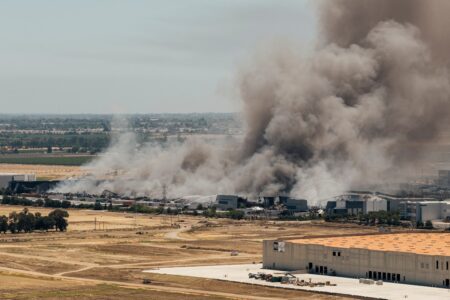
Unhealthy air quality in California city as huge warehouse fire burns for 3rd day
Judge orders Trump administration to restore National Park changes at sites that ‘disparaged’ US
Teens’ reading and math scores have stagnated, US test results show
WASHINGTON (AP) — Younger students have regained ground academically after the pandemic's disruptions while older ...
Lawyers for man accused of killing Charlie Kirk try to block death penalty
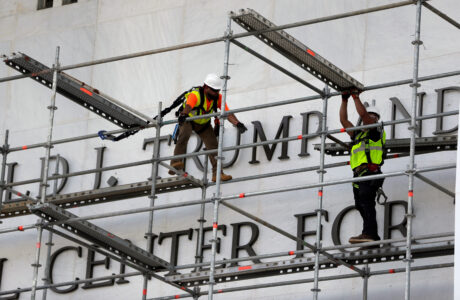
Trump’s name poised to come off Kennedy Center