Mail bomb scheme was just narrowly averted, officials say
Washington ? The mail bomb plot stretching from Yemen to Chicago may have been aimed at blowing up planes in flight and was only narrowly averted, officials said Sunday, acknowledging that one device almost slipped through Britain and another seized in Dubai was unwittingly flown on two passenger jets.
Senior U.S. officials met to develop a U.S. response to the al-Qaida faction linked to the powerful explosives addressed to synagogues in Chicago.
Investigators were still piecing together the potency and construction of two bombs they believed were designed by the top explosives expert working for al-Qaida in the Arabian Peninsula, the Yemen-based militant faction thought to be behind the plot. Yemeni authorities hunted suspects linked to the group, but released a female computer engineering student arrested Saturday, saying someone else had posed as her in signing the shipping documents.
But authorities admitted how close the terrorists came to getting their bombs through, and a senior U.S. official said investigators were still trying to figure out if other devices remained at large.
“We’re trying to get a better handle on what else may be out there,” deputy national security adviser John Brennan told NBC’s “Meet the Press” on Sunday. “We’re trying to understand better what we may be facing.” He told CNN’s “State of the Union” that “it would be very imprudent … to presume that there are no others (packages) out there.”
Airborne detonation?
Brennan said authorities are “looking at the potential that they would have been detonated en route to those synagogues aboard the aircraft as well as at the destinations. But at this point we, I think, would agree with the British that it looks as though they were designed to be detonated in flight.” He made those remarks on CBS’ “Face the Nation.”
British Prime Minister David Cameron had raised the possibility the bombs were aimed at blowing up the planes carrying them, but Brennan and other officials had previously concentrated more on the threat to the American synagogues.
One of the explosive devices found inside a shipped printer cartridge in Dubai had flown on two airlines before it was seized, first on a Qatar Airways Airbus A320 jet to Doha and then on an as-yet-undisclosed flight from Doha to Dubai. The number of passengers on the flights were unknown, but the first flight had a 144-seat capacity and the second would have moved on one of a variety of planes with seating capacities ranging from 144 to 335.
Such a plot aimed at blowing up jets in flight is not new for al-Qaida. A mid-1990s scheme hatched by now-imprisoned terrorist mastermind Khalid Sheikh Mohammed aimed to bring down a dozen jets simultaneously, but the plan was shelved in favor of the “flying bomb” approach used during the 9/11 attacks.
After masterminding the attempt last December to blow up a U.S.-bound airliner with explosives hidden in a passenger’s underwear, the Yemen terror affiliate appears to have nearly pulled off its own audacious plot capitalizing on weak points in the world’s aviation security and cargo systems.
Response being planned
The U.S. has tried in the past to kill or capture the group’s leaders, but the American response to the thwarted attacks was still being developed Sunday. Brennan headed a meeting of national security and intelligence officials at the White House to determine the U.S. response in concert with a Yemeni government that has been reluctant to give free rein to the American military in taking on the militants.
About 50 elite U.S. military experts are in Yemen training its counterterrorism forces and Washington is giving $150 million in military assistance to Yemen this year for helicopters, planes and other equipment.
A Yemeni official said Sunday his government is aiming for a “surgical” response with the help of the U.S. against the cell that carried out the plot. The official spoke on condition of anonymity because of the sensitivity of the talks.
As the two countries decide a course of action, new details have emerged about the events leading up to the near-disaster. U.S. officials said a call from Saudi intelligence with information about packages containing explosives led to a frantic search in Dubai and England.
“It was a race against the clock to find those packages, to neutralize them,” Brennan told CNN.
National
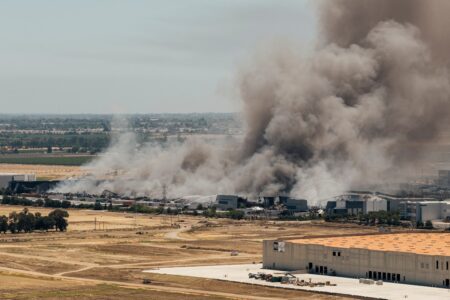
Unhealthy air quality in California city as huge warehouse fire burns for 3rd day
Judge orders Trump administration to restore National Park changes at sites that ‘disparaged’ US
Teens’ reading and math scores have stagnated, US test results show
WASHINGTON (AP) — Younger students have regained ground academically after the pandemic's disruptions while older ...
Lawyers for man accused of killing Charlie Kirk try to block death penalty

Trump’s name poised to come off Kennedy Center