BP begins testing new cap over leak
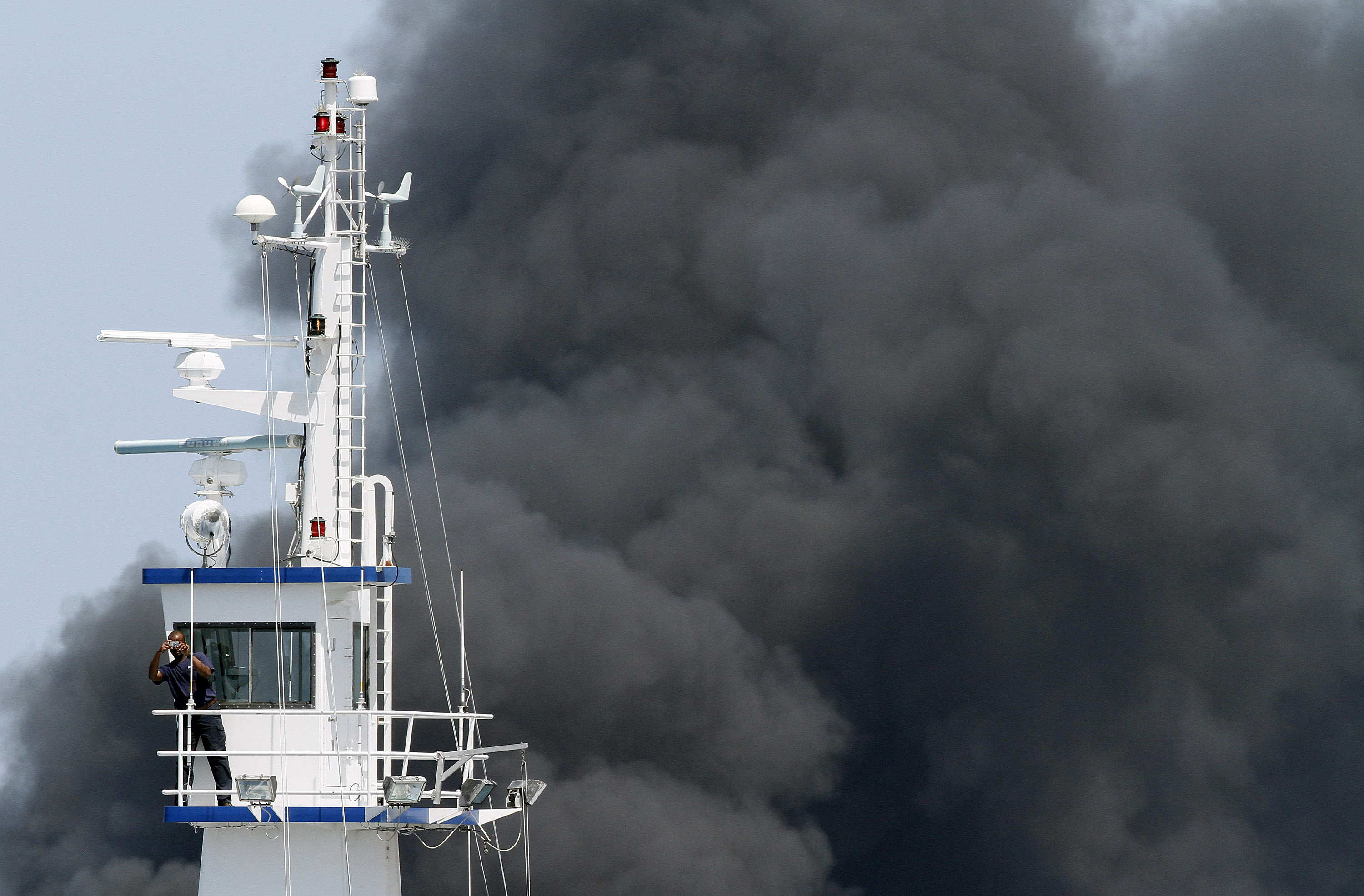
A crew member takes a picture from the crow’s nest of the Delaware Responder oil skimming vessel Wednesday while passing a controlled burn on the Gulf of Mexico near the coast of Louisiana.
New Orleans ? BP allayed last-minute government fears of making the disaster worse and started trying to slowly choke off the flow of oil into the Gulf of Mexico Wednesday, in the hope of finally stopping the leak.
Retired Coast Guard Adm. Thad Allen, the Obama administration’s point man on the disaster, said the government gave the go-ahead after carefully reviewing the risks of the procedure. The plan is a test of whether a new temporary well cap can withstand the pressure and ultimately contain the oil.
“What we didn’t want to do is compound that problem by making an irreversible mistake,” he said at the end of a 24-hour roller-coaster of hopes raised, hopes dashed and hopes raised again along the Gulf Coast.
The cap — a 75-ton metal stack of pipes and valves — was lowered onto the well on Monday in hopes of either bottling up the oil inside the well machinery, or capturing it and funneling it to the surface. But before BP could test the equipment, the government intervened because of second thoughts about whether the buildup of pressure from the gushing oil could rupture the walls of the well and make the leak worse.
“We sat long and hard about delaying the tests,” Allen said. He said that the pause was necessary in the interest of the public, the environment and safety, and that officials were convinced the test could go forward.
If the cap works, it will enable BP to stop the oil from gushing into the sea, either by holding all the oil inside the well machinery like a stopper or, if the pressure is too great, channeling some though lines to as many as four collection ships.
The test began with BP shutting off pipes that were funneling some of the oil to ships on the surface so the full force of the gusher went up into the cap. Then deep-sea robots began slowly closing, one at a time, three openings in the cap that let oil pass through. Ultimately, the flow of crude will be blocked entirely.
All along, engineers will be watching pressure readings to learn whether the well is intact. The first two valves shut off like a light switch, while the third works more like a dimmer and takes longer to close off.
On Wednesday evening, the company said it had isolated a leak on the line attached to the dimmer switch, and was repairing it before moving forward. It wasn’t clear how that would affect the timing of the operation.
Allen said BP will monitor the results every six hours and end the test after 48 hours to evaluate the findings.
As of Wednesday, the 85th day of the disaster, between 92 million and 182 million gallons of oil had spewed into the Gulf since the Deepwater Horizon rig leased by BP exploded April 20, killing 11 workers.
National
Teens’ reading and math scores have stagnated, US test results show
WASHINGTON (AP) — Younger students have regained ground academically after the pandemic's disruptions while older ...

Lawyers for man accused of killing Charlie Kirk try to block death penalty

Trump’s name poised to come off Kennedy Center

Suspect in Texas shooting had fired at police days earlier, officials say

Man pleads guilty to killing a top Minnesota Democrat and her husband