Yemen official says U.S. troops not wanted there
San’a, Yemen ? As Yemen becomes the new front in the war on terror, its leaders want this to be clear: It does not intend to become another Iraq or Afghanistan with thousands of U.S. troops on the ground.
Foreign Minister Abu Bakr al-Qirbi drew some red lines Wednesday in its burgeoning alliance with Washington against al-Qaida, telling The Associated Press that Yemen welcomes U.S. and foreign troops for training, intelligence and logistical support.
“But not in any other capacity,” he said, adding, “there is a lot of sensitivity” among Yemenis about foreign combat troops. He underlined that Yemeni forces would remain under Yemeni command, without any joint authority with the Americans.
His comments came as Yemeni security forces carried out a hunt for Mohammed Ahmed al-Hanaq, the suspected leader of an al-Qaida cell believed to be plotting attacks on the U.S. Embassy or other consulates in Yemen. While troops searched in the mountainous region of Arhab northeast of San’a where he was hiding, officials were negotiating with local tribal sheiks, demanding al-Hanaq’s surrender.
Washington and San’a are still feeling out how far they can go in their newly intensified partnership against al-Qaida, whose fighters have dug roots into the mountains of this impoverished Arab nation and now, the Obama administration says, present a global threat.
Military personnel from the United States and other Western countries are already on the ground helping train Yemeni counterterror units and exchanging intelligence, and Washington and Britain are ramping up aid, pouring in tens of millions of dollars to build up the security forces.
Yemen’s government has been weakened by wars, poverty and its own misrule and corruption. Central authority barely extends beyond the capital, and heavily armed tribes control large areas. Many tribes are bitter toward San’a, and some give refuge to al-Qaida fighters.
The U.S. says the group in Yemen, known as al-Qaida in the Arabian Peninsula, trained and provided the explosive materials for the 23-year-old Nigerian accused of trying to blow up an American passenger jet heading to Detroit on Christmas Day. This week, the U.S. and other Western countries temporarily closed their embassies in San’a after threats of a terrorist attack surfaced. The move was criticized by al-Qirbi.
“It was the wrong decision actually,” he said of the closures Sunday and Monday. “Closing embassies in response to a threat plays into the hands of the terrorists.”
He was also critical of Obama’s decision to halt the release of Yemenis held at Guantanamo Bay military prison, out of fear they could return to terror activities. The government “would like Yemenis to be handed over” and will prosecute any who committed crimes, al-Qirbi said.
Al-Qirbi said the U.S. should focus itself on building up Yemen’s own forces.
National
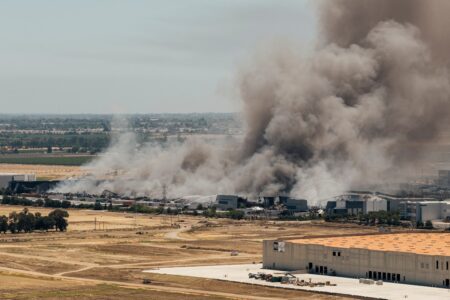
Unhealthy air quality in California city as huge warehouse fire burns for 3rd day
Judge orders Trump administration to restore National Park changes at sites that ‘disparaged’ US
Teens’ reading and math scores have stagnated, US test results show
WASHINGTON (AP) — Younger students have regained ground academically after the pandemic's disruptions while older ...
Lawyers for man accused of killing Charlie Kirk try to block death penalty

Trump’s name poised to come off Kennedy Center