Political writer Kristol dies at 89
Washington ? Irving Kristol, a forceful essayist, editor and university professor who became the leading architect of neoconservatism, which he called a political and intellectual movement for disaffected ex-liberals like himself who had been “mugged by reality,” died Friday at the Capital Hospice in Arlington. He was 89.
He spent much of his career in New York but had for the last two decades lived at the Watergate apartments in Washington. He died of complications from lung cancer, said his son, William Kristol, the founder and editor of the conservative Weekly Standard magazine.
The elder Kristol founded and edited such magazines such Encounter and the Public Interest that aimed at an elite audience of political, social and cultural tastemakers. In addition to his professorship at New York University, he advanced his ideas through monthly opinion pieces in the Wall Street Journal and a fellowship at the American Enterprise Institute think tank. He was for many years an editor at Basic Books, a small but distinguished publisher of social science and philosophy.
Karl Rove, a Republican strategist who advised former president George W. Bush, called Kristol an “intellectual entrepreneur who helped energize several generations of public policy thinkers.”
Through his editing, writing and speaking, Kristol “made it a moral imperative to rouse conservatism from mainstream Chamber of Commerce boosterism to a deep immersion in ideas,” Rove said. He added that Kristol helped create a synthesis of Cold War Democrats and Reagan White House anticommunist hawks, which proved decisive in influencing foreign and military policy in the 1980s.
Kristol and his historian wife, Gertrude Himmelfarb, along with a group of sociologists, historians and academics including Norman Podhoretz, Nathan Glazer, Richard Pipes and for a while Daniel P. Moynihan, emerged in the late 1960s and 1970s as prominent critics of welfare programs, tax policy, moral relativism and countercultural social upheavals they felt were contributing to America’s cultural and social decay.
National
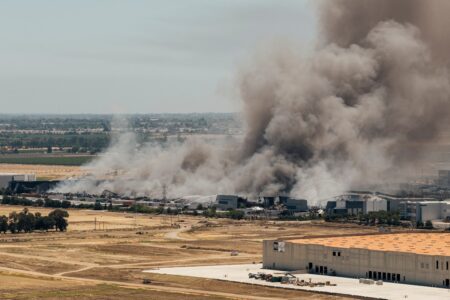
Unhealthy air quality in California city as huge warehouse fire burns for 3rd day
Judge orders Trump administration to restore National Park changes at sites that ‘disparaged’ US
Teens’ reading and math scores have stagnated, US test results show
WASHINGTON (AP) — Younger students have regained ground academically after the pandemic's disruptions while older ...
Lawyers for man accused of killing Charlie Kirk try to block death penalty

Trump’s name poised to come off Kennedy Center