Appeals court rules Ashcroft can be liable in 9/11 case
Boise, Idaho ? A federal appeals court delivered a stinging rebuke Friday to the Bush administration’s post-Sept. 11 detention policies, ruling that former Attorney General John Ashcroft can be held liable for people who were wrongfully detained as material witnesses after 9/11.
A three-judge panel of the 9th U.S. Circuit Court of Appeals said the government’s improper use of material witnesses after Sept. 11 was “repugnant to the Constitution and a painful reminder of some of the most ignominious chapters of our national history.”
The court found that a man who was detained as a witness in a federal terrorism case can sue Ashcroft for allegedly violating his constitutional rights. Abdullah al-Kidd, a U.S. citizen and former University of Idaho student, filed the lawsuit against Ashcroft and other officials in 2005, claiming his civil rights were violated when he was detained as a material witness for two weeks in 2003.
He said the investigation and detention not only caused him to lose a scholarship to study in Saudi Arabia, but also cost him employment opportunities and caused his marriage to fall apart.
He argued that his detention exemplified an illegal government policy created by Ashcroft to arrest and detain people — particularly Muslim men and those of Arab decent — as material witnesses if the government suspected them of a crime but had no evidence to charge them.
Ashcroft had asked the judge to dismiss the matter, saying that because his position at the Department of Justice was prosecutorial he was entitled to absolute immunity from the lawsuit. Justice Department spokesman Charles Miller would only say Friday that the agency is reviewing the opinion.
Phone messages left at Ashcroft’s Washington D.C. lobbying and law firms were not immediately returned Friday.
The exact ramifications of the ruling were not immediately clear, but at a minimum it casts a negative spotlight on the Bush administration’s practice of detaining Muslim men earlier this decade at a time when the nation was still on edge after Sept. 11.
“It’s a very big ruling, because qualified immunity is ordinarily a very robust form of protection,” said Richard Seamon, a professor at the University of Idaho College of Law and a former assistant to the U.S. Solicitor General. “To overcome that immunity, you have to show that the defendant almost deliberately acted unconstitutionally to violate someone’s rights — no innocent mistakes.”
If the ruling stands, Ashcroft could be forced to submit to a deposition, Seamon said.
“The mere prospect of that causes a lot of concern for these officials, with the time and secrecy parts of that and all the publicity that this kind of thing attracts,” Seamon said. “That’s exactly why qualified immunity exists, so these officials can be spared that.”
National
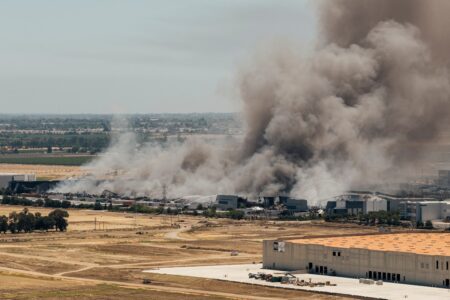
Unhealthy air quality in California city as huge warehouse fire burns for 3rd day
Judge orders Trump administration to restore National Park changes at sites that ‘disparaged’ US
Teens’ reading and math scores have stagnated, US test results show
WASHINGTON (AP) — Younger students have regained ground academically after the pandemic's disruptions while older ...
Lawyers for man accused of killing Charlie Kirk try to block death penalty
Trump’s name poised to come off Kennedy Center