Ailing California economy could prolong recession
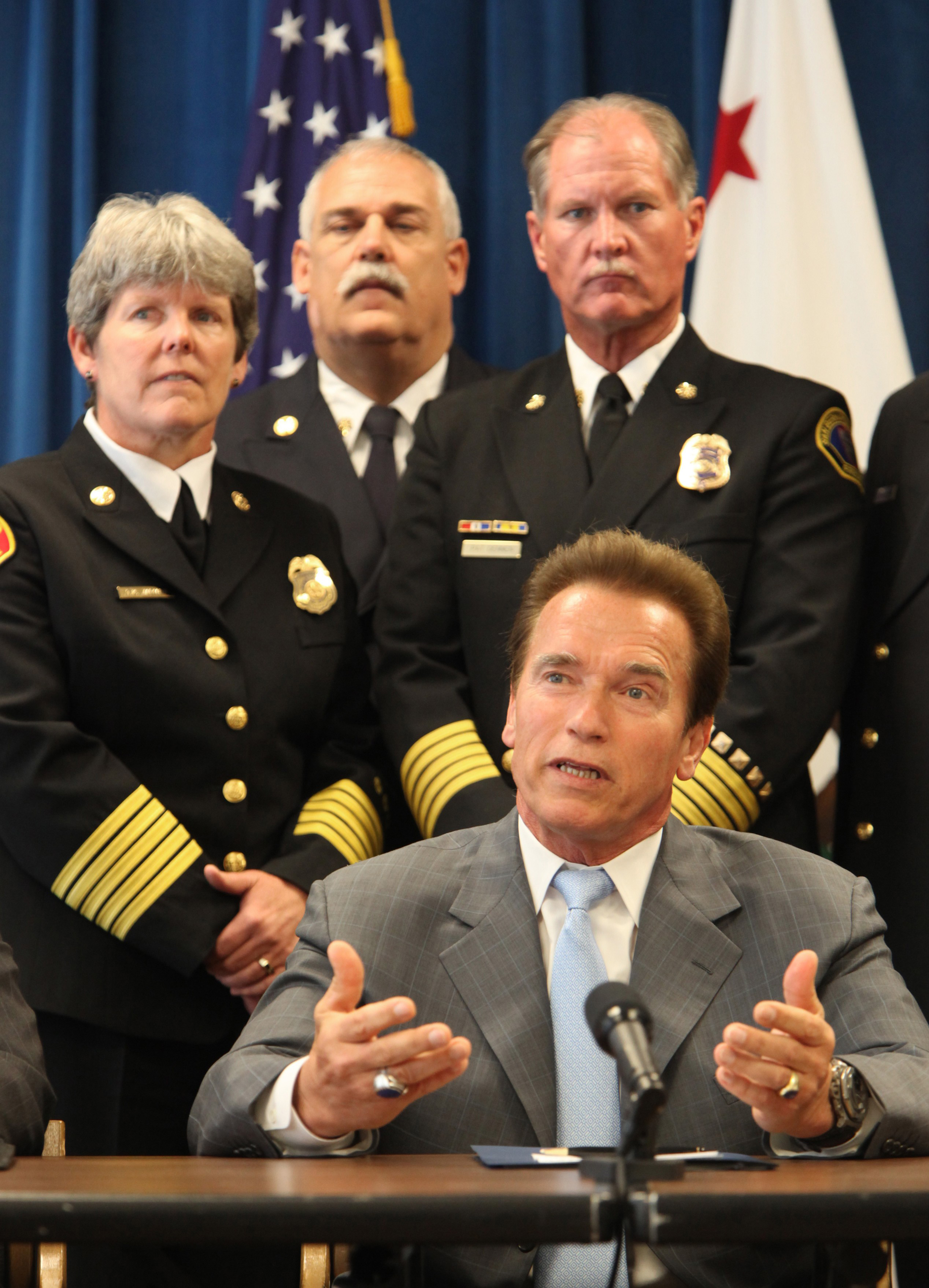
CALIFORNIA Gov. Arnold Schwarzenegger, surrounded by members of the Blue Ribbon Fire Commission, discusses the state’s pending cash crisis Monday at the Capitol in Sacramento. Schwarzenegger said he would veto any budget plan that includes tax increases and urged lawmakers to reach a solution to the state’s 4.3 billion deficit.
Sacramento, Calif. ? California faces a $24 billion budget shortfall, an eye-popping amount that dwarfs many states’ entire annual spending plans.
Beyond California’s borders, why should anyone care that the home of Google and the Walt Disney Co. might stop paying its bills this week?
Virtually all states are suffering in the recession, some worse than California. But none has the economic horsepower of the world’s eighth-largest economy, home to one in eight Americans.
California accounts for 12 percent of the nation’s gross domestic product and the largest share of retail sales of any state. It also sends far more in tax revenue to the federal government than it receives — giving a dollar for every 80 cents it gets back — which means Californians are keeping social programs afloat across the country.
While the deficit affects only the state, California’s deepening economic malaise could make it harder for the entire nation’s economy to recover.
When the state stumbles, its sheer size — 38.3 million people — creates fallout for businesses from Texas to Michigan.
Even if California lawmakers solve the deficit quickly, there will likely be more government furloughs and layoffs and tens of billions of dollars in spending cuts. That will ripple through the state economy, sowing fear of even more job losses.
Californians have already been scaling back for months as the state’s unemployment rate has climbed to a record 11.5 percent in May. Increases to income, sales and vehicle license taxes approved by lawmakers and Gov. Arnold Schwarzenegger in February acted as a further drag on spending.
Personal income declined in California in 2008 for the first time since the Great Depression, and income tax revenue fell by 34 percent during the first five months of this year.
The decrease in spending is especially evident in automobiles. California is the nation’s largest single auto market, and sales are down 40 percent from last year. Auto dealers see little hope of a quick turnaround, especially after a 1 percentage point increase in the state sales tax and hike of the vehicle license fee.
Because California’s $1.7 trillion annual economy is so important, the state’s treasurer has asked for federal help — in the form of a guarantee that would allow California and other states to take out short-term loans at lower interest rates.
A federal guarantee would cut the interest rate on the state’s borrowing by as much as half, saving California taxpayers hundreds of millions of dollars.
But some members of Congress worry about setting a precedent for bailing out local governments.
National
Unhealthy air quality in California city as huge warehouse fire burns for 3rd day

Judge orders Trump administration to restore National Park changes at sites that ‘disparaged’ US
Teens’ reading and math scores have stagnated, US test results show
WASHINGTON (AP) — Younger students have regained ground academically after the pandemic's disruptions while older ...
Lawyers for man accused of killing Charlie Kirk try to block death penalty
Trump’s name poised to come off Kennedy Center