Deficit threatens Obama’s popularity
Washington ? The solid armor of President Barack Obama’s popularity may have a crack — a nearly $2 trillion-sized one.
There’s continued and considerable public restiveness over eye-popping federal budget deficits, a potential danger for both Obama’s ambitious agenda and his political fortunes.
About $1.3 trillion when Obama took office, this year’s deficit now is on track to soar to a record $1.85 trillion after his massive influx of federal spending to stimulate the moribund economy, help struggling homeowners, stabilize frozen credit markets and bail out troubled banks, automakers and insurers.
With those actions, Obama has greatly expanded the government’s reach — and, polls say, stoked people’s concerns.
From the start, Obama has been sensitive about skyrocketing deficits. He’s grown only more so lately.
Shortly after his November election, the president-elect said: “We shouldn’t worry about the deficit next year or even the year after” because righting the economy should take precedence. Seven months later, he declared that the deficit problem “keeps me awake at night.”
He’s mindful of this: The public’s lingering wariness over a government plunging deeper into the red threatens to turn into a major liability. As he said in April: “We also have a deficit — a confidence gap — when it comes to the American people.”
Recent polls indicate as much.
The nonpartisan Pew Research Center reported Thursday that a majority of Americans — 55 percent — are optimistic that Obama will eventually reduce the budget deficit. But that’s a smaller slice than the 61 percent of people who approve of him generally.
And according to a new New York Times/CBS News poll, 60 percent of Americans don’t believe the president has a strategy for dealing with the deficit.
Also, 58 percent in an NBC/Wall Street Journal poll want Obama to make controlling the deficit a higher priority than a speedy economic recovery. And, nearly half expressed a “great deal” of concern about the increase of government intervention in American life that Obama has overseen, from taking over companies to influencing corporate bonuses and seeking to add government-sponsored insurance to the health care system.
Those growing more wary are mostly political independents, the fickle swing voters who decide close elections. They were critical to the winning coalition Obama assembled last fall and certainly will be critical again if he runs in 2012.
In the nearer term, if voters turn on Obama, it could threaten the Democrats’ comfortable majority in Congress and make it difficult for the president to secure approval for his ambitious proposals to overhaul health care, revamp energy policy and institute sweeping economic reforms. Democrats up for re-election in 2010 will gladly attach themselves to Obama if he’s successful — but they also will just as quickly distance themselves from him amid failure.
So far, the reservoir of concern hasn’t dragged down Obama’s overall approval ratings. Despite disappointing economic progress and international turmoil, solid majorities still view the president favorably and larger numbers than in years say the country is on the right track. And, for now at least, people blame former President George W. Bush for the deficit more than they blame Obama, by far.
But the GOP senses a rare opportunity for a potent message against the popular president. Republicans are hammering Obama as a big-spending, big-government, big-deficit leader.
Obama has promised to cut the deficit by half within his four-year term. He also focuses just as much on the need to drastically cut the expense of health care as he does on expanding coverage. He pledges at every turn that he won’t accept any plan that increases the deficit. Expect this to continue as the debate heats up into the summer and fall.
National
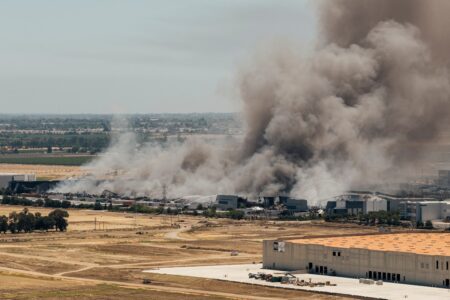
Unhealthy air quality in California city as huge warehouse fire burns for 3rd day
Judge orders Trump administration to restore National Park changes at sites that ‘disparaged’ US
Teens’ reading and math scores have stagnated, US test results show
WASHINGTON (AP) — Younger students have regained ground academically after the pandemic's disruptions while older ...
Lawyers for man accused of killing Charlie Kirk try to block death penalty
Trump’s name poised to come off Kennedy Center