Collection of U.S. banks repay $68 billion received from bailout
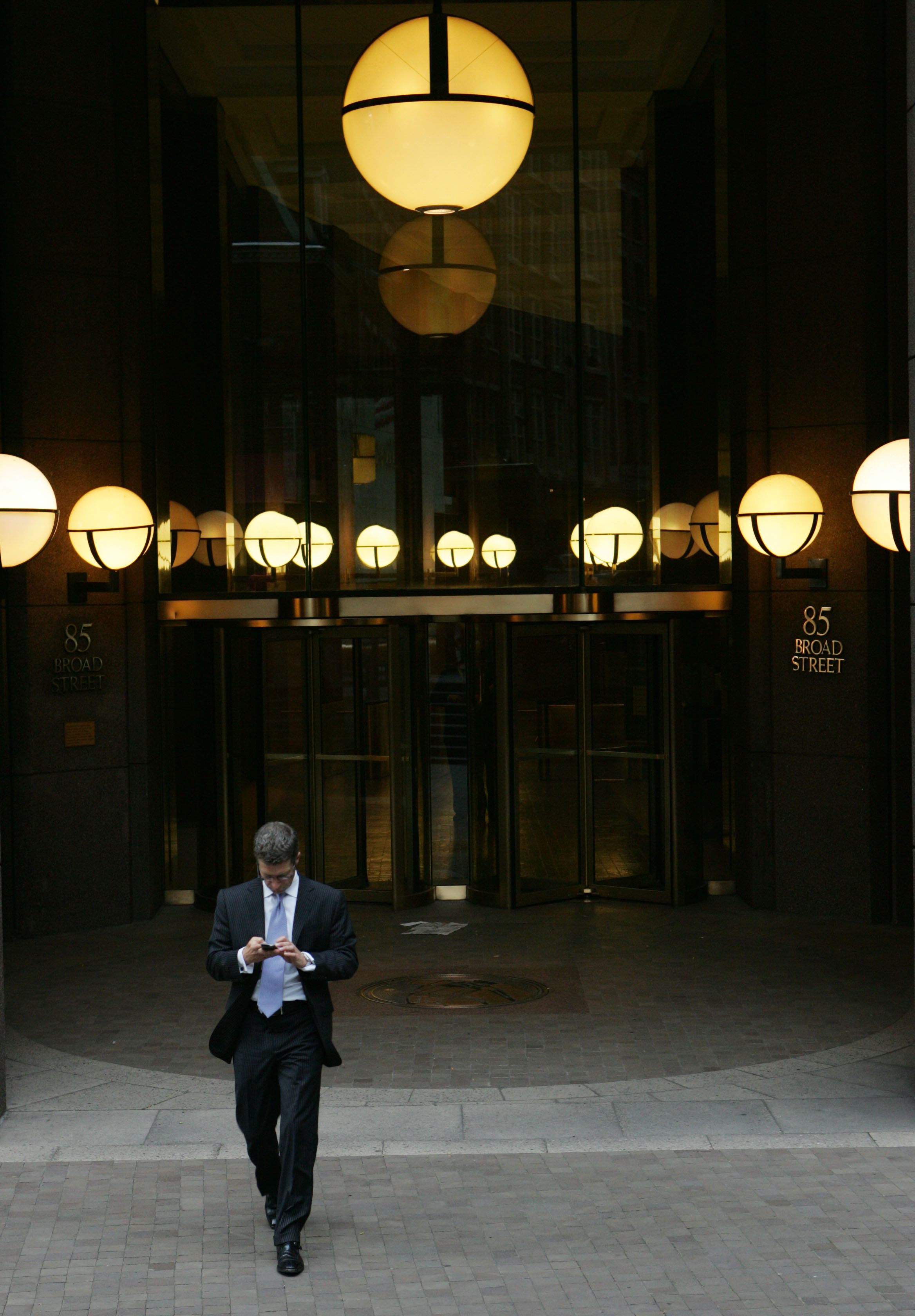
A man walks out of Goldman Sachs headquarters in this Sept. 16, 2008, file photo in New York. Goldman Sachs said Wednesday that it has finished repaying a 0 billion government investment. The bank made the disclosure in letters to high-ranking congressmen and senators on Tuesday.
Washington ? A key government effort to ease the credit crisis reached a milestone Wednesday as 10 large banks said they had repaid a total of $68 billion in bailout funds.
Treasury said last week that the banks could begin repaying money they received under the $700 billion financial system bailout known as the Troubled Asset Relief Program, or TARP. The government created the program in October as its flagship effort to address the global credit crisis and teetering financial markets.
Meanwhile, officials hustled to prepare an announcement about the pricing of stock warrants Treasury holds — a final barrier to the banks’ ending their ties to the bailout program. The warrants allow Treasury to buy the banks’ stock at a fixed price at some future date. The banks now want to buy back those warrants.
Concerns over program limits
The flurry of activity around TARP followed months of criticism from opponents of government intervention in the financial industry. It showed that some of the biggest TARP investments are winding down sooner than many had feared.
More than $70 billion has been returned to the fund. That includes Wednesday’s redemptions and about $2 billion in earlier repayments from smaller banks.
But until the banks can buy back the stock warrants Treasury holds, they remain entangled in a program that has subjected them to limits on executive pay and other restrictions. The banks have chafed against TARP from early on, fearing government-imposed rules could hurt their profits and prevent them from hiring or keeping top talent.
The warrants are hard to price because their values will fluctuate along with the banks’ stock prices. Treasury wanted more money to unwind the contracts than the banks were willing to pay.
Uncertainty surrounding the warrant sales raises questions about whether Treasury “is getting the best possible price for taxpayers,” the Government Accountability Office charged in a report Wednesday.
The GAO also urged Treasury to create consistent rules for evaluating bank requests to buy their way out of TARP.
Wednesday marked the first repayment opportunity for the 10 large banks whose exit applications Treasury approved last week.
Throughout the day, the banks announced that they had finished repaying the government money.
The banks were: JPMorgan Chase & Co., Morgan Stanley, Goldman Sachs Group Inc., U.S. Bancorp, Capital One Financial Corp., American Express Co., BB&T Corp., Bank of New York Mellon Corp., Northern Trust Corp. and State Street Corp.
Requirements to leave TARP
To begin the process of leaving TARP, the banks had to clear a series of hurdles designed to make sure they would remain viable despite the financial crisis and the recession.
All but Northern Trust underwent government “stress tests” to ensure they had an extra capital buffer in case the recession worsened. The 10 also were required to raise equity from investors and raise debt without a government guarantee.
Despite their relative strength, the banks still rely on government subsidies, including guarantees on debt they already issued and discounted credit lines from the Federal Reserve.
The rapid repayments are not necessarily a sign that TARP itself will be scaled back. Treasury has said the money would be returned to the $700 billion bailout fund. It could be recycled in loans to other institutions the government hopes will lend money to people and businesses, supporting an economic recovery.
But an announcement about warrant pricing is expected by Friday, according to two industry sources who spoke anonymously because the matter was not yet public.
That clarification and Wednesday’s repayments provide a clearer way forward for banks wishing to end their involvement with the government’s financial stabilization plans.
The size of the TARP repayments far exceeds the $25 billion that Treasury Secretary Tim Geithner projected banks would repay this year.
Besides the money they’re returning, the banks have paid Treasury more than $2 billion in dividends mandated under TARP. The banks pay 5 percent dividends for the first five years. After that, the government would charge them 9 percent interest.
In addition, taxpayers will receive billions in exchange for the warrants, once Treasury and the banks agree on how to price them.
National
Unhealthy air quality in California city as huge warehouse fire burns for 3rd day
Judge orders Trump administration to restore National Park changes at sites that ‘disparaged’ US
Teens’ reading and math scores have stagnated, US test results show
WASHINGTON (AP) — Younger students have regained ground academically after the pandemic's disruptions while older ...
Lawyers for man accused of killing Charlie Kirk try to block death penalty
Trump’s name poised to come off Kennedy Center