Obama seeks common ground with Muslim world
Cairo ? “Assalamu aleikum,” the president of the United States said.
“We love you,” cried the crowd, sounding like partisans at a campaign rally in Chicago.
In such small ways, on a day rich with symbolism built from small things, President Barack Obama achieved a cultural communion between America and Islam that he wants to see writ large in the world.
His greeting of “assalamu aleikum” — peace be upon you — set the tone of a 55-minute speech at Cairo University on Thursday in which he invoked his middle name, Hussein, quoted from the Quran and spoke of his country’s common purpose with a religion he said Americans will never engage in war.
The reaction from typically antagonistic quarters was largely respectful. Some Islamic and Arab figures spoke of the change they are seeing under Obama.
They’re not convinced yet it’s change they can believe in.
“There is a change between the language of President Obama and previous speeches made by George Bush,” said Fawzi Barhoum, a spokesman for Hamas. He added that Obama did not specifically note the suffering in Gaza following the three-week Israeli incursion earlier this year.
“So all we can say is that there is a difference in the statements, and the statements of today did not include a mechanism that can translate his wishes and views into actions,” said Barhoum, whose group the U.S. considers a terrorist organization.
Iran’s Supreme Leader Ayatollah Ali Khamenei said in advance of the speech that any statements by Obama were just “words, speech and slogan” that would leave in place sanctions designed to persuade the nation to stop its nuclear weapons program.
But Mohammad Ali Abtahi, a cleric who was vice president under reformist President Mohammad Khatami, called the speech “compensation” for a hostile environment created by Bush.
“This can be an initial step for removing misconceptions between world of Islam and the West,” he said.
When Obama arrived at the Great Pyramids outside Cairo not long after delivering the speech, he appeared a man transformed, displaying an unmistakable — and rare — air of jubilance.
“This thing is huge!” a widely grinning president yelled at the base of the biggest pyramid, his voice echoing off the stone. Around the corner, he joked about climbing on a camel. When three aides did, they were thrilled so much that the experience had them high-fiving and hugging.
Obama’s speech was designed to reset relations after the terrorist attacks of Sept. 11, 2001, and the U.S.-led war in Iraq. Yet he also called sternly for Israelis and Palestinians to live up to their obligations in seeking peace, demanded Iran bow to international demands to halt its nuclear weapons program and bid Muslim countries help in eradicating the threat of fundamentalist’ violence across the globe.
National
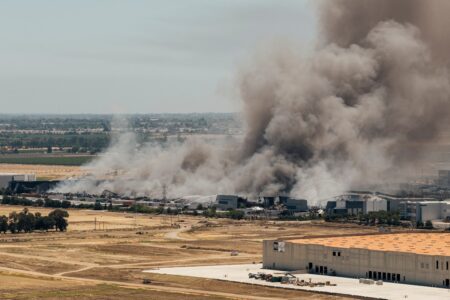
Unhealthy air quality in California city as huge warehouse fire burns for 3rd day
Judge orders Trump administration to restore National Park changes at sites that ‘disparaged’ US
Teens’ reading and math scores have stagnated, US test results show
WASHINGTON (AP) — Younger students have regained ground academically after the pandemic's disruptions while older ...
Lawyers for man accused of killing Charlie Kirk try to block death penalty
Trump’s name poised to come off Kennedy Center