A new crop of farmer
Census: More than 1 in every 10 U.S. farms is run by a woman
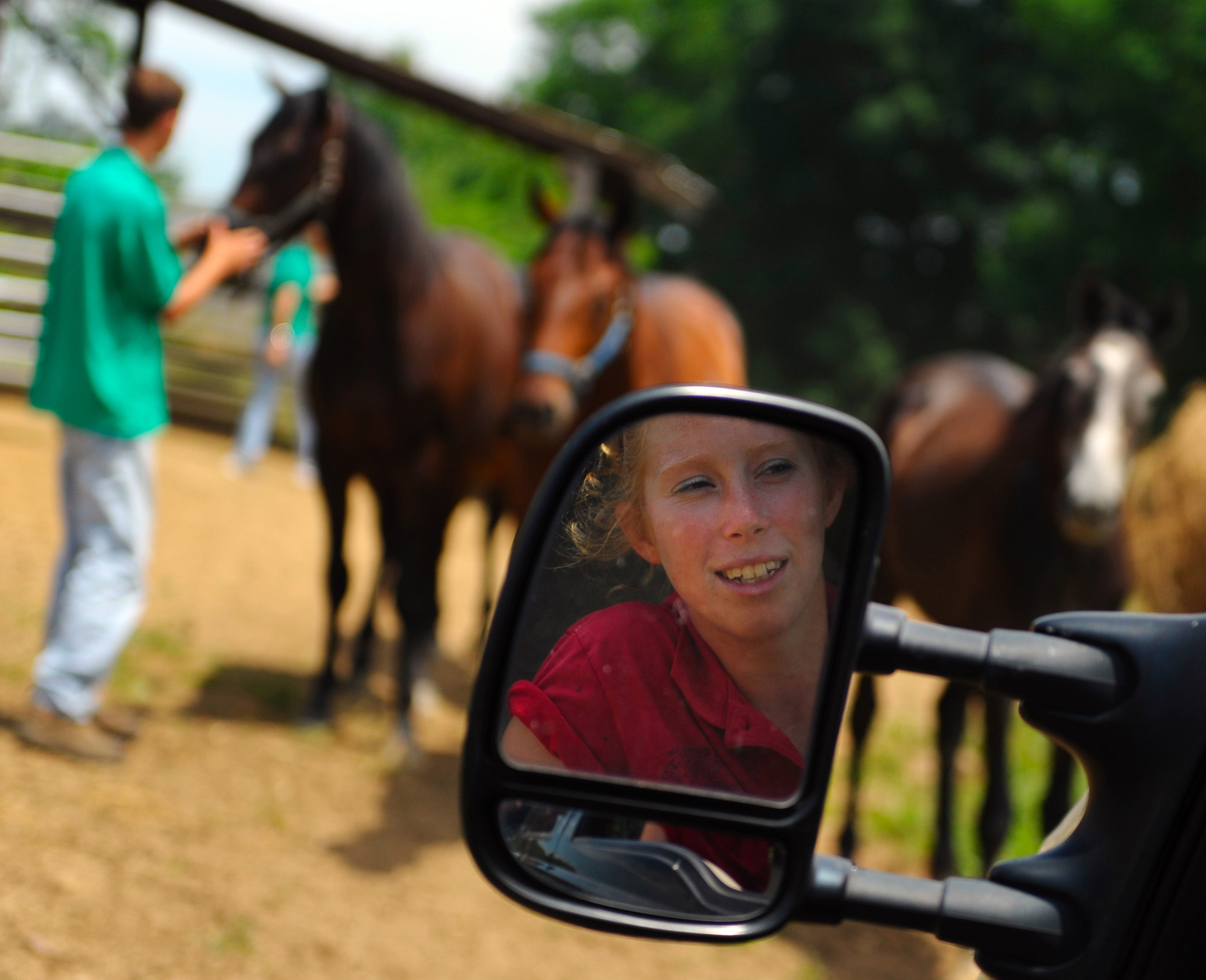
Nora Crist, 21, recently graduated from the University of Delaware’s College of Agriculture and Natural Resources and might be the next generation to run the family farm, Elioak, in Ellicott City, Md. Crist’s farming roots go back to 1797, when her mother’s family settled in Howard County, Md.
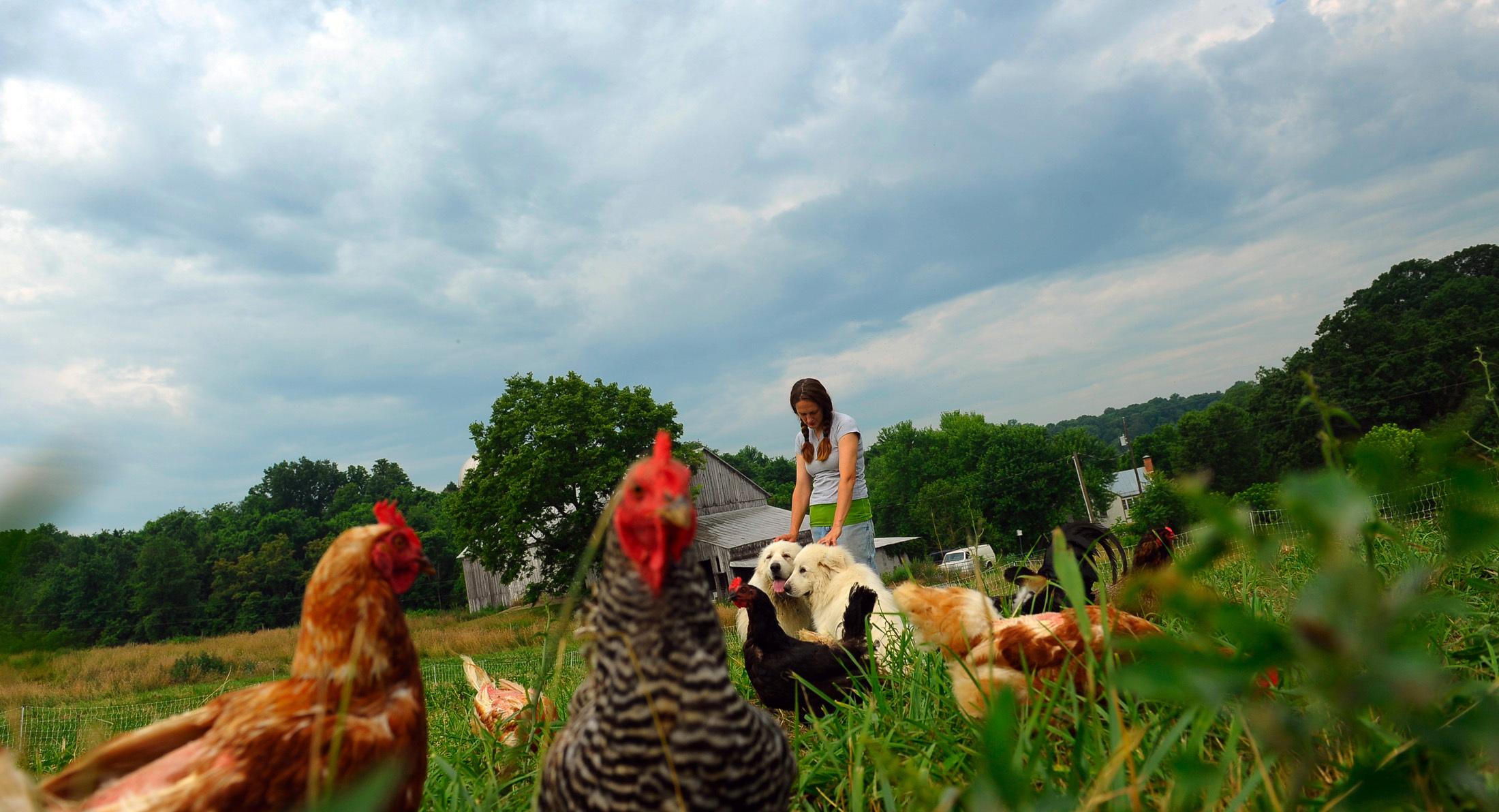
Julie Stinar, of Sharpsburg, Md., walks through a pasture on her Evensong Farm, where she raises chickens and grows produce to sell at farmers’ markets.
Washington ? Julie Stinar once worked with some of the top names in fashion: Donna Karan, Giorgio Armani, Tracy Reese.
Now she works with some completely different brand names: Cornish and Poulet Rouge chickens and Red Devon cattle.
Stinar is the owner of Evensong Farm in Sharpsburg, Md., and an example of the changing face of American farming.
Women always played important roles on the family farm. They kept the books, milked the cows and fed the children, often juggling another part-time job while the men worked the fields. Sometimes, they ran the farm after their husbands or fathers died.
But increasingly, women such as Stinar are turning to farming on their own. According to the 2007 U.S. Census of Agriculture released this year, more than one in every 10 U.S. farms is run by a woman. In Virginia, the number of farms in which a woman is the principal operator jumped 16 percent between 2002 and 2007.
“Just as we’ve seen the numbers of women increasing in the workplace, we are seeing more women” in farming, said Stefphanie Gambrell, a domestic policy economist with the American Farm Bureau.
Female organizations
Some say that the statistics simply reflect better outreach efforts by census takers, but others point to the growing number of female-focused farming organizations as proof that the number of female farmers is on the rise.
Women’s agricultural associations have popped up in Vermont, Connecticut and Maine. In Pennsylvania, membership in the Women’s Agricultural Network, which is affiliated with Penn State’s College of Agricultural Sciences, grew from 100 members in 2005 to 1,000 in 2008, said Linda Stewart Moist, a senior extension associate at the college.
Smaller, specialized
While men tend to run larger farms focused on such commodity crops as soybeans and wheat, women tend to run smaller, more specialized enterprises selling heirloom tomatoes and grass-fed beef to well-heeled, eco-conscious consumers.
These smaller enterprises have gotten a boost from the popularity of farmers’ markets and programs in which people pay in advance to receive weekly produce baskets, as well as renewed consumer interest in buying locally.
The lavender Deborah Williamson and her mother, Edith, grow on their farm, Seven Oaks Lavender Farm in Catlett, Va., is sold locally at Whole Foods Markets. Stinar built her heirloom vegetable business by selling to her husband’s office colleagues. The Internet has also made it easier for farmers to sell directly to consumers without heavy start-up costs, experts say.
Motivation
Women say they are drawn to farming for a number of reasons. Many like the independence and flexibility that comes with running a farm. Many younger women choose farming to do something positive for the environment by employing sustainable farming techniques, said Amy Trauger, an assistant professor of geography at the University of Georgia who has studied women in agriculture.
Eight years ago, Jeanne Dietz-Band made a deal with her husband: She’d quit her job at a local biotechnology firm if they would buy a home in the country. Now Dietz-Band, who has a PhD in molecular biology and genetics, heads her own start-up, Many Rocks Farm in Keedysville, Md., where she raises about 200 Kiko goats. She sells meat, sausage, goat milk soap and lotions at farmers’ markets across the area.
Dietz-Band, who grew up in Kansas, had no farming background. And her husband, born and raised in Boston, had no idea what he was getting into when the family moved to the 40-acre spread in Washington County, she said. Like many farming spouses, he kept his outside job as an electrical engineer to guarantee income and health coverage.
Dietz-Band chose goats because they were small and she figured she could handle them. Her background in genetics has come in handy.
“Even though I walked out of one career into a totally different one, everything came together,” she said.
Family business
Others follow a more traditional route: inheriting their farm. Martha Clark’s farming roots go back to 1797, when her family first settled in Howard County. Her father, former Maryland state senator James Clark Jr., thought Clark’s brother would inherit the family farm. Instead, Martha took over more than 420 acres in Ellicott City, Md., where she raises livestock, corn, tomatoes and other crops. Her daughter Nora Crist, 21, recently graduated from the University of Delaware’s College of Agriculture and Natural Resources and might be the next generation to run the family farm.
For her part, Stinar always loved the country. After the birth of her son, she and her husband bought the 132-acre spread that eventually became Evensong Farm. She started with a vegetable garden and some mail-order chickens. Then came the cow, who had the calf they dubbed “Dinner.” Those were followed by the homeless three-legged pig, who was recently joined by five piglets.
Once a week, she drives to the Saturday farmers market in Silver Spring, Md., where she sells an assortment of vegetables, herbs and eggs. Stinar chats easily with customers, and her passion for her work is evident.
By 11 a.m., the eggs are sold out, as is the last bunch of bok choy. Customers are already asking about the Poulet Rouge chickens, which Stinar says will be ready in July.
“It’s a great feeling to be able to grow food and to be able to share it with people,” she said. “Being outside, growing food — it’s just a great way to live.”
National

Unhealthy air quality in California city as huge warehouse fire burns for 3rd day

Judge orders Trump administration to restore National Park changes at sites that ‘disparaged’ US
Teens’ reading and math scores have stagnated, US test results show
WASHINGTON (AP) — Younger students have regained ground academically after the pandemic's disruptions while older ...

Lawyers for man accused of killing Charlie Kirk try to block death penalty

Trump’s name poised to come off Kennedy Center